



Commercial and specialty pools
Best robotic pool cleaner for swim spas: what a robot can and cannot reach.
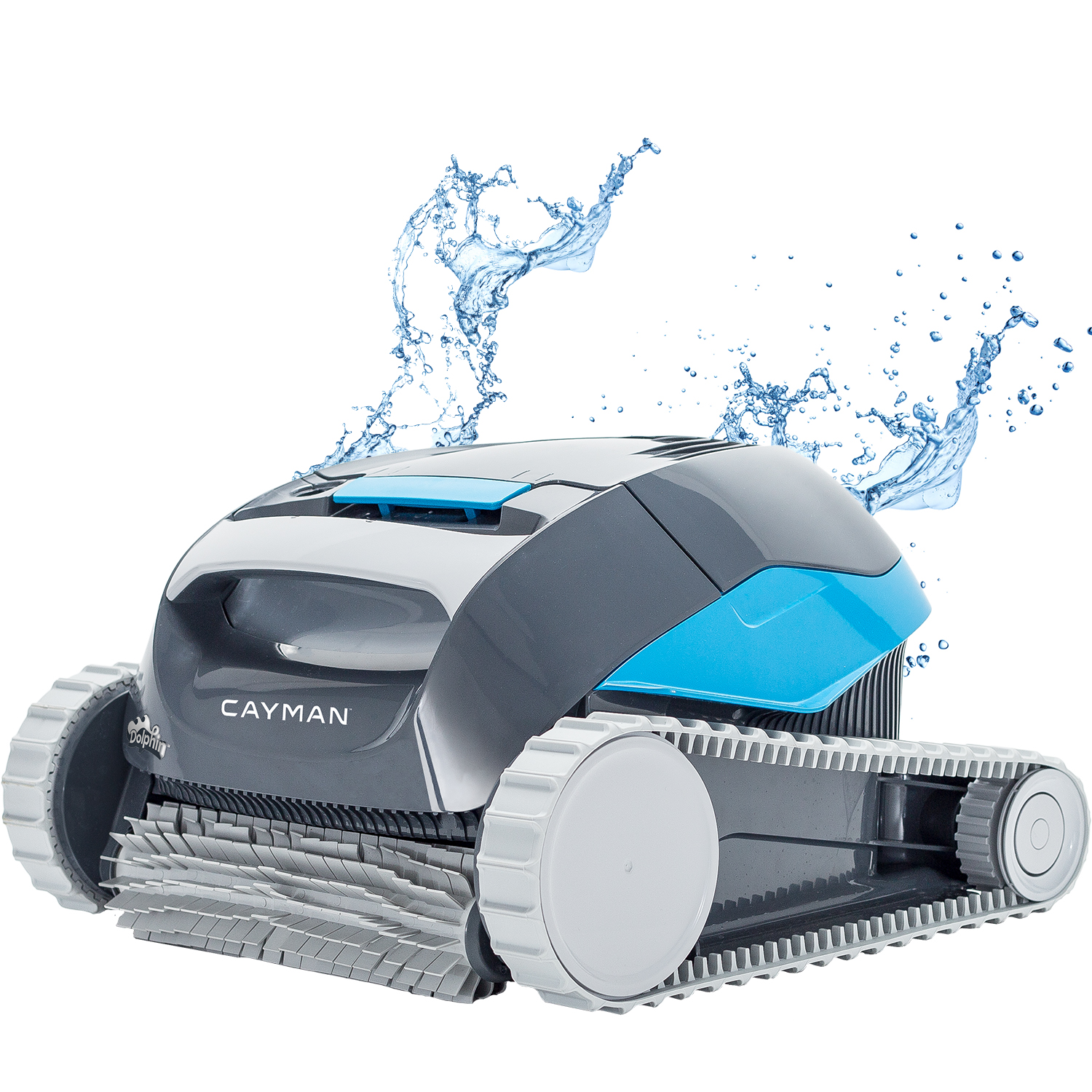
Top pick: Dolphin Cayman
Live prices · Ships free · 30 Day Trial
A swim spa is short, narrow, warm and full of molded seats. Here is what a robot will clean in one, what it will miss, and which light Dolphin suits the job.
The quick answer
With those limits accepted, the Dolphin Cayman is our pick for a swim spa: 14.6 lb, a 2-hour cycle and a top hatch that empties with one tab, for the flat swim-lane floor and walls. Choose the Dolphin Quantum instead if you want steps and ledges in the robot's published coverage and fine panels included. The Dolphin Escape is the lightest and lowest-priced of the three.
Know this first
No robot on this page is published for swim spas. Molded seats and footwells will not be fully covered, the swim jets must be off during a cycle, and the water must be within the temperature range in the robot's manual. Acrylic shells are not on any published surface list. Treat what follows as the closest practical fit.
A swim spa sits somewhere between a hot tub and a lap pool: 12 to 21 ft long, 7 or 8 ft wide, 4 to 5 ft deep, with an acrylic shell, swim jets at one end and molded seats and steps at the other. Owners searching for the best robotic pool cleaner for swim spas usually want to stop dragging a hose vacuum across that floor. A robot can do most of it. It cannot do all of it, and none of these robots is published for the purpose.
So this page starts with what you are taking on: a pool robot working in a vessel it was not rated for, in warmer water than a pool, around contours it was not shaped for. If the temperature checks out and you accept hand-cleaning the seats, a small, light robot handles the flat swim lane and the walls. Size and weight decide the ranking, not power.
The picks, ranked
Three robots for a swim spa, with the limits in mind.
$1299$1049Save $250 off the list price
Temporarily out of stock
Pick 1: Best fit for the swim-lane floor and walls
Dolphin Cayman
The Cayman comes first because it is small where a swim spa needs small and still handles obstacles. It weighs 14.6 lb, which matters every time you lift it over the spa wall. Its published obstacles include steps, ladders, drain covers and ledges, the kinds of shapes a spa floor is full of, although molded seats are a different matter. Its top hatch opens with a single tab, so rinsing the MaxBin after every cycle is no chore. One HyperBrush and over 4,000 GPH of flow are ample for a floor this size. The cycle is 2 hours.
- Best for
- Owners of a 12 to 21 ft swim spa who want the flat floor and walls cleaned by a light, simple robot.
- The trade-off
- Not published for swim spas or acrylic. No waterline scrubbing, no swivel on the cable, and NanoFilter panels are an optional extra.
$1999$1599Save $400 off the list price
Temporarily out of stock
Pick 2: For spas where steps and ledges matter most
Dolphin Quantum
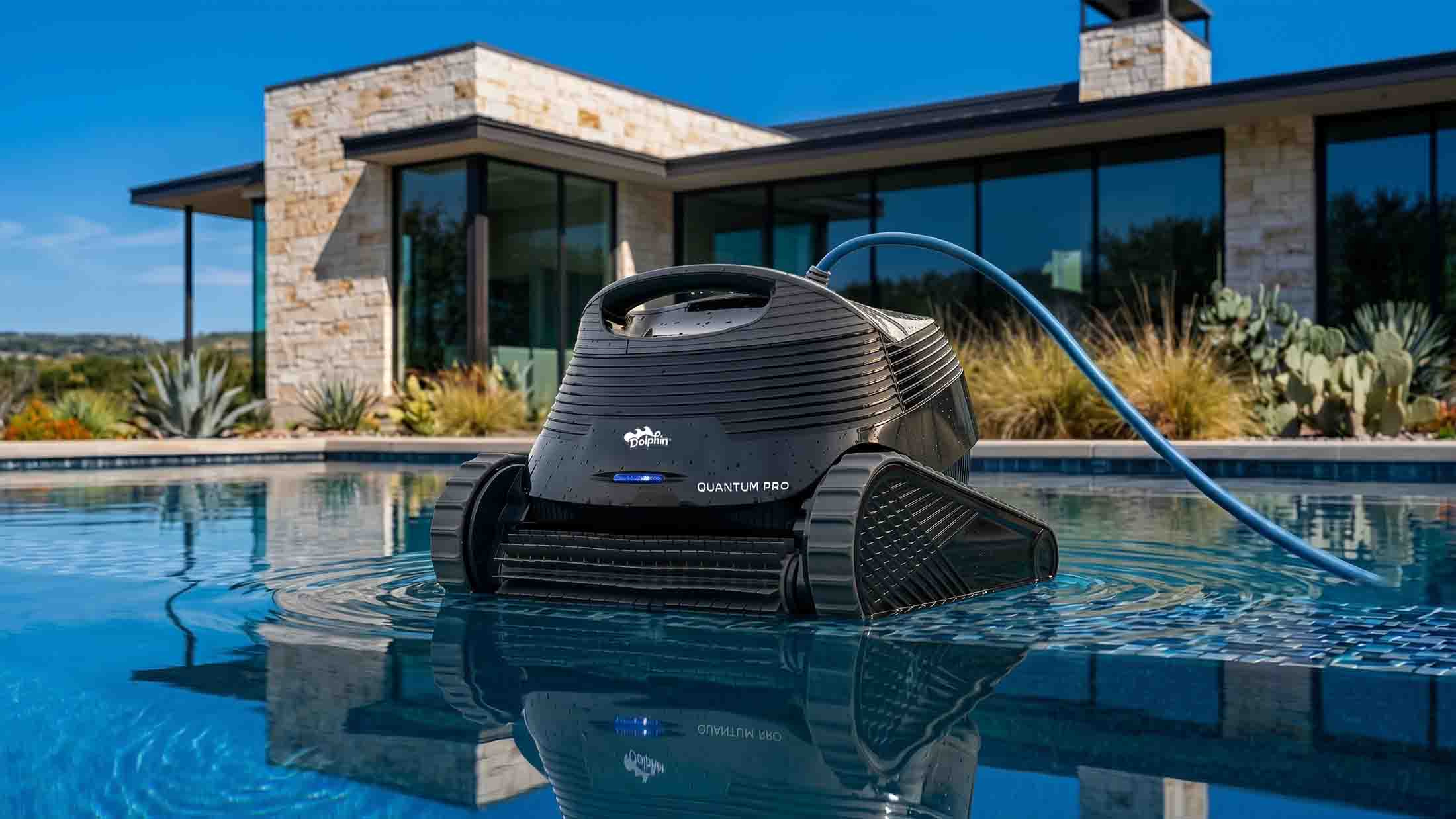
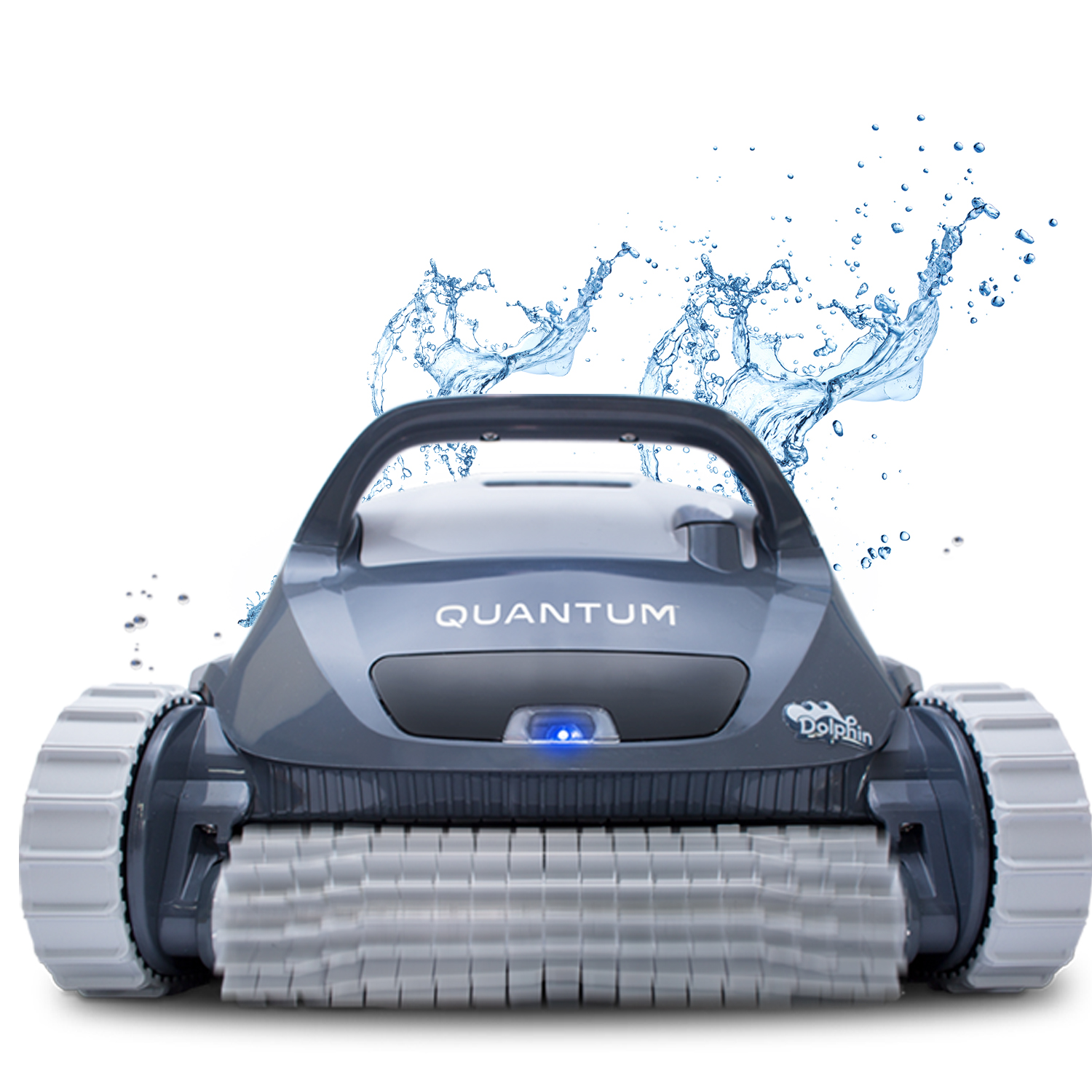
Choose the Quantum when the seating end bothers you more than the lift does. Of the five Dolphins compared here, it alone lists stairs, sun shelves and Baja ledges as areas it cleans, along with floor, walls and waterline, so it is the most likely to work its way onto broad entry steps and a bench. Likely is the right word: molded seats and footwells are still beyond its published range. It scrubs the waterline, where body oils collect in warm water, includes NanoFilter panels for fine debris, and has an anti-tangle swivel on its cable. It weighs 18.3 lb and costs more.
- Best for
- Owners who want the waterline scrubbed and the best chance of step and bench coverage, and can lift 18.3 lb.
- The trade-off
- An in-ground robot rated to 50 ft is far more machine than a swim spa needs. Heavier and pricier than the other two picks.
$959$659Save $300 off the list price
Temporarily out of stock
Pick 3: Lightest and lowest-priced of the three
Dolphin Escape
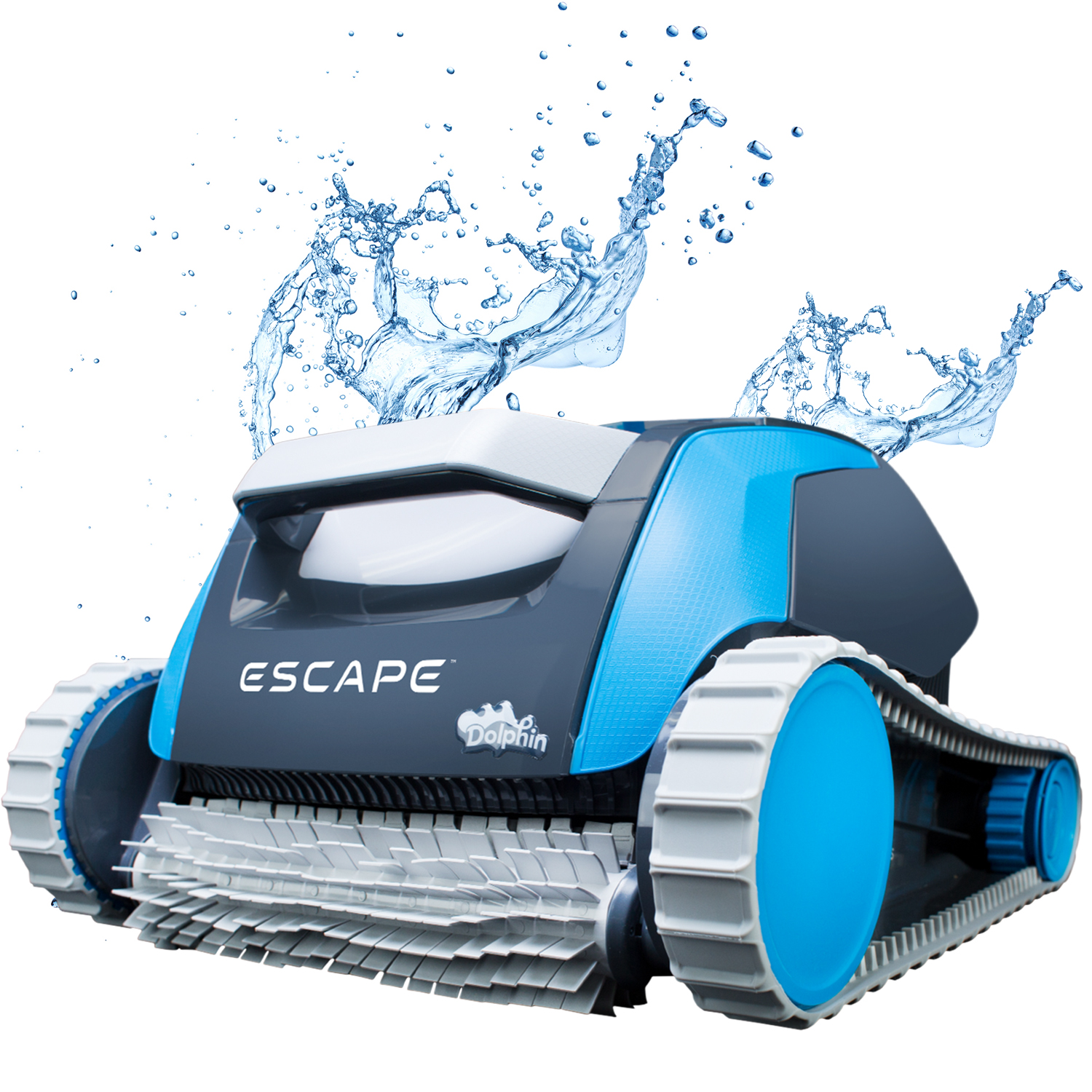
The Escape is the least robot for the least water, which is a fair way to shop for a swim spa. At 14.2 lb it is the lightest pick here, its 1.5-hour cycle is the shortest, and its 40 ft cable leaves less slack to manage on the deck. It shares the top-load MaxBin and HyperBrush of the Cayman. It ranks third because no obstacles are published for it, and a swim spa is mostly obstacles at one end. Keep it to the swim lane and it does the job for the lowest price of the three.
- Best for
- Budget-minded owners of a smaller swim spa who mainly want the swim-lane floor kept clear.
- The trade-off
- No published obstacle list and no waterline cleaning. Like the others, it is not published for swim spas.


Side by side
Cayman, Quantum and Escape side by side.
| Specification | Dolphin Cayman | Dolphin Quantum | Dolphin Escape |
|---|---|---|---|
| Price today | $1049 | $1599 | $659 |
| Pool length | Up to 33 ft | Up to 50 ft | Up to 33 ft |
| Cable | 50 ft | 55 ft with anti-tangle swivel | 40 ft |
| Cycle time | 2 hours | 2 hours | 1.5 hours |
| Filtration | MaxBin basket with fine panels; NanoFilter panels optional | XXL MaxBin basket with standard and NanoFilter panels | MaxBin basket; NanoFilter panels optional |
| Scheduling | Timer: every day | Weekly timer: every day, every 2 days or every 3 days | Optional Automation Timer: every 24, 48 or 72 hours |
| Robot weight | 14.6 lb | 18.3 lb | 14.2 lb |
| Warranty | 2 years | 2 years | 2 years |
What to look for
What decides it in a swim spa.
-
Water temperature.
Swim spas are usually kept warmer than pools, and some owners run them at hot-tub temperatures. Each robot's manual gives a maximum water temperature. Check it against the temperature you actually keep. If you run the spa hot, let it cool into range before a cycle, or do not use a robot.
-
Weight over the wall.
You will lift the robot over a spa wall, often from a step or a raised deck, with water draining out of it. Every pound counts. The picks here run from 14.2 to 18.3 lb, and the larger in-ground robots weigh 20 lb or more.
-
Molded contours.
A robot is built for a floor that meets walls. Seats, footwells, armrests and jet recesses are shapes it will bump into, climb partway or skip. Expect a clean floor and walls in the swim lane, and plan on a spa vacuum for the seating end.
-
Jets and currents.
Swim jets, current generators and air blowers push a robot around and can lift it off the floor. All of them must be off for the whole cycle, which means a robot in a swim spa is started by hand, not left to a schedule.
What the robot will and will not reach.
Picture the spa in zones, and be realistic about each one.
- Swim-lane floor: flat, open and the easy part. Any of the three covers it.
- Walls: these robots climb walls, but acrylic is not on any published surface list, so watch the first cycles for slipping.
- Tile or water line: only the Quantum scrubs it. With the other two, wipe it by hand.
- Steps: broad, flat steps may be reached, most likely by the Quantum. Narrow or curved steps will not.
- Molded seats, footwells and jet recesses: not covered. Use a spa vacuum or a hand brush.
Setting up a cycle in a swim spa.
Switch off the swim jets, air blowers and any water features, and let the water settle. Check the temperature against the manual's range. Take out chemical floaters, thermometers, swim tethers and loose cushions. Place the power supply on a dry surface, back from the spa by the distance the manual gives, and lay the spare cable out straight along the deck so it feeds into the water with no loops. Lower the robot in at the open swim end and let it settle flat on the floor before you start it. When the cycle ends, lift it out, let it drain over the water, and rinse the basket.
Is a robot worth it for a spa this small?
Be realistic about the saving. A swim spa floor is small enough to vacuum by hand in minutes, and a robot still leaves the seats to you. Where a robot earns its place is frequency: if the spa sits under trees or open sky, is used daily, or gathers grit from bare feet, a cycle a few times a week keeps the floor clear while you do something else. If the spa is indoors and covered, a spa vacuum alone may be all you need. Owners with both a pool and a swim spa get the most from it: buy the robot for the pool, and use it in the spa when the temperature allows.
Tips for running a pool robot in a swim spa.
- Check the water temperature against the manual before each run, especially after the spa has been heated for a soak.
- Rinse the basket after every cycle. Spa debris is fine and oily, and it clogs panels sooner than leaves do.
- Finish the seats and footwells with a spa vacuum while the robot drains.
- If the cable twists on the Cayman or Escape, which have no swivel, unplug it and straighten it on the deck before the next run.
Questions, answered
Swim spa questions, answered straight.
Is any robotic pool cleaner for swim spas approved by the spa makers?
Not that we can point to for the robots on this page. None of them is published for swim spas, and acrylic is not among their listed surfaces. Check your spa's owner documentation, or ask its maker, whether a pool robot is permitted and whether using one affects the shell warranty, before you buy.
My swim spa has a hot tub at one end. Can the robot do both?
Do not use it in the hot tub section. Hot-tub water is normally kept well above pool temperatures, likely beyond the range in the robot's manual, and the tub is all seats and footwells with almost no flat floor. Use the robot in the swim section only, if its temperature is in range, and a spa vacuum in the tub.
Will the tracks or brushes mark an acrylic shell?
We cannot promise either way, because acrylic is not on the published surface list of any robot here. Their lists do include vinyl liner and fiberglass, both smooth finishes, which is encouraging but not the same thing. Ask your spa maker, run a short supervised cycle first, and inspect the shell afterward.
Would the Premier or Sigma be better because they are more powerful?
Not for this job. Both would clean the floor, but at 20.3 and 24.6 lb they are a lot to lift over a spa wall, their cycles run 3 and 2.5 hours, and their 55 ft cables leave even more slack on the deck. Power is not what a swim spa is short of. Small and light is.
The bottom line
How to choose, in order.
Check two things first: that your water temperature is inside the robot manual's range, and that you accept hand-cleaning the seats. Then choose by what you value. For the lightest practical robot with published obstacle handling, the Cayman. For waterline scrubbing and the best chance at steps, the Quantum, if you can lift it. For the lowest price and a floor-only job, the Escape. If the spa is indoors and stays clean, a spa vacuum may be enough.
More buying guides
