



By pool type and installation
The best robotic pool cleaner for natural pools, with the limits stated first.
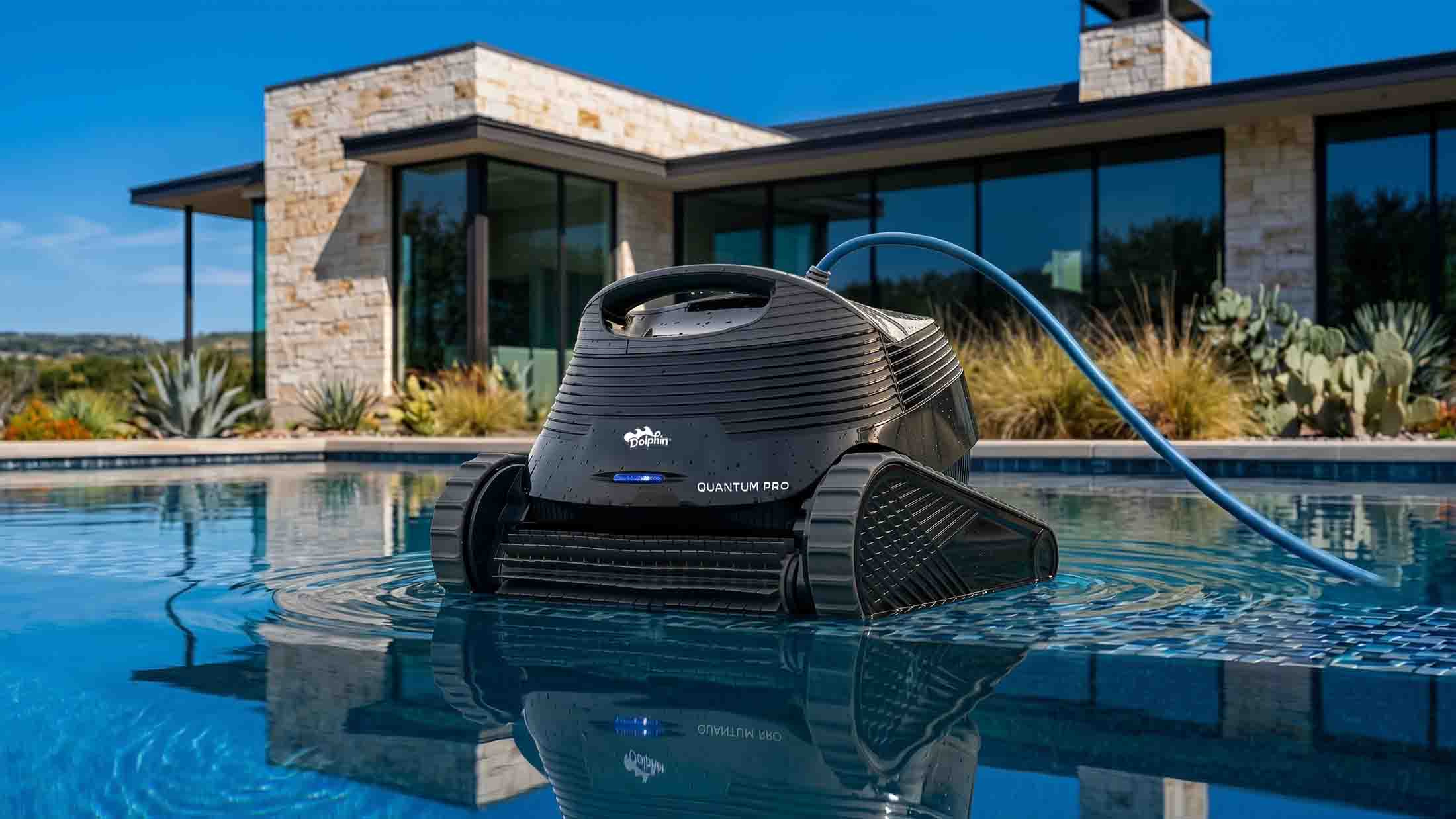
Top pick: Dolphin Quantum
Live prices · Ships free · 30 Day Trial
A robot can keep the lined swimming zone of a natural pool free of sediment, biofilm and leaf litter, provided it never enters the planted zone and goes in clean.
The quick answer
With the builder's agreement, the Dolphin Quantum is our first choice for the swimming zone of a natural pool: NanoFilter panels for fine sediment are in the box, the XXL basket takes leaf litter, and its timer keeps biofilm from settling in. Choose the Dolphin Premier if leaf fall is heavy. Neither is published as approved for natural pools, and neither belongs among the plants.
Know this first
No robot on this page is published by its maker as approved for natural swimming pools. What follows covers the lined swimming zone only: the robot must be kept out of the planted regeneration zone, gravel beds and any loose substrate. Check with your pool's builder before you buy or run one.
The honest starting point for the best robotic pool cleaner for natural pools is that nobody publishes one. A natural swimming pool swaps chlorine for plants and biological filtration, and robot makers write their specifications around conventional pools. Treat everything here as practice, not approval, and ask your builder before a robot goes in.
In practice a robot can do useful work in one part of the pool: the lined swimming zone. On a smooth liner or a concrete floor it collects the fine sediment that drifts in from the regeneration zone, brushes the biofilm that coats walls within days, and picks up leaf litter before it rots into nutrients. We also rank the Sigma and the Cayman below, each for a narrower case.
The picks, ranked
Four robots for the swimming zone, in order.

$1999$1599Save $400 off the list price
Temporarily out of stock
Pick 1: First choice for the lined swimming zone
Dolphin Quantum
Natural pool dirt arrives in two sizes at once, leaf litter and fine sediment, and the Quantum is equipped for both. The XXL MaxBin basket holds the leaves, and a full set of NanoFilter panels in the box holds the silt. Dual HyperBrushes spinning at twice the speed of standard brushes work on biofilm across floor, walls and waterline, and a 2-hour cycle is short enough to repeat often. Set the timer on the power supply to every day, every 2 days or every 3 days.
- Best for
- Lined or concrete swimming zones up to 50 ft that collect both leaves and fine sediment.
- The trade-off
- It climbs onto steps and shelves, so a shallow submerged divider may not stop it. Check the boundary before trusting it alone.

$2499$1949Save $550 off the list price
Temporarily out of stock
Pick 2: Heavy leaf litter around the swimming zone
Dolphin Premier
Where a natural pool sits among trees and reeds that shed in the fall, the Premier's oversized leaf bag is the better tool for the bulk, and its NanoFilters swap in for the sediment once the leaves are out. Both come in the box as part of the Multi-Media system. The 3-hour cycle, the longest here, gives a large swimming zone a thorough pass. Its 3-year warranty matches the Sigma's as the longest in this guide.
- Best for
- Larger swimming zones up to 50 ft bordered by trees or heavy planting that sheds.
- The trade-off
- No app, a 3-hour cycle and a higher price than the Quantum. Like every pick, it is not published for natural pools.

$2999$2349Save $650 off the list price
Temporarily out of stock
Pick 3: Fine sediment and stubborn biofilm
Dolphin Sigma
The Sigma is the fine-cleaning specialist. Its NanoFilters are described as filtering down to 2 microns, its quad scrubbing brushes put four brushes on the biofilm where the other picks put two or one, and SmartNav 3.0 with an onboard gyroscope lays down an orderly pattern across the whole floor. The app scheduler sets runs by day and time. It sits third because its cartridges are not suited to leaf litter, which a natural pool nearly always has.
- Best for
- Swimming zones open to the sky with few trees nearby, where the dirt is nearly all fine.
- The trade-off
- Highest price of the four, 24.6 lb to lift, and cartridges that fill quickly when leaves blow in.
$1299$1049Save $250 off the list price
Temporarily out of stock
Pick 4: Smaller swimming zones up to 33 ft
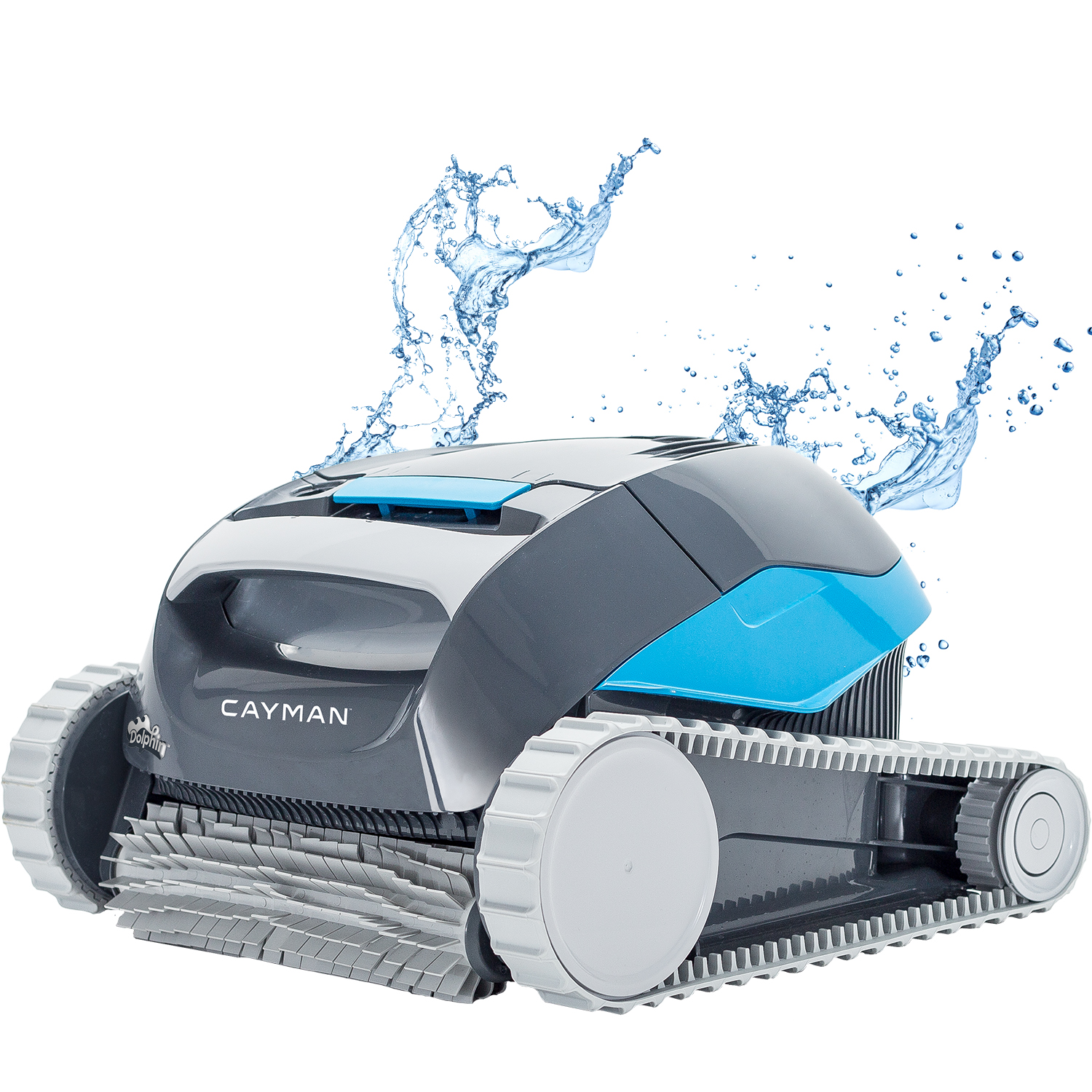
Dolphin Cayman
Many natural pools have a modest swimming zone, and for one up to 33 ft long the Cayman covers the floor and walls for less. Its timer has a single setting, every day, which happens to be the right rhythm for biofilm. The MaxBin basket with fine panels handles leaf litter and coarser sediment, and its 14.6 lb weight makes it the simplest of the four to lift out and rinse. For the finest silt, add the optional NanoFilter panels.
- Best for
- Compact swimming zones that need the floor and walls cleaned every day.
- The trade-off
- The film at the water's edge is left to you, since it does not scrub the waterline, and the fine panels that silt calls for are an add-on.


Side by side
How the four compare.
| Specification | Dolphin Quantum | Dolphin Premier | Dolphin Sigma | Dolphin Cayman |
|---|---|---|---|---|
| Price today | $1599 | $1949 | $2349 | $1049 |
| Pool type | In-ground | In-ground | In-ground | In-ground and above-ground |
| Pool length | Up to 50 ft | Up to 50 ft | Up to 50 ft | Up to 33 ft |
| Cleans | Floor, walls, waterline, sun shelves and stairs | Floor, walls and waterline | Floor, walls and waterline | Floor and walls |
| Cable | 55 ft with anti-tangle swivel | 55 ft with 360° anti-tangle swivel | 55 ft with 360° anti-tangle swivel | 50 ft |
| Filtration | XXL MaxBin basket with standard and NanoFilter panels | Multi-Media: NanoFilters, oversized leaf bag and standard fine filters | NanoFilters and standard filter cartridges | MaxBin basket with fine panels; NanoFilter panels optional |
| Robot weight | 18.3 lb | 20.3 lb | 24.6 lb | 14.6 lb |
| Warranty | 2 years | 3 years | 3 years | 2 years |
What to look for
What decides it in a natural pool.
-
A hard, smooth swimming zone
A robot needs a continuous smooth surface under it. Vinyl liner, which is PVC, is on every pick's published surface list. EPDM rubber is on none of them, so the builder's view matters. Gravel, planting baskets and loose stone are off limits: a robot draws them into its intake and churns up the bed.
-
Fine sediment
The dirt in a natural pool is mostly fine: silt, plant fragments and the soft brown layer that settles overnight. Standard filter panels pass much of it straight back into the water. NanoFilters hold it. The Quantum, Premier and Sigma include them; on the Cayman they are an optional add-on.
-
Biofilm that returns within days
With no chlorine in the water, a slippery film forms on walls and floor quickly. It belongs to the way the pool works, but in the swimming zone most owners want it kept thin. Frequent short runs do more than one long weekly clean, so a timer earns its place.
-
Nothing foreign in the water
The biology that keeps the water clear is sensitive to pool chemicals. A robot that has ever run in a chlorinated or salt pool carries residue in its filter, brushes and body. It has to be washed thoroughly with fresh water before it enters a natural pool, and it should not travel between the two.
Wash the robot before it goes in.
A robot is a mechanical cleaner: brushes, a pump and a filter. It adds nothing to the water unless it brings something with it. One that has spent a season in a chlorinated or salt pool holds residue in the filter panels, the brushes and the body. Before its first natural pool run, hose it down inside and out with fresh water, rinse the panels until the water runs clear, and let everything dry.
After each run, empty the basket onto a garden bed and hose the panels over the lawn, never back into the pool. The sediment you caught carries the nutrients that feed algae, and taking it out of the system is the point.
Set the boundary and watch the first runs.
Walk the edge of the swimming zone before the first cycle. Note where the liner gives way to gravel, where planting baskets sit, and whether the divider between zones breaks the surface. A wall that rises above the water keeps a robot in. A submerged wall or a gentle shelf may not, because these robots climb.
Place the power supply so the floating cable crosses open water, not the planting, and set it back from the edge by the distance in the manual. Then stay for the first two or three cycles. If the robot gets over the divider, stop there and ask the builder for a barrier or a different routine before running it unattended.
What a robot will not do here.
It will not clean the regeneration zone, and it should never be asked to. Thinning plants, lifting sludge from the gravel and skimming the surface stay manual jobs. It will not clear green or cloudy water either; that is the biology's work. And it will not stop biofilm from returning, only keep it thin.
On warranty, ask before you buy how cover applies in a pool the maker has not published the robot for. Chat with a Dolphin Expert and we will talk it through for your pool.
Running a robot in a natural pool.
- Get the builder's agreement first, and ask specifically about the liner material, the divider between zones and floor fittings such as aerators or drains.
- Fit the NanoFilter panels for everyday sediment, and change to the standard panels, or the Premier's leaf bag, while leaves are falling.
- Empty and rinse the filter after every cycle or two. Fine sediment blinds a fine panel quickly.
- Lift the robot out when plants are being cut back, and before any treatment the builder prescribes for the water.
Questions, answered
Natural pool questions.
Is any robotic pool cleaner for natural pools approved by its manufacturer?
None of the robots in this guide is published as approved for natural swimming pools. Owners do run them in the lined swimming zone, and that is the use this page describes, but it is practice, not a published rating. Your builder's guidance comes first.
Will a robot harm the plants or the biological filter?
Kept in the swimming zone and washed before its first run, a robot adds nothing to the water. The harm comes when it wanders into the planted zone, where it can uproot plants and pull gravel into its intake, or when it carries chemical residue in from another pool.
How often should a robot run in a natural swimming pool?
More often than in a chlorinated pool, because biofilm regrows within days. Every day or every 2 days through the swimming season is a sensible starting point; then adjust to what you see on the walls. The Quantum and Premier timers offer both settings. The Cayman's timer runs every day only.
Does a robot work on an EPDM rubber liner?
EPDM is not on the published surface list of any robot here; vinyl liner is on all of them. Rubber liners are also often laid with folds at the corners, and a fold can catch a robot. Ask the builder, and if you go ahead, watch the first cycles closely around folds and seams.
The bottom line
The decision rule for a natural pool.
Start with the builder, not the robot. If the swimming zone is smooth, bounded and yours to clean mechanically, choose by debris: the Quantum for a mix of leaves and sediment, the Premier where leaf fall is heavy, the Sigma where the dirt is all fine, the Cayman for a swimming zone under 33 ft. Wash it before the first run, keep it out of the plants, and run it often.
More buying guides
