



By debris and dirt problem
The best robotic pool cleaner for twigs, and the finger-length rule.
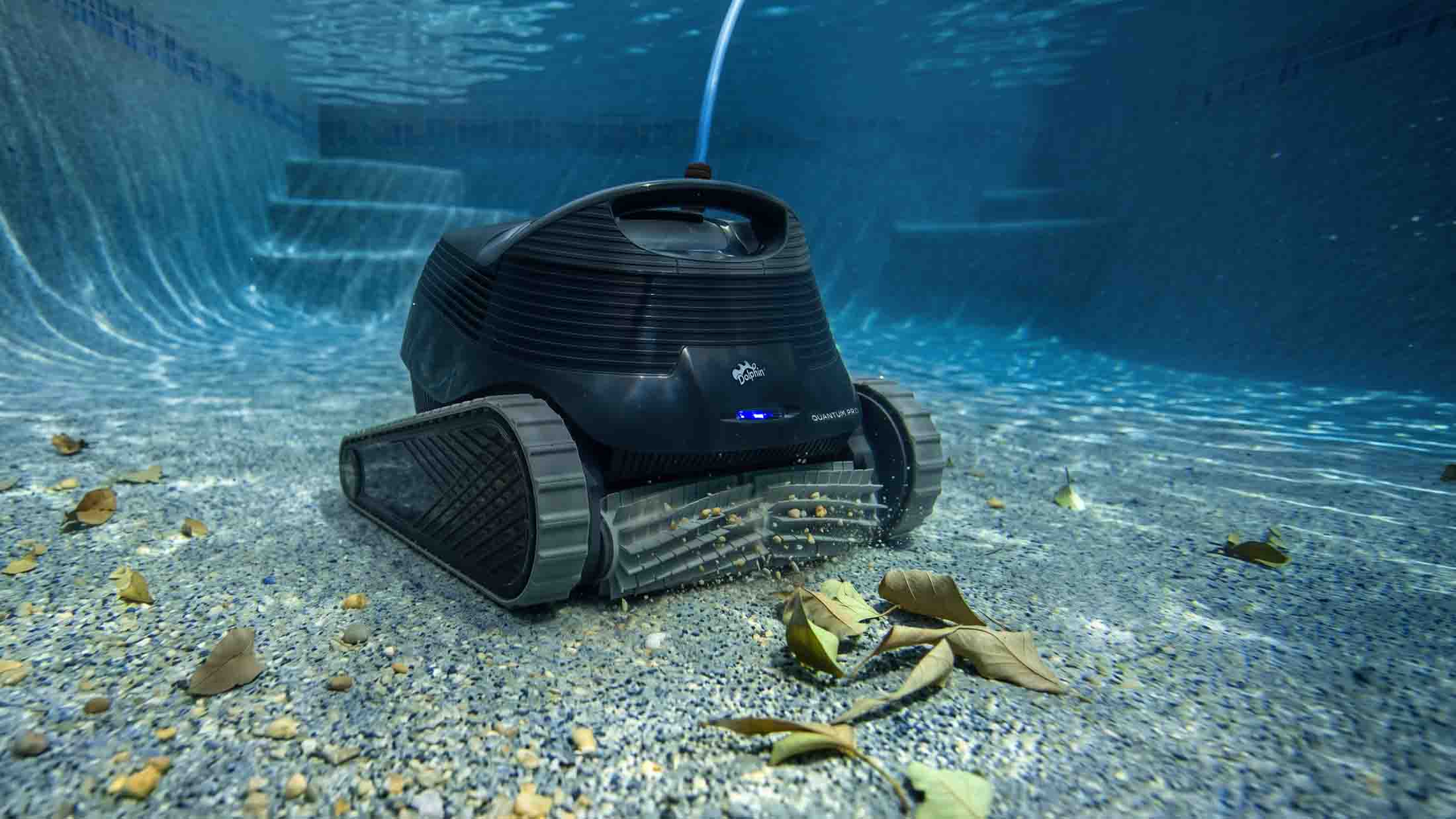
Top pick: Dolphin Quantum
Live prices · Ships free · 30 Day Trial
A robot will collect short twigs all day; it is the long ones that bridge the intake and stop pickup, so basket room and a quick hand pass matter more than power.
The quick answer
The Dolphin Quantum is our first choice for twigs: its XXL MaxBin is a big, open, top-load basket with room for short sticks, on a robot rated for pools up to 50 ft. Choose the Dolphin Premier instead if twigs come with heavy leaf fall, because its oversized leaf bag takes both. On any robot, net anything longer than a finger before the cycle.
With twigs, length is the whole problem. A stick shorter than your finger tumbles into the intake and rides up into the basket. A longer one lands across the opening, bridges it, and from then on the robot drives over leaves and dirt without collecting much. So the best robotic pool cleaner for twigs is partly a question of the robot and partly a question of what you remove before it starts.
On the robot side, what helps is an open basket or bag with real volume, media coarse enough to keep water moving, and easy access to the underside when something wedges. That puts the Quantum and Premier ahead, the Cayman next for pools up to 33 ft, and the Sigma last, because fine cartridges are the wrong media for sticks.
The picks, ranked
Our picks for twigs, in order.

$1999$1599Save $400 off the list price
Temporarily out of stock
Pick 1: Roomiest open basket for short sticks
Dolphin Quantum
Short twigs need somewhere to go, and the Quantum gives them the XXL MaxBin: a rigid, open basket with over 400 sq in of filter area that lifts out of the top with one click, tips out in one motion and rinses under a hose. With the standard panels fitted, water keeps moving through bark and twig ends, backed by 4,000 GPH from dual commercial-grade motors.
Its coverage includes stairs and sun shelves, where blown sticks often come to rest, and it is the lowest-priced of the 50 ft robots here.
- Best for
- In-ground pools up to 50 ft that collect short twigs, bark and seed litter week in, week out.
- The trade-off
- It will not swallow long sticks any better than the others; net those first. Its warranty is 2 years.

$2499$1949Save $550 off the list price
Temporarily out of stock
Pick 2: Best when twigs arrive with heavy leaf fall
Dolphin Premier
Twigs rarely fall alone. Where the same trees drop leaves by the armful, the Premier's oversized leaf bag takes sticks and leaves together, and its Multi-Media system lets you change to standard fine filters or NanoFilters in seconds once the yard has been cleaned up. Dual commercial-grade ProLine motors move 4,500 GPH, matched here only by the Sigma.
A full-filter indicator on the power supply tells you when the bag is full, which is useful after a windy night, and the warranty runs 3 years.
- Best for
- Wooded lots where sticks, leaves and seed pods come down together and volume is the daily problem.
- The trade-off
- No app, and a three-hour cycle; it also costs more than the Quantum, so compare the live prices on the cards.
$1299$1049Save $250 off the list price
Temporarily out of stock
Pick 3: Lightest to lift and check, for pools to 33 ft
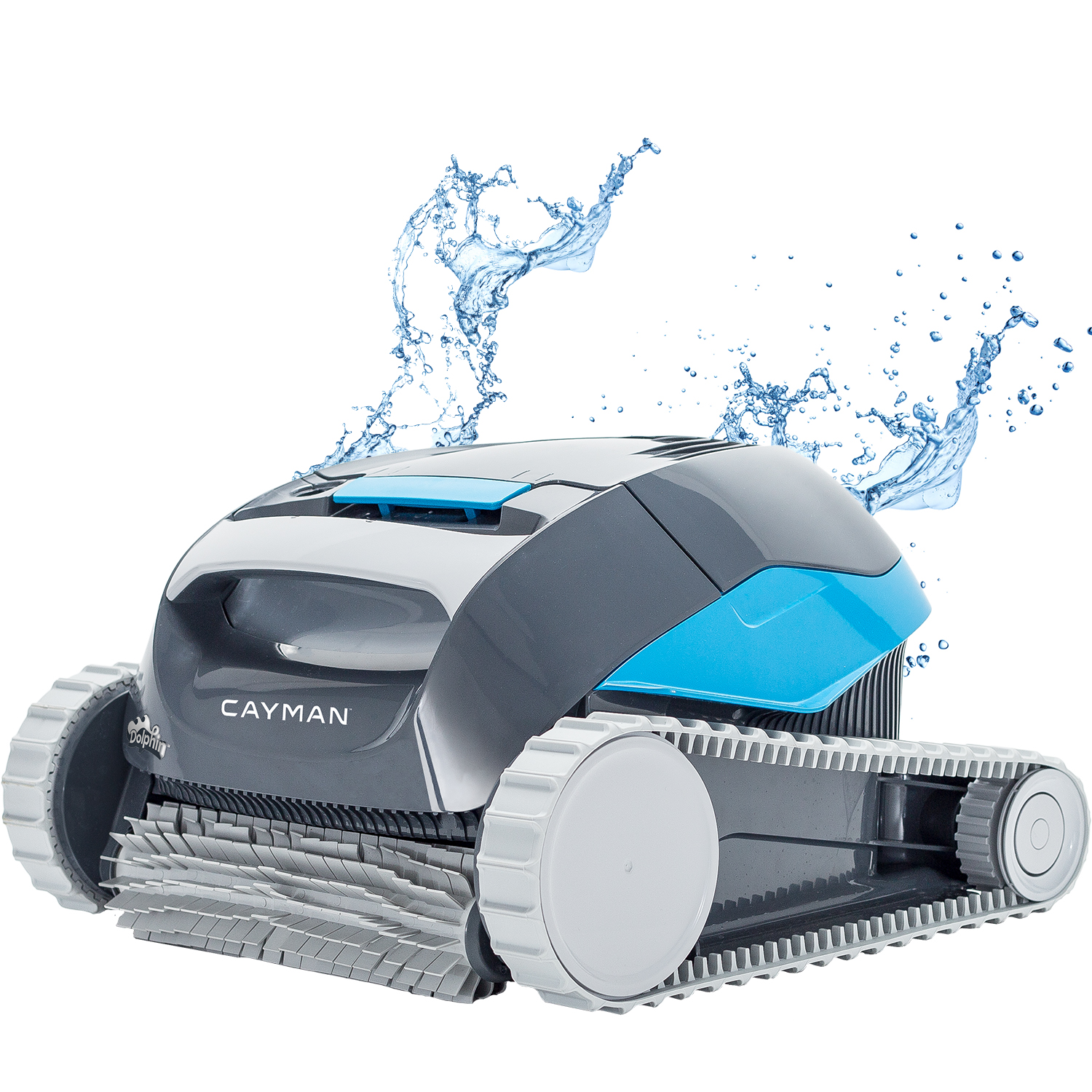
Dolphin Cayman
In a pool up to 33 ft, in-ground or above-ground, the Cayman is the sensible twig robot. Its MaxBin basket is 50% larger than standard Dolphin filters and empties through a top hatch with one tab, so short sticks tip straight out. At 14.6 lb it is the lightest of the four picks, which helps when you turn it over to check the intake.
It ranks third because the basket is smaller than the Quantum's, there is one HyperBrush, and the 50 ft cable has no swivel.
- Best for
- Smaller pools under trees, and owners who want a robot that is easy to lift out and inspect.
- The trade-off
- Rated to 33 ft only, floor and walls only, and the cable needs untwisting by hand from time to time.

$2999$2349Save $650 off the list price
Temporarily out of stock
Pick 4: For pools where twigs are the exception
Dolphin Sigma
The Sigma is a very capable cleaner aimed at a different problem. Its three ProLine motors, quad scrubbing brushes and SmartNav 3.0 with an onboard gyroscope are built for thorough scrubbing and fine filtration, and its filters are cartridges. Cartridges are the wrong media for sticks: bark and twig ends block them early, and they take longer to rinse than a basket.
Choose it if your pool sees the odd twig after a storm but its everyday debris is dust and silt. Fit the standard cartridges in stick season.
- Best for
- Pools with fine debris most of the year and only occasional sticks, where scrubbing and app control come first.
- The trade-off
- Highest price here and the heaviest to turn over at 24.6 lb; cartridges need frequent rinsing when twigs and bark are about.


Side by side
Compare the four twig picks.
| Specification | Dolphin Quantum | Dolphin Premier | Dolphin Cayman | Dolphin Sigma |
|---|---|---|---|---|
| Price today | $1599 | $1949 | $1049 | $2349 |
| Filtration | XXL MaxBin basket with standard and NanoFilter panels | Multi-Media: NanoFilters, oversized leaf bag and standard fine filters | MaxBin basket with fine panels; NanoFilter panels optional | NanoFilters and standard filter cartridges |
| Filter access | Top-load, one-click open | Top-load, no tools | Top hatch, one-tab emptying | Cartridges |
| Brushes | Dual HyperBrush | Dual scrubbing brushes | HyperBrush | Quad scrubbing brushes |
| Flow rate | 4,000 GPH | 4,500 GPH | Over 4,000 GPH | 4,500 GPH |
| Cycle time | 2 hours | 3 hours | 2 hours | 2.5 hours |
| Cleans | Floor, walls, waterline, sun shelves and stairs | Floor, walls and waterline | Floor and walls | Floor, walls and waterline |
| Scheduling | Weekly timer: every day, every 2 days or every 3 days | Weekly timer: every day, every 2 days or every 3 days | Timer: every day | Weekly scheduler by day and time |
| Warranty | 2 years | 3 years | 2 years | 3 years |
What to look for
What to judge a robot on when sticks are the debris.
-
Open volume in the basket.
Twigs do not pack flat the way leaves do. They cross each other and hold space open, so a basket fills in fewer sticks than you would expect. The Quantum's XXL MaxBin and the Premier's oversized leaf bag give them the most room of the robots in this guide.
-
The intake is the limit, not the motor.
Every robot draws debris through an opening on its underside. Anything longer than that opening is wide can bridge it, and no amount of flow pulls a stick through sideways. This is why the finger-length rule applies to every robot here, whatever its GPH.
-
Access when something wedges.
You will turn the robot over now and then to free a stick. Top-load filter access makes the routine part quick, and a lighter robot makes the turning-over part easier: the Cayman weighs 14.6 lb, the Quantum 18.3 lb, the Premier 20.3 lb and the Sigma 24.6 lb.
-
Media that suits coarse debris.
NanoFilters and fine cartridges are for silt and pollen. Loaded with bark, twig ends and the leaf litter that travels with them, they block early. Use the standard panels in the Quantum, the supplied panels in the Cayman or the leaf bag in the Premier during stick season, and save the finest media for afterwards.
The finger rule, and what to do after a storm.
Hold a twig against your index finger. If it is shorter, leave it for the robot. If it is longer, forked, or thicker than a pencil, it comes out with a leaf rake first. That one habit prevents most stalled cycles, because the sticks that cause trouble are almost never the small ones.
After a storm, do not send the robot in first. Make a hand pass along the floor with a leaf rake, empty the skimmer basket, then start the cycle. A robot finishes a floor well; it is poor at clearing a storm's worth in one go.
When the robot starts leaving debris behind.
A robot that drives its usual pattern but leaves a trail has usually lost flow, and under trees a stick is the first suspect. Unplug the power supply, lift the robot out and work through this list in order. If all four are clear and pickup is still weak, chat with a Dolphin Expert before running more cycles.
- The basket or bag: empty it even if it looks half full. Crossed twigs hold leaves in a plug.
- The intake on the underside: look for a stick lying across the opening.
- The impeller: a twig end here cuts flow sharply. Your manual shows how to reach it.
- Brushes and tracks: remove anything wedged between a brush and the body.
What a robot will not do with sticks.
It will not collect branches, floating sticks or anything wedged in a drain cover, and it will not prevent the brown tannin marks that bark and twigs can leave on plaster or vinyl if they sit for weeks. Sticks that float belong to the skimmer and the net, and branches come out by hand. What the robot does well is the daily pickup of short pieces, bark crumbs and bud scales, which is most of what a tree drops in an ordinary week.
Before, during and after stick season.
- Net anything longer than a finger before each cycle; it takes less time than freeing a jammed intake afterwards.
- Fit standard panels or the leaf bag, not NanoFilters, while twigs are falling.
- Turn the robot over once a week and look at the intake, brushes and tracks.
- Prune dead wood that overhangs the water; fewer sticks in the pool is the cheapest fix there is.
Questions, answered
Questions about twigs and robots.
Can twigs break a robotic pool cleaner?
A twig is far more likely to stop a robot than to harm it. A stick across the intake or against the impeller cuts pickup, and one caught in a track can halt the robot in place. Unplug the power supply, remove the stick and run it again. What you should not do is keep running cycles with something jammed.
How long a twig can a pool robot pick up?
There is no published figure for any of these robots, so use a practical rule: shorter than your finger, straight and thinner than a pencil goes in; longer, forked or thick gets netted first.
Is a leaf bag or a basket better for sticks?
Both work, for different yards. The Premier's oversized leaf bag suits sticks mixed with a lot of leaves. The Quantum's XXL MaxBin is rigid, so twigs tip out in one motion and the panels hose clean. What matters more than the container is the media: NanoFilters block quickly with bark, so leave them out.
Should I take the robot out of the pool before a storm?
Yes, if you can. A storm drops more and larger debris than any robot is meant to collect, and a scheduled cycle running through it just fills the basket and stalls on sticks. Lift the robot out or pause the schedule, then put it back once you have netted the worst.
Will a robot pick up bark and mulch?
Small pieces, yes. Bark chips and mulch that blow or wash in are short enough for the intake and collect in the basket with standard panels fitted. Large nuggets behave like long twigs. Mulch also sheds fine dust, so finish with finer media.
The bottom line
The rule for twigs.
Remove the long ones by hand and let the robot take the rest. For that job in a pool up to 50 ft, the Quantum's XXL MaxBin is the pick, and the Premier is the step up when leaves pile in with the sticks. For 33 ft or less, the Cayman is lighter and costs less. Buy the Sigma for fine debris, not for sticks. Every robot here comes with 30 day returns and no restocking fees.
More buying guides
