



By steps, ledges and tricky features
Best robotic pool cleaner for curved walls: round, kidney and freeform pools.
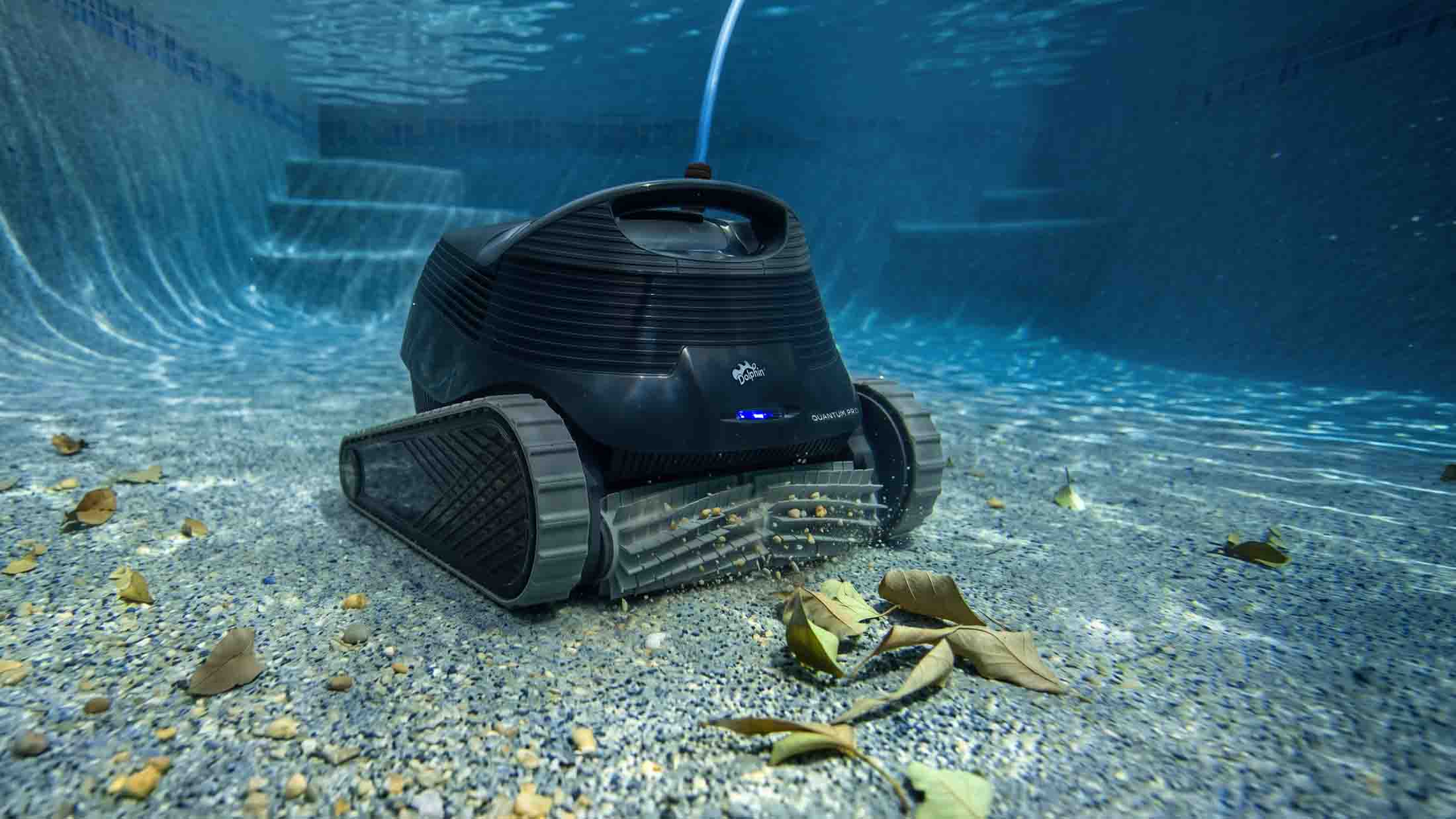
Top pick: Dolphin Quantum
Live prices · Ships free · 30 Day Trial
A curve keeps turning the robot the same way and changes the angle of every wall climb, so the cable and the navigation matter more than the brushes.
The quick answer
For an in-ground pool with curved walls, the Dolphin Quantum is our first choice: freeform and oval are among its published shapes, and the swivel on its 55 ft cable sheds the twist that curves build. The Sigma is the step up when the outline is truly irregular, thanks to its gyroscope. For an above-ground round, see the Cayman, the fourth pick below.
A rectangular pool gives a robot four straight walls and four predictable turns. Curved walls take that away. On a round above-ground pool, a kidney, a freeform lagoon or a pool with deep radius corners, the robot meets the wall at a slightly different angle every time, and the wall keeps steering it the same direction. Finding the best robotic pool cleaner for curved walls means asking how each robot copes with those two things.
The first is climbing: a robot that meets a curve at a slant can ride up crooked and peel off early. The second is the cable, which collects a twist with every turn in the same direction. Navigation deals with the first, a swivel with the second.
The picks, ranked
Four picks for pools without straight lines.
$1999$1599Save $400 off the list price
Temporarily out of stock
Pick 1: Best all-rounder for in-ground curves
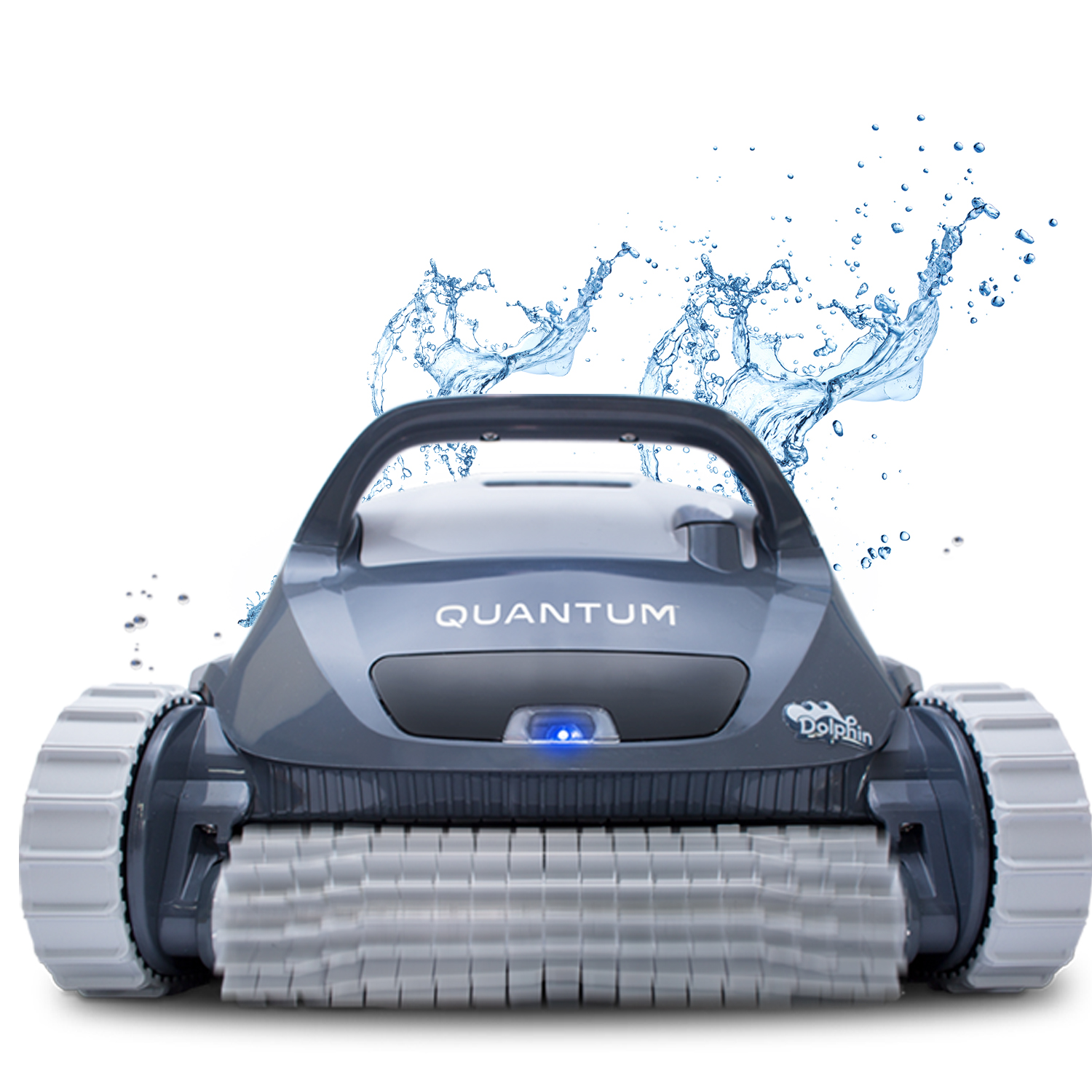
Dolphin Quantum
Freeform and oval are both in the Quantum's published shapes, and its 55 ft cable has an anti-tangle swivel, the part a curved pool works hardest. HyperGrip continuous rubber tracks steady the climb when the robot meets a wall at a slant. It also scrubs the waterline, which on a kidney or lagoon pool is a long, winding tile band that is tedious to brush by hand. Stairs and sun shelves, common in curved pools, are in its coverage too. It is the lowest-priced 50 ft robot in this guide.
- Best for
- Kidney, oval and freeform in-ground pools up to 50 ft, especially those with a shelf or curved steps.
- The trade-off
- No gyroscope. In a very irregular outline with bays and peninsulas, the Sigma keeps a more orderly pattern.
$2999$2349Save $650 off the list price
Temporarily out of stock
Pick 2: Best sense of direction on irregular outlines
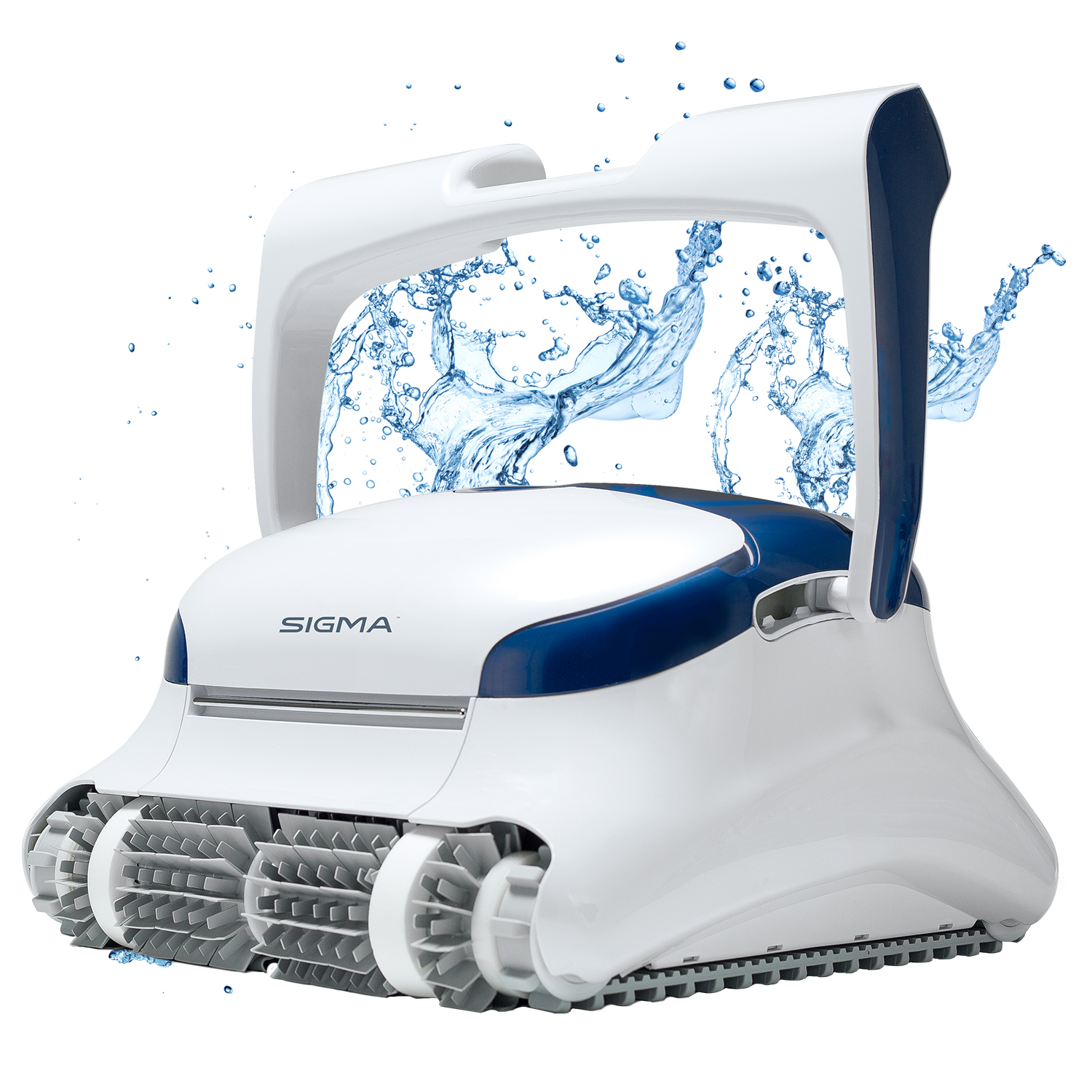
Dolphin Sigma
A gyroscope does not care what shape the walls are. The Sigma's SmartNav 3.0 uses one to track its own heading, so where no two walls are parallel it still lays down orderly passes and corrects itself when a curve turns it. The 55 ft cable has a 360-degree swivel, and four scrubbing brushes backed by three ProLine motors at 4,500 GPH work the waterline band hard. It is second only on cost: it is the highest-priced robot here, and a plain oval or kidney does not need what it adds.
- Best for
- Large, truly irregular freeform pools where a robot has to keep its bearings.
- The trade-off
- The most expensive pick and the heaviest at 24.6 lb, and more than a simple oval needs.
$2499$1949Save $550 off the list price
Temporarily out of stock
Pick 3: Best for curved pools under trees
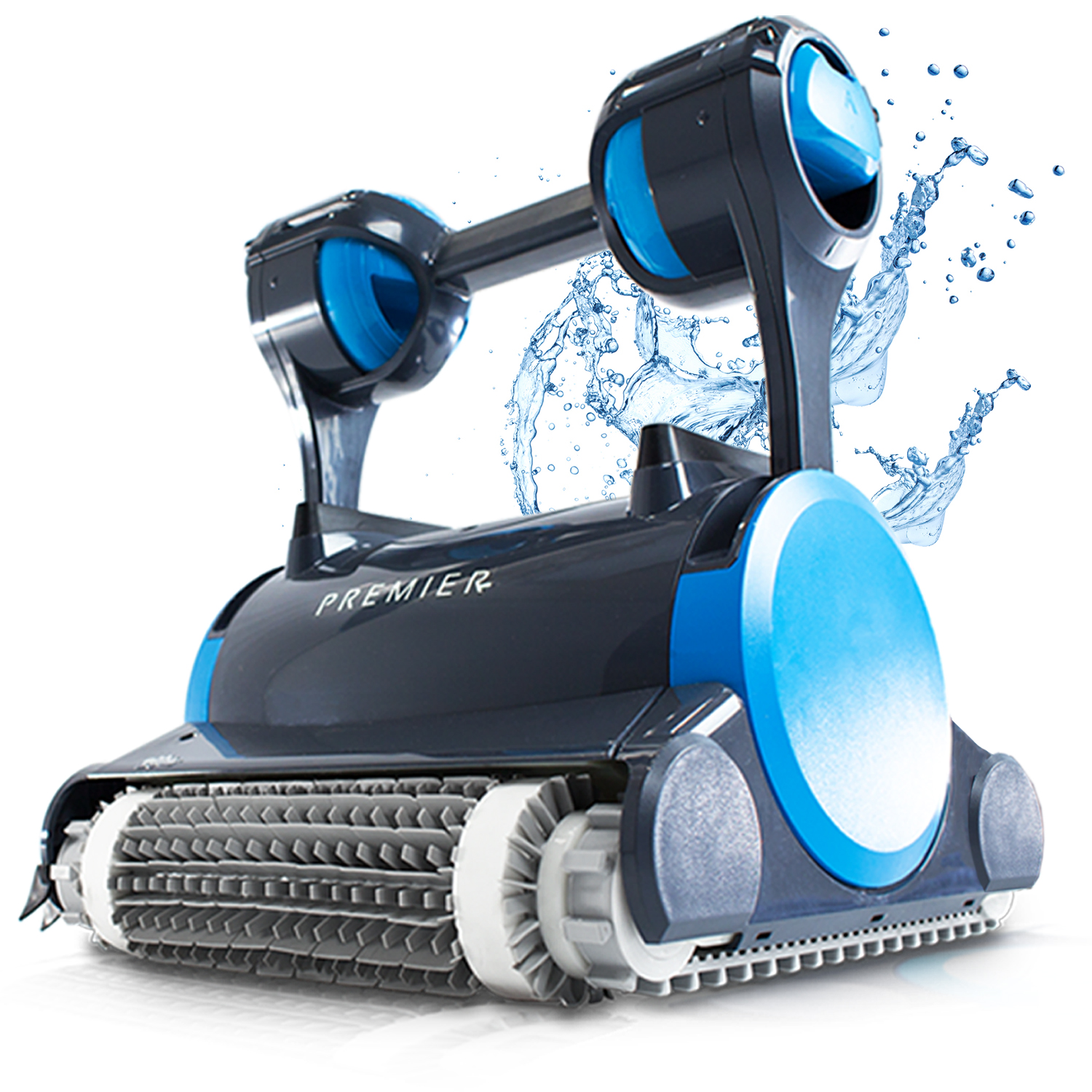
Dolphin Premier
The Premier has the same kind of 360-degree swivel on a 55 ft cable, so one-way turning does not wind it up, and freeform, oval and L-shaped are all in its published shapes. Curved pools are often landscaped pools, with planting right up to the coping, and that is where the oversized leaf bag in its Multi-Media set earns its place. It ranks third because it costs more than the Quantum and does not list shelves or stairs in its coverage.
- Best for
- Landscaped freeform pools with heavy leaf fall, and owners who want the longer warranty.
- The trade-off
- No phone control of any kind, and for curves alone it costs more than the Quantum.
$1299$1049Save $250 off the list price
Temporarily out of stock
Pick 4: Best for above-ground rounds and small ovals
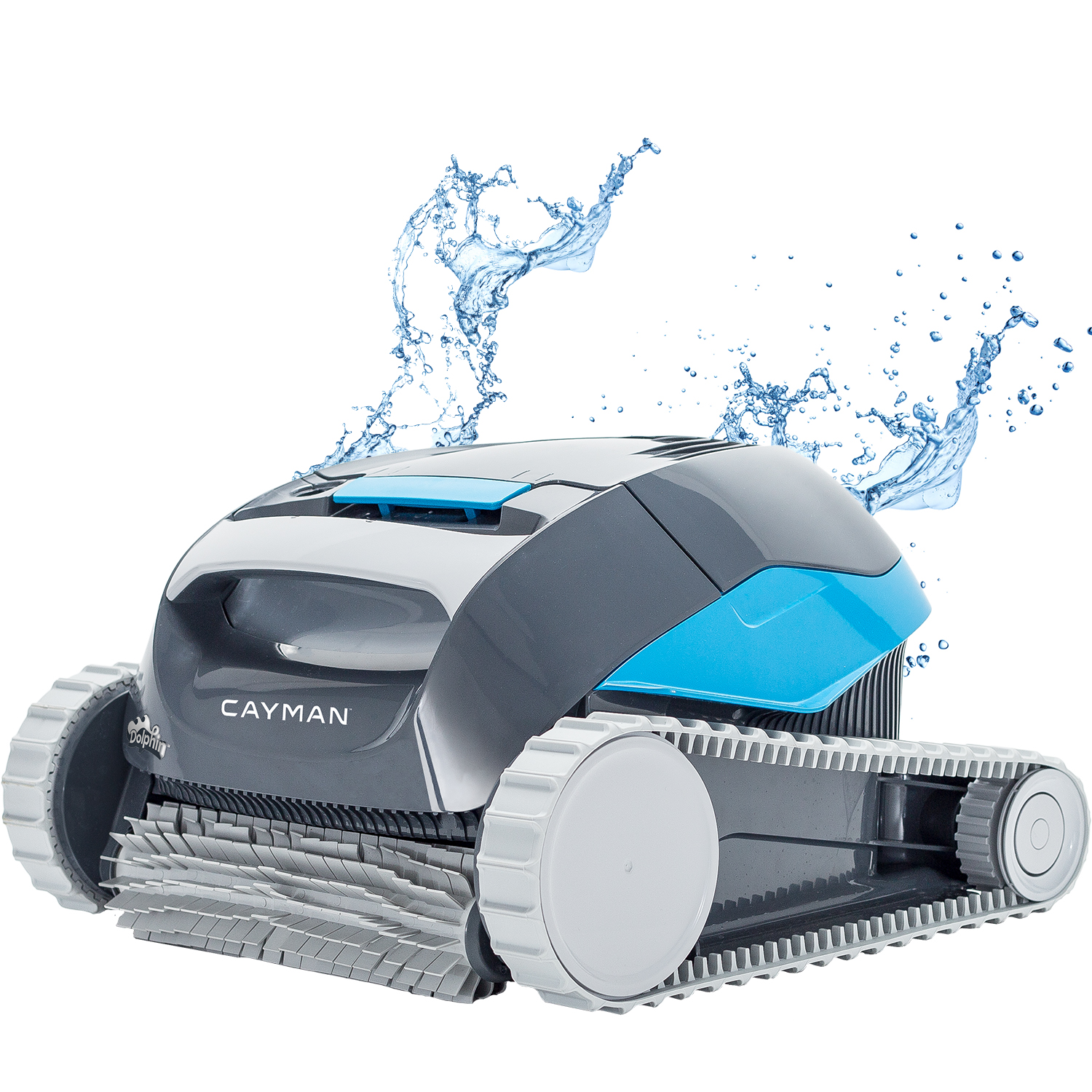
Dolphin Cayman
The Cayman is the one pick here rated for above-ground pools as well as in-ground ones, up to 33 ft. In a round or oval above-ground pool it cleans the floor and the base of the wall well on a 2-hour cycle, and its 50 ft cable reaches across the larger sizes. That cable has no swivel, and a round pool turns a robot one way all cycle, so plan on laying it out straight every few uses to let the twist out.
- Best for
- Round and oval above-ground pools, and small curved in-ground pools of 33 ft or less.
- The trade-off
- No swivel and no waterline scrubbing. The cable needs straightening by hand, more often in a round pool.


Side by side
Cables, navigation and pool types compared.
| Specification | Dolphin Quantum | Dolphin Sigma | Dolphin Premier | Dolphin Cayman |
|---|---|---|---|---|
| Price today | $1599 | $2349 | $1949 | $1049 |
| Cleans | Floor, walls, waterline, sun shelves and stairs | Floor, walls and waterline | Floor, walls and waterline | Floor and walls |
| Traction | HyperGrip tracks | HyperGrip tracks | HyperGrip tracks | HyperGrip tracks |
| Navigation | SmartNav 2.0 | SmartNav 3.0 with gyroscope | SmartNav 2.0 | SmartNav 2.0 |
| Cable | 55 ft with anti-tangle swivel | 55 ft with 360° anti-tangle swivel | 55 ft with 360° anti-tangle swivel | 50 ft |
| Robot weight | 18.3 lb | 24.6 lb | 20.3 lb | 14.6 lb |
| Warranty | 2 years | 3 years | 3 years | 2 years |
What to look for
What a curve asks of a robot.
-
A cable that copes with one-way turning
In a rectangle, left and right turns roughly cancel. Around a curve the robot keeps turning the same way, so twist builds in the cable faster. The Quantum, the Premier and the Sigma have a swivel that releases it. The Cayman and Escape have none, so their cables need straightening by hand.
-
Navigation that holds a line
Scanning navigation has fewer straight edges to work from on a curved wall. SmartNav 2.0 handles it: oval and freeform appear in the published shapes for all four picks. The Sigma adds an onboard gyroscope, which gives it a sense of heading that does not depend on the walls at all.
-
Grip on the way up
A robot that arrives at a slant loads its drive unevenly. Tracks spread that load, and all four picks use HyperGrip tracks. Water flow helps hold the robot to the wall, so a clean filter climbs better than a full one.
-
How firm the wall is
In-ground curves are rigid. Above-ground walls flex, and the climb depends on how firm the wall and liner are. Expect a clean floor and wall base in any above-ground pool; how far up the wall the robot gets varies from one pool to the next.
What a curve does to a robot.
Picture a robot in a kidney pool. It drives across the floor, meets the wall at an angle, and the curve nudges it around instead of turning it back square. On the next crossing the same thing happens in the same direction. After an hour the robot has made far more turns one way than the other, and the cable has kept count.
The climb changes too. On a straight wall the robot goes up nose-first. On a curve, one side reaches the wall before the other, so it rides up at a slant and may come off sooner. None of this stops a good robot cleaning the pool. It does explain why the cable and the navigation deserve a closer look.
Above-ground rounds and ovals.
A round above-ground pool is all curve, with a flat floor and a flexible wall. The Cayman handles the floor and the base of the wall well. How far up it climbs depends on how rigid the wall and liner are, so treat upper-wall cleaning as a bonus, not a promise.
The Escape, designed for above-ground pools first and the one Dolphin of the five in these guides to list round among its published shapes, also suits these pools. It is outside this shortlist because the Cayman does the same job with 10 ft more cable. On rounds larger than about 24 ft, measure the cable run from where the power supply will sit before settling on the Escape's 40 ft cable.
In-ground curves: kidney, freeform, radius corners.
Rigid curved walls are easier than they look. Radius corners and coved floor joints actually help, because a brush follows a curve more completely than it reaches into a square corner. The harder parts are the features curved pools tend to have: a peninsula, a tight inside bend, a narrow neck between two lobes.
Place the power supply where the cable can reach every lobe without crossing a peninsula, set back from the water by the distance in your manual. Then watch the first cycle. If one bay is consistently missed, moving the power supply a few feet along the deck usually fixes it.
Setting up for a curved pool.
- Start the robot from the middle of the longest side, not from a tight bay.
- Feed in only the cable the pool needs. Spare cable floating in a round pool gets swept into loops.
- With the Cayman, stretch the cable out straight every few cycles and let it rest in the sun for an hour to relax.
- Empty the basket before a long cycle, because full water flow holds a slanted climb better.
- After the first cycle, check the tightest bend and the far lobe, and move the power supply if either was missed.
Questions, answered
Curved-wall questions, answered.
Do robotic pool cleaners work in round pools?
Yes. A round pool has no corners to trap a robot. The thing to manage is the cable, because the robot turns the same way all cycle. In an above-ground round, choose a robot rated for that kind of pool, such as the Cayman, and straighten its cable regularly.
Why does the cable twist more in a kidney or oval pool than in a rectangle?
Because the turns no longer cancel out. A curved wall steers the robot the same direction again and again, and each turn adds a little twist. A swivel releases it as it forms, which is why the three robots that have one are the safer choices for in-ground curves.
Will the best robotic pool cleaner for curved walls still climb to the waterline?
On a rigid in-ground wall, the Quantum, Premier and Sigma are built to climb and scrub the waterline, curved or straight. On a flexible wall the climb depends on wall firmness, and the Cayman does not clean the waterline in any pool.
Is a gyroscope necessary for a freeform pool?
No. Freeform is a published shape for the SmartNav 2.0 robots in this guide, and most freeform pools are cleaned well by them. The extra sensor helps when the outline is large and irregular, with bays and peninsulas where a robot can lose its pattern. That is the case for the Sigma.
Does a robot clean the cove where a curved wall meets the floor?
Usually better than it cleans a square joint. A coved transition lets the brushes stay in contact as the robot rolls from floor to wall, so there is no hard angle for debris to hide in.
The bottom line
Curves in the ground, or above it.
Decide by construction first, then by shape. In-ground kidney, oval or freeform: the Quantum, for its swivel cable and its price. A big, irregular outline: the Sigma. Trees over a landscaped lagoon: the Premier. A round or oval pool that stands above the ground, or a small curved in-ground pool of 33 ft or less: the Cayman, with its cable laid out straight and untwisted every few uses.
More buying guides
