



By steps, ledges and tricky features
Best robotic pool cleaner for tight corners, and the inch no robot reaches.
Top pick: Dolphin Quantum
Live prices · Ships free · 30 Day Trial
A robot does not fit into a corner; it scrubs it with brush width and repeated approaches, which makes brush design the spec to read first.
The quick answer
For tight corners we would start with the Dolphin Quantum: two HyperBrushes spinning at twice the speed of standard brushes, stairs in its published coverage for step corners, and NanoFilter panels included for the silt that corners hold. If corners are your main complaint and price is not, the Sigma puts four scrubbing brushes on the surface, the most contact of any robot here.
Corners are where a pool tells on you. The floor is clean, the water is clear, and there is still a grey triangle of silt where two walls meet the floor, or a green smudge behind the ladder. Anyone searching for the best robotic pool cleaner for tight corners is really asking how a boxy machine cleans a place it cannot fit into.
The answer is brush width and repetition. A robot reaches a corner with the ends of its brushes, and it gets there several times in a cycle from different directions: along one wall, along the other, and down from above. The more brush on the surface and the more approaches, the less is left behind. We will also be straight about the last inch.
The picks, ranked
Four robots for a pool with tight corners, in order.
$1999$1599Save $400 off the list price
Temporarily out of stock
Pick 1: Fast dual brushes plus step-corner coverage
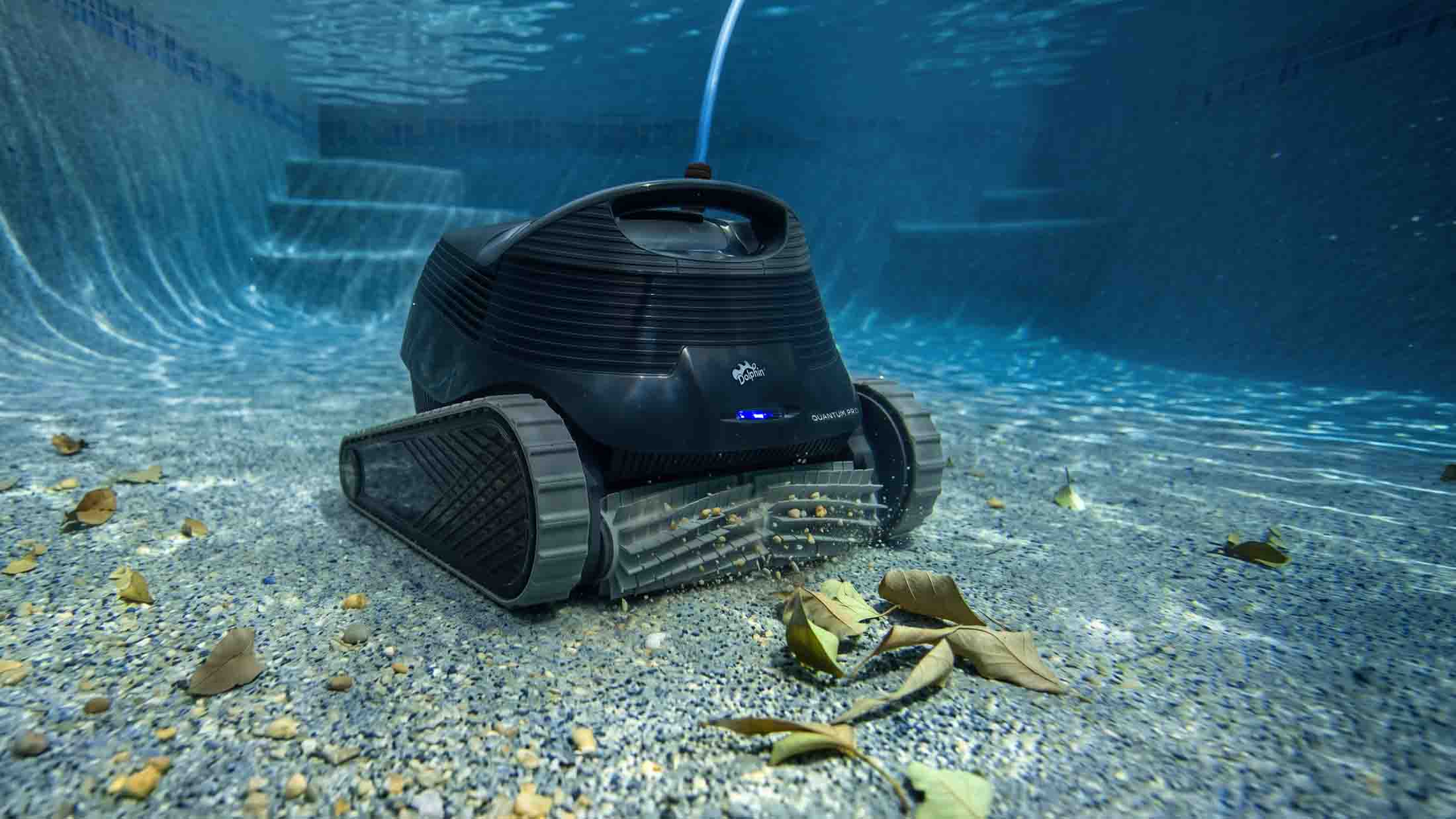
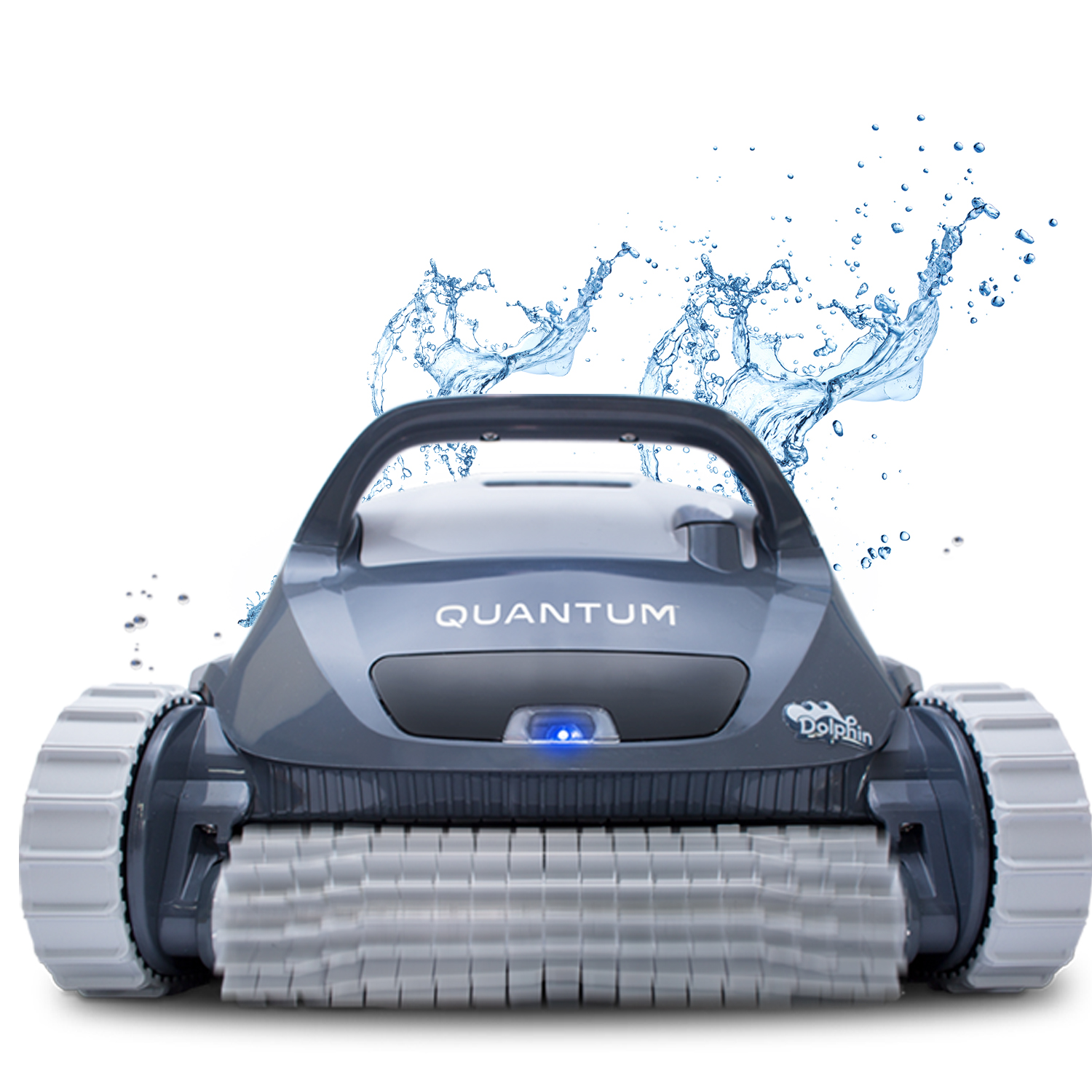
Dolphin Quantum
Two things put the Quantum first. Its dual HyperBrushes spin at twice the speed of standard brushes, so every pass along a wall-floor joint delivers more scrubbing strokes than a slower brush manages in the same time. And its published coverage includes stairs, sun shelves and Baja ledges, which is where most of a pool's corners actually are: every step has two. The full set of NanoFilter panels in the box keeps the loosened silt in the basket. It is also the lowest-priced of the three 50 ft robots here.
- Best for
- Pools with steps, a sun shelf or a bench, where most of the corners are above the floor.
- The trade-off
- Two brushes, not four. In a square-cornered pool with stubborn algae, the Sigma's quad brushes put more bristle on the joint.
$2999$2349Save $650 off the list price
Temporarily out of stock
Pick 2: Most brush contact of any pick
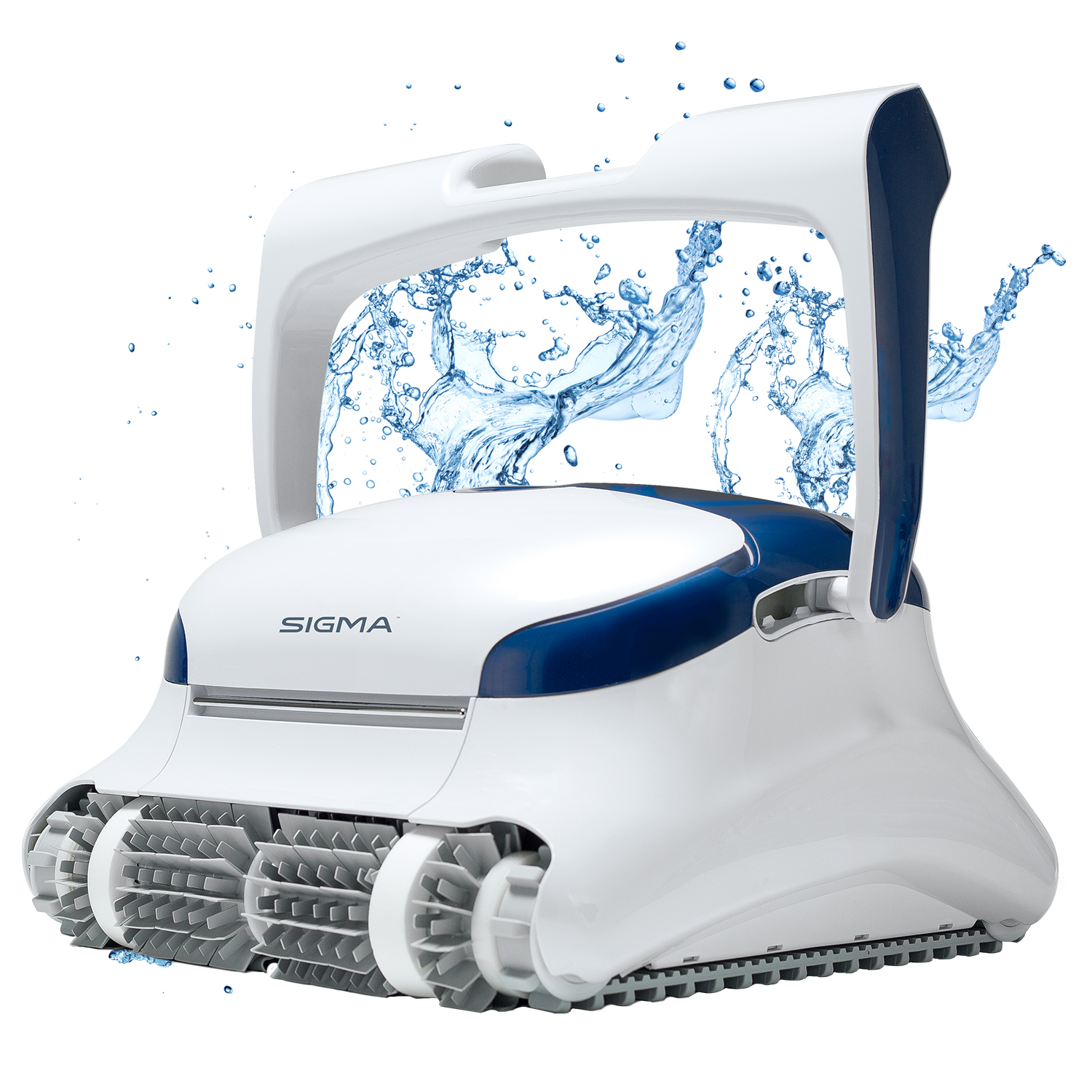
Dolphin Sigma
On brush count alone the Sigma wins this page. Four scrubbing brushes put more bristle on the surface at once than any other pick, three ProLine motors move 4,500 GPH to carry off what the brushes lift, and the gyroscope in SmartNav 3.0 keeps its route systematic, which is what brings a robot back to every corner. It is second here because it is the highest-priced robot in this guide, and its listed coverage is floor, walls and waterline, without the stairs and shelves the Quantum adds.
- Best for
- Square-cornered plaster and tile pools where algae keeps returning to the same joints.
- The trade-off
- Top price here and 24.6 lb to lift. Its filters are cartridges rather than one large basket.
$2499$1949Save $550 off the list price
Temporarily out of stock
Pick 3: Longest cycle, most return visits
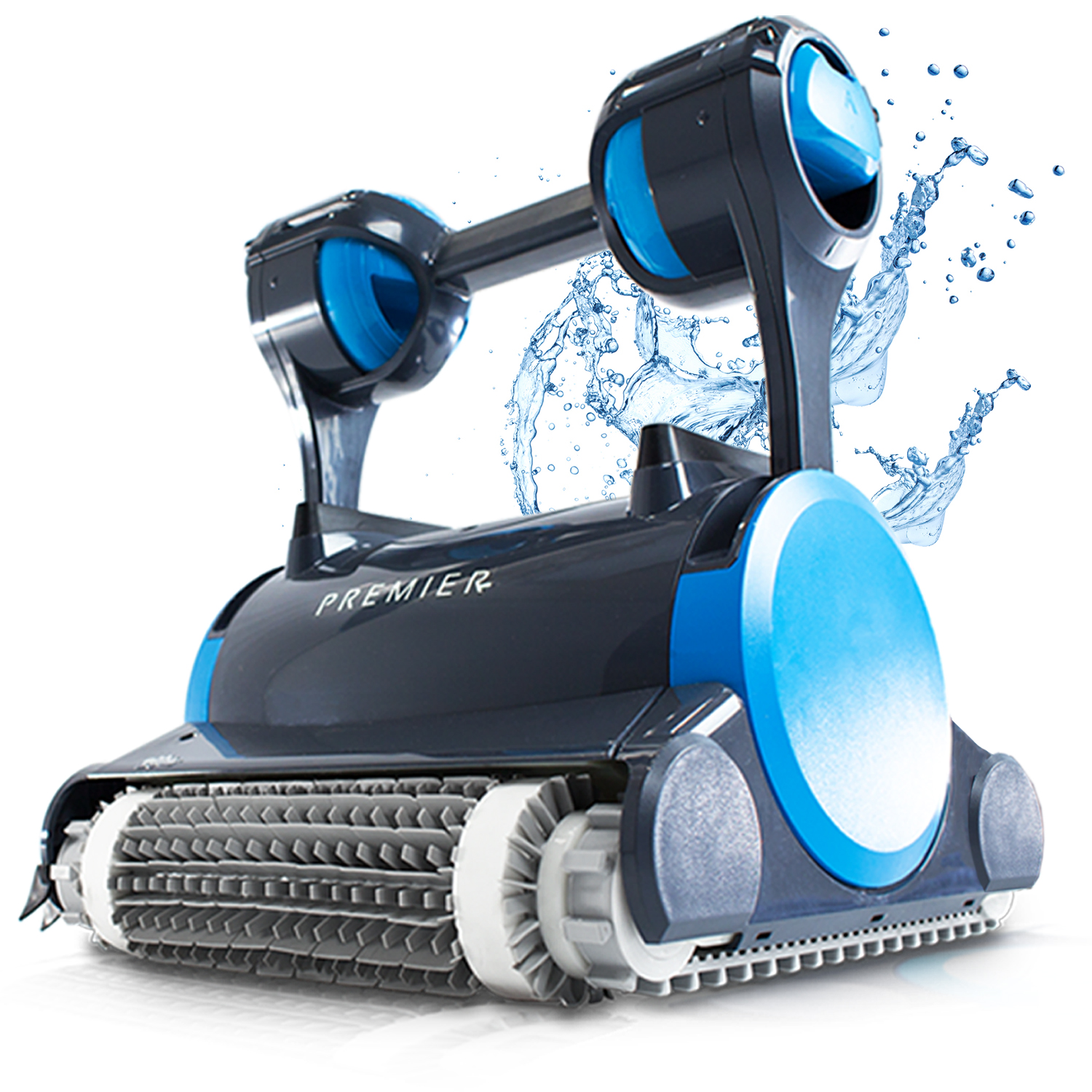
Dolphin Premier
The Premier's argument for corners is time. Its 3-hour cycle is the longest here, and a longer cycle means more trips along each wall and more return visits to every joint. Dual scrubbing brushes work the floor, walls and waterline. When the corner debris is whole leaves and not silt, the oversized leaf bag takes them without clogging, and the 3-year warranty is the other reason owners choose it. It is third because its two brushes are not the double-speed HyperBrush kind and it costs more than the Quantum.
- Best for
- Leafy pools where corners fill with silt and whole leaves, and owners who value a longer warranty.
- The trade-off
- No stairs or shelves in its listed coverage, and a higher price than the Quantum for the same brush count.
$1299$1049Save $250 off the list price
Temporarily out of stock
Pick 4: One fast brush for pools up to 33 ft
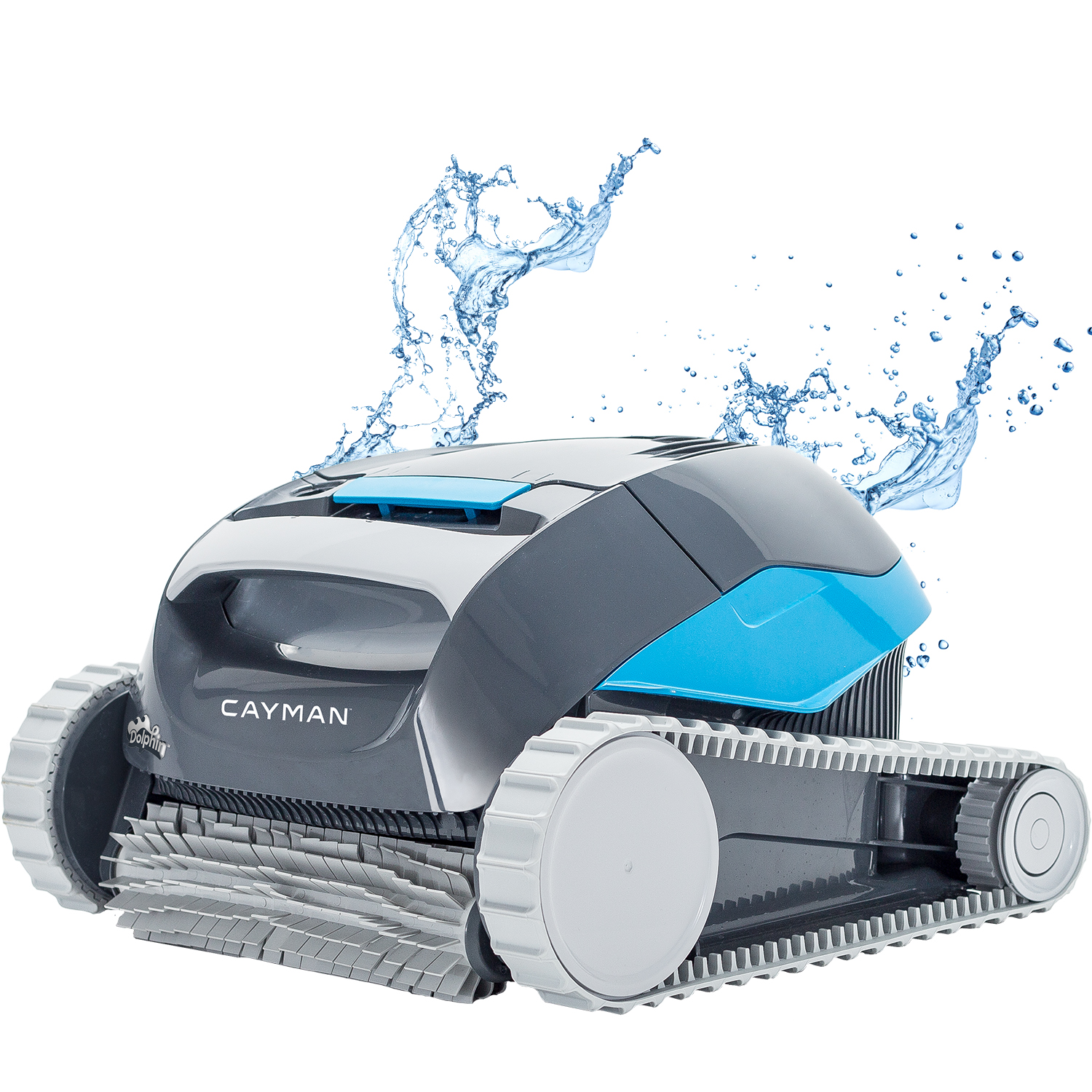
Dolphin Cayman
A smaller pool has as many corners as a big one, and the Cayman cleans them with a single HyperBrush that spins at twice the speed of standard Dolphin brushes. It covers floor and walls on a 2-hour cycle, climbs on HyperGrip tracks, and can run every day on its timer. That last point is a quiet advantage for corners: debris collected daily never gets the chance to pack down. Fine panels come standard, and NanoFilter panels for corner silt are an optional add-on.
- Best for
- In-ground pools of 33 ft or less with ordinary corner silt and no algae history.
- The trade-off
- One brush and no waterline scrubbing, so the top of each corner at the tile line is left for you.


Side by side
Brushes, cycles and filters side by side.
| Specification | Dolphin Quantum | Dolphin Sigma | Dolphin Premier | Dolphin Cayman |
|---|---|---|---|---|
| Price today | $1599 | $2349 | $1949 | $1049 |
| Cleans | Floor, walls, waterline, sun shelves and stairs | Floor, walls and waterline | Floor, walls and waterline | Floor and walls |
| Traction | HyperGrip tracks | HyperGrip tracks | HyperGrip tracks | HyperGrip tracks |
| Navigation | SmartNav 2.0 | SmartNav 3.0 with gyroscope | SmartNav 2.0 | SmartNav 2.0 |
| Cable | 55 ft with anti-tangle swivel | 55 ft with 360° anti-tangle swivel | 55 ft with 360° anti-tangle swivel | 50 ft |
| Robot weight | 18.3 lb | 24.6 lb | 20.3 lb | 14.6 lb |
| Warranty | 2 years | 3 years | 3 years | 2 years |
What to look for
What decides how clean a corner gets.
-
Brush contact
Brushes do the corner work, because suction alone will not pull film off a joint. Count the brushes and how they move: the Sigma has four scrubbing brushes, the Premier two, the Quantum two HyperBrushes at twice standard speed, and the Cayman one HyperBrush.
-
Approaches from more than one direction
A corner is three surfaces meeting. A robot that cleans floor and walls arrives along the floor and again on each climb, so the joint is brushed from several angles in one cycle. Longer cycles add approaches: 3 hours on the Premier, 2.5 on the Sigma, 2 on the Quantum and Cayman.
-
Fine filtration
What sits in a corner is mostly silt, dust and dead algae, fine enough to slip through a coarse filter and settle straight back. NanoFilter panels come in the box with the Quantum, Premier and Sigma. For the Cayman they are an optional add-on.
-
The shape of the corner itself
A radius corner, where the wall curves into the floor or into the next wall, lets the brush follow the surface. A true 90-degree corner always keeps a small pocket beyond the brush ends. Know which kind you have before you judge any robot.
Why corners get dirty first.
Water in a pool travels a loop from the returns to the skimmer and the main drain. Corners sit outside that loop. Flow slows there, so whatever is suspended drops out: dust, pollen, silt, dead algae.
Algae likes the same places for the same reason: sanitizer arrives last where water moves least. A robot helps by scrubbing those spots every cycle, but it does not replace sanitizer or balanced water. If one corner keeps going green, test the water as well.
How a robot cleans a place it cannot fit.
A robot body is a rounded box and a corner is a point. What reaches in is the brush, which runs the width of the machine. As the robot drives along a wall and turns, the brush end sweeps through part of the joint. On a later lap it arrives along the other wall and sweeps more. Wall climbs add a third angle, brushing down the vertical seam.
This is why coverage and cycle length matter as much as brush count. One approach leaves a wedge. Three approaches from three directions leave very little, and often nothing at all on a radius corner.
The last inch, and what to do about it.
No robot scrubs the final inch of a true square corner every time, because the brush ends stop just short. In most pools that leaves nothing you can see. Where it does, the fix takes a minute:
- Every week or two, run a hand brush down each vertical corner and along the step angles, pushing debris out toward the open floor.
- Do it shortly before a cycle, so the robot collects what you loosened.
- During an algae treatment, brush every corner daily. The robot picks up the dead algae afterward; it does not replace the brushing.
- Behind a fixed ladder, a narrow corner brush reaches where neither the robot nor a wide brush can.
Getting more out of each corner pass.
- Fit the NanoFilter panels when the corner debris is fine silt or dust, and go back to the standard panels when leaves arrive.
- Lift out a removable ladder before the cycle so the robot can drive into the corner behind it.
- Empty the basket before it is full. A clogged filter cuts the water flow that presses the brushes against the wall.
- If your return fittings are adjustable, angle one toward the worst corner so less settles there between cycles.
- Look at the brushes each season. Worn brushes scrub less everywhere, and corners are where it shows first.
Questions, answered
Corner questions we hear.
Can a robotic cleaner get all the way into a 90-degree corner?
Not quite. The brush reaches most of the corner over several approaches, but its ends stop just short of the point where two walls meet. On radius corners that gap disappears. On square ones, a quick pass with a hand brush every week or two deals with whatever is left.
Why does algae always start in the corners?
Because circulation is weakest there. Water moves slowly in a corner, so sanitizer is replenished slowly and fine debris settles. Regular scrubbing by a robot removes that film, but algae that keeps returning to one spot is also a reason to check your sanitizer level and the direction of the return jets.
Is the best robotic pool cleaner for tight corners simply the one with the most brushes?
Brush count is the first thing to compare, and it favors the Sigma with four. Speed and coverage count too. The Quantum's two HyperBrushes spin at twice the speed of standard brushes, and it also covers stairs and shelves. In a pool with steps or a shelf, that mix can matter more than two extra brushes.
Will a robot clean behind the pool ladder?
Only if it can get there. Robots meet the ladder legs and turn away, so the strip behind a fixed ladder is often missed. Lifting a removable ladder out for the cycle solves it. With a fixed ladder, brush that area toward the open floor before you start the robot.
Do robots clean the corners of steps?
The Quantum is the one pick here with stairs in its published coverage, so it is the likeliest to brush the treads and their inside angles. The other three list steps among the obstacles they handle, which means they work around them.
The bottom line
Which one for your corners.
Choose by the kind of corner. Steps and shelves, or a bit of everything: the Quantum. Square floor corners with algae that keeps coming back: the Sigma and its four brushes. Leaves as well as silt, and a longer warranty: the Premier. A pool of 33 ft or less: the Cayman. Whichever you pick, keep a hand brush for the last inch of a true 90-degree corner.
More buying guides
