



By debris and dirt problem
The best robotic pool cleaner for palm tree debris: seeds, fibers and all.
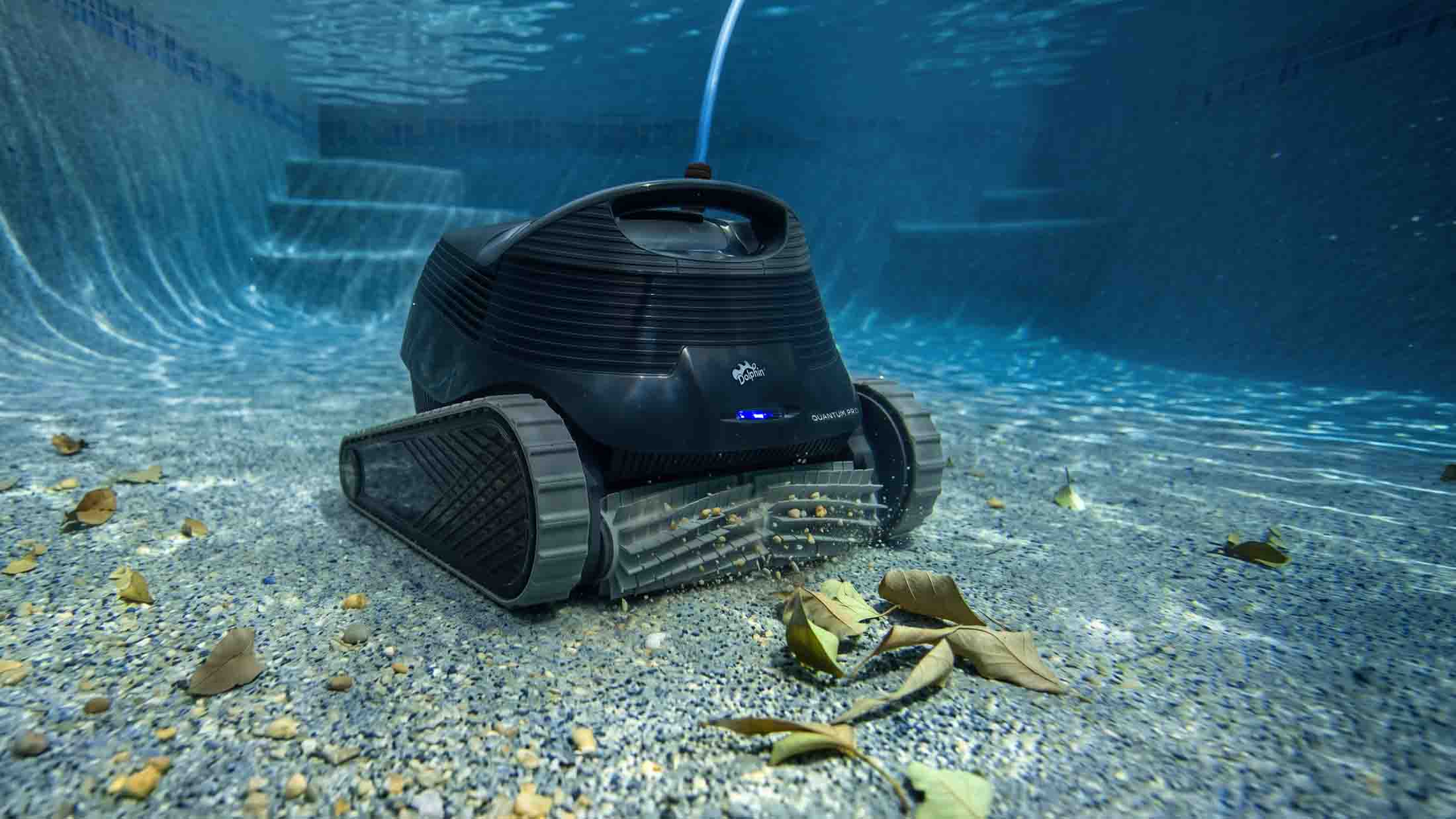
Top pick: Dolphin Quantum
Live prices · Ships free · 30 Day Trial
Palms drop seeds a robot collects easily, fibers that wrap its brushes, and fronds no robot can swallow, so buy for basket room and plan a little hand work.
The quick answer
Buy the Dolphin Quantum for most palm-lined pools. Seeds and fallen fruit are a capacity job, and its XXL MaxBin has the room for them and tips out from the top; its coverage also includes the sun shelf many of these pools have. Where queen or date palms drop fruit for weeks, the Dolphin Premier and its oversized leaf bag are the stronger choice.
A palm does not shed the way an oak or a maple does. It drops its own mix: hard round seeds and soft fruit, thousands of tiny blossoms from each flower stalk, long fibrous threads from the trunk and frond bases, and now and then a whole frond. Seeds and blossoms go in the basket. Fibers wind round brushes and tracks. Fronds and stalks are simply too big. The best robotic pool cleaner for palm tree debris has room for the first group and easy access for dealing with the second.
It should also run often, because the fruit of queen palms and date palms stains decks and plaster where it rests. The four picks below, from the Quantum to the Sigma and the Cayman, are ranked with all of that in mind.
The picks, ranked
Our ranking for pools with palms.
$1999$1599Save $400 off the list price
Temporarily out of stock
Pick 1: Best fit for palm-lined pools with a shelf
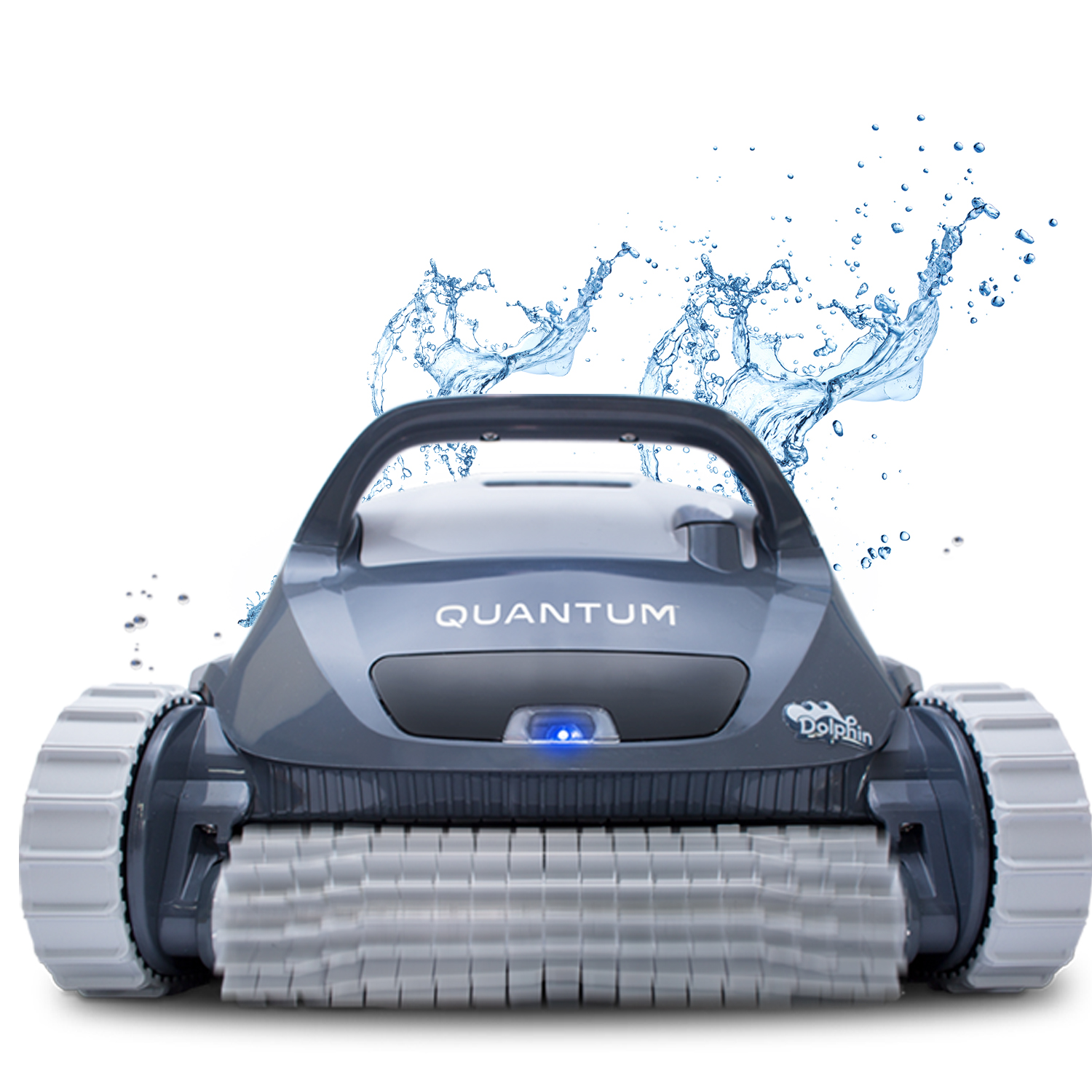
Dolphin Quantum
Pools with palms around them are very often the ones with a sun shelf or Baja ledge, and that shallow water is exactly where seeds and blossoms collect. The Quantum is the one robot in this guide whose coverage lists sun shelves, Baja ledges and stairs along with floor, walls and waterline. Seeds go into the XXL MaxBin, which opens from the top with one click.
Set the weekly timer to every day while fruit is dropping, and fit the NanoFilter panels from the box for the fine dust that comes down with the flowers.
- Best for
- In-ground pools up to 50 ft with palms nearby, particularly those with a sun shelf, Baja ledge or wide steps.
- The trade-off
- Fibers wrap its two brushes like any other robot's, and a heavy fruit drop means emptying the basket daily. The warranty is 2 years.
$2499$1949Save $550 off the list price
Temporarily out of stock
Pick 2: Best for queen and date palms in full fruit
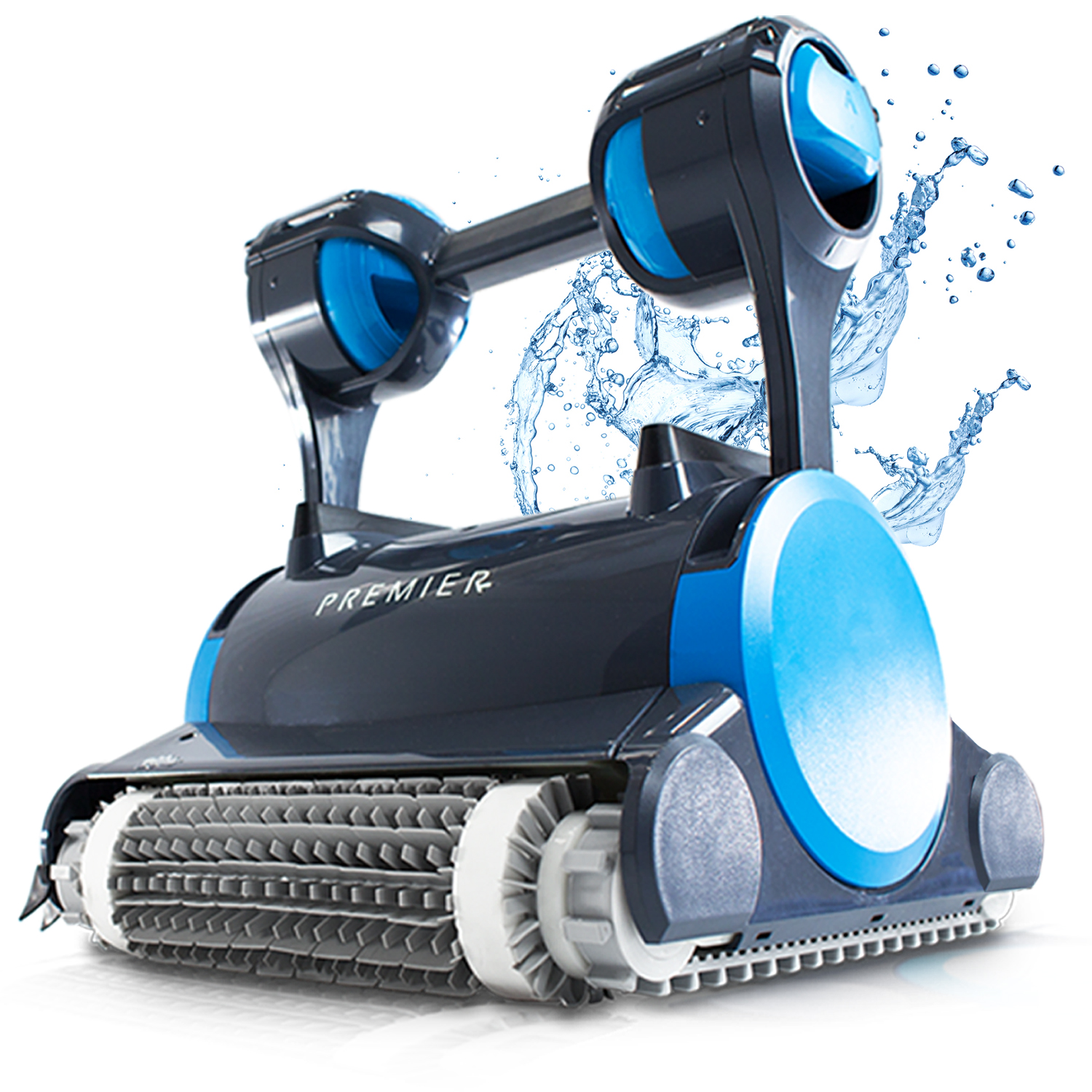
Dolphin Premier
Some palms are relentless. A mature queen palm or date palm over the water can keep dropping fruit for weeks, and that is where the Premier's oversized leaf bag justifies its price: it is made for bulk, and the Multi-Media system lets you switch to standard fine filters or NanoFilters once the fruit is finished. Flow is 4,500 GPH from dual commercial-grade ProLine motors, which helps with dense seeds that roll.
The weekly timer on the power supply handles the daily runs that keep fruit from staining, and the warranty is 3 years.
- Best for
- Pools directly under fruiting palms, where seeds arrive in volume for weeks at a stretch.
- The trade-off
- Its coverage is floor, walls and waterline, without the shelf and stairs coverage the Quantum lists, and there is no app.
$2999$2349Save $650 off the list price
Temporarily out of stock
Pick 3: For palms that stand back from the water
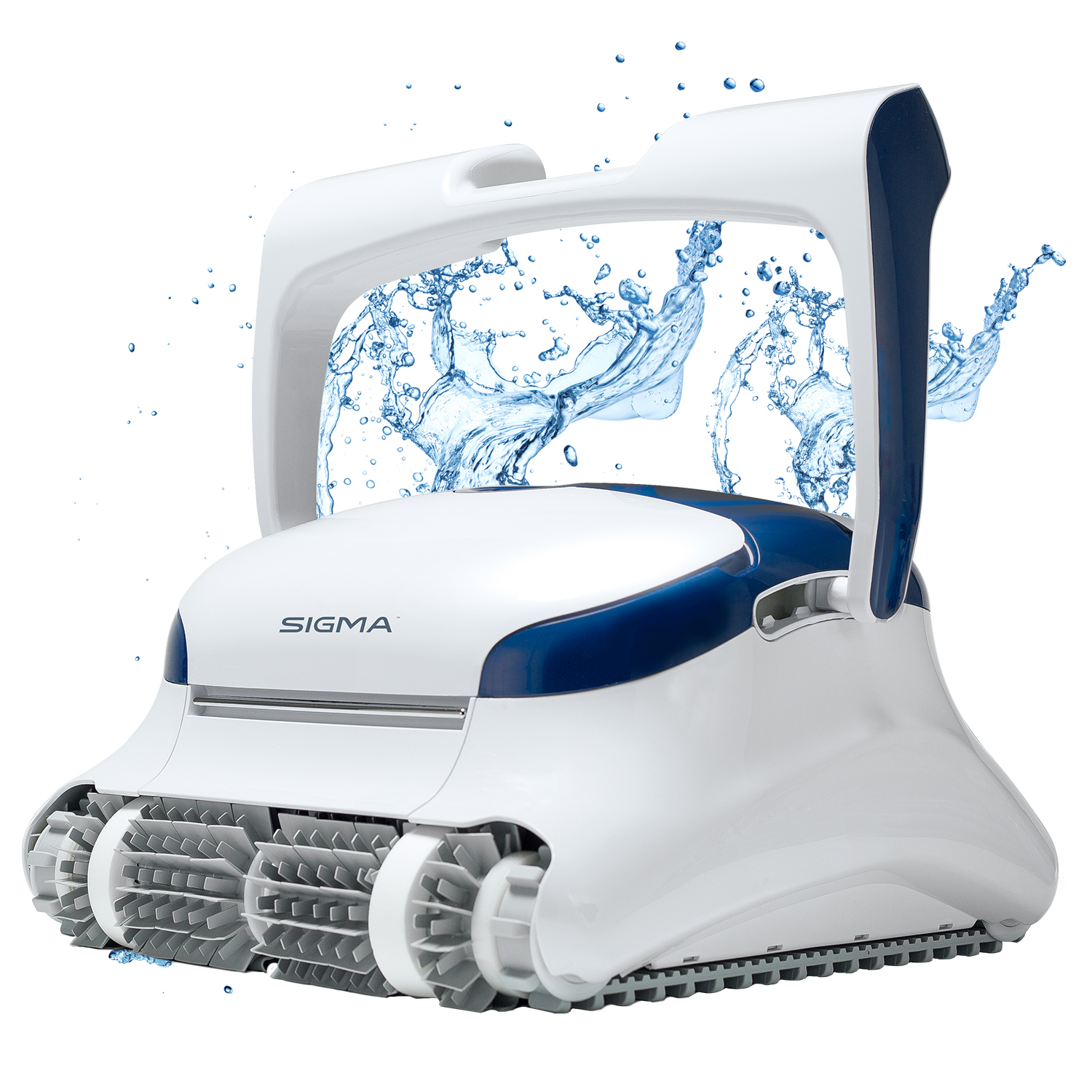
Dolphin Sigma
Where palm fruit has sat on the floor, scrubbing matters, and the Sigma brings the most of it: quad scrubbing brushes, three commercial-grade ProLine motors and 4,500 GPH, guided by SmartNav 3.0 with a gyroscope. Its NanoFilters catch the fine dust that falls with the flowers, and the app scheduler runs it on the days you choose.
It is third for two practical reasons. Its filters are cartridges, which fill quickly with seeds and take longer to rinse than a basket. And four brushes give palm fiber four places to wrap.
- Best for
- Pools with palms at a distance, where fine blossom dust is the daily debris and seeds are occasional.
- The trade-off
- Cartridges are the wrong container for a heavy seed drop, and it is the highest-priced, heaviest robot of the four.
$1299$1049Save $250 off the list price
Temporarily out of stock
Pick 4: For compact pools up to 33 ft under palms
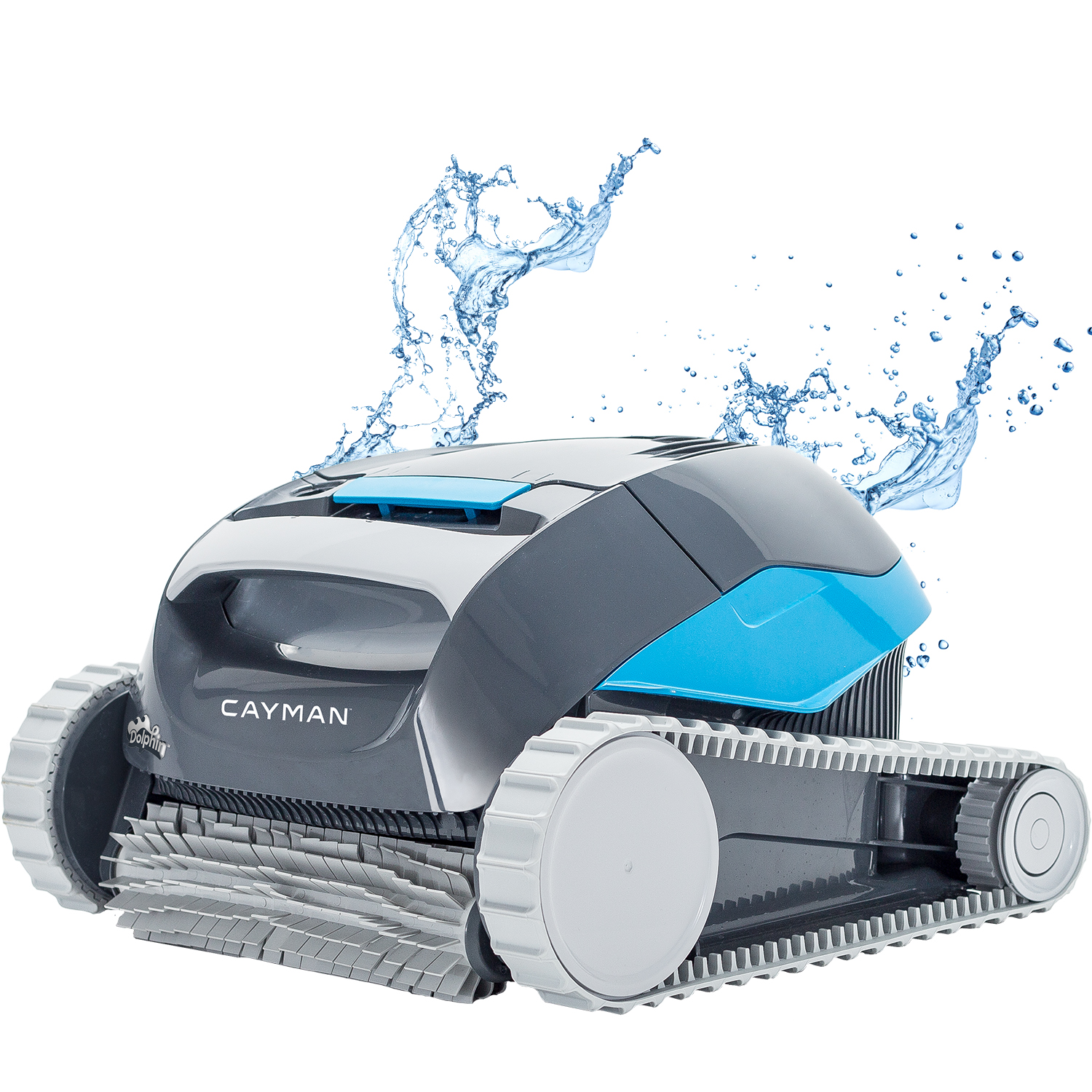
Dolphin Cayman
Plenty of palm-shaded pools are small: courtyard pools, plunge-sized pools, above-ground pools in a warm-climate yard. For anything up to 33 ft, the Cayman covers the floor and walls with a MaxBin basket 50% larger than standard Dolphin filters, emptied through a top hatch with one tab. Its timer runs every day, which is what staining fruit calls for, and a single HyperBrush leaves only one brush for fibers to wrap.
It does not clean the waterline, and its 50 ft cable has no swivel, so untwist it when you empty the basket.
- Best for
- Small in-ground and above-ground pools with a palm or two, cleaned every day on the timer.
- The trade-off
- Rated to 33 ft, no waterline scrubbing, and NanoFilter panels for blossom dust are an optional add-on.


Side by side
Side-by-side specs for the four picks.
| Specification | Dolphin Quantum | Dolphin Premier | Dolphin Sigma | Dolphin Cayman |
|---|---|---|---|---|
| Price today | $1599 | $1949 | $2349 | $1049 |
| Filtration | XXL MaxBin basket with standard and NanoFilter panels | Multi-Media: NanoFilters, oversized leaf bag and standard fine filters | NanoFilters and standard filter cartridges | MaxBin basket with fine panels; NanoFilter panels optional |
| Filter access | Top-load, one-click open | Top-load, no tools | Cartridges | Top hatch, one-tab emptying |
| Brushes | Dual HyperBrush | Dual scrubbing brushes | Quad scrubbing brushes | HyperBrush |
| Flow rate | 4,000 GPH | 4,500 GPH | 4,500 GPH | Over 4,000 GPH |
| Cycle time | 2 hours | 3 hours | 2.5 hours | 2 hours |
| Cleans | Floor, walls, waterline, sun shelves and stairs | Floor, walls and waterline | Floor, walls and waterline | Floor and walls |
| Scheduling | Weekly timer: every day, every 2 days or every 3 days | Weekly timer: every day, every 2 days or every 3 days | Weekly scheduler by day and time | Timer: every day |
| Warranty | 2 years | 3 years | 3 years | 2 years |
What to look for
How to judge a robot against a palm.
-
Basket room for seeds and fruit.
A fruiting queen palm can drop seeds daily for weeks. They are small individually and bulky together, and they do not compress. A large open basket or bag decides whether the robot finishes the floor: the Quantum's XXL MaxBin and the Premier's oversized leaf bag lead here.
-
Flow to lift round, heavy seeds.
Palm seeds are dense and roll away from a weak intake, collecting in the deep end. Flow is what picks them up. The Premier and Sigma are rated at 4,500 GPH, the Quantum at 4,000 GPH, and the Cayman at over 4,000 GPH.
-
Brushes and tracks you can clear by hand.
Palm fiber is long, tough and stringy. It wraps round brushes and tracks on every robot and has to be pulled off. Fewer brushes means fewer places to check, and a lighter robot is easier to turn over at the pool's edge.
-
A daily timer while fruit is falling.
Ripe palm fruit bleeds color into plaster where it settles. A robot that runs every day moves it to the basket before that happens. The Quantum and Premier timers have an every-day setting, and the Cayman's timer runs daily by design.
What each part of the palm does in a pool.
It is worth knowing the parts, because a robot handles each one differently and the tree sheds them at different times of year.
- Seeds and fruit: collected by the robot. Dense, so they fill a basket quickly and roll to the deep end.
- Blossoms: tiny, cream-colored, and shed by the thousand from each flower stalk. Standard panels hold them; the dust with them needs NanoFilters.
- Fibers: long threads from the trunk and frond bases. They wrap brushes and tracks and are removed by hand.
- Fronds, frond bases and flower stalks: far too large for any robot. Lift them out before a cycle.
Fibers: the part every robot struggles with.
There is no robot design that palm fiber does not get into. The threads are long enough to reach round a brush and strong enough to stay there, and a few turns will slow a brush or drag on a track.
Each time you empty the basket, look at the brush ends and along both tracks, and pull off anything wound there. Net floating fiber before the cycle when you can; like most palm debris it floats for a while before it sinks, and the skimmer and a leaf rake are far better at it than a robot's intake.
Stop it at the tree.
The most effective palm cleanup happens before anything falls. Flower stalks appear well before the fruit, and a tree service can cut them off at that stage, which removes the blossoms, the fruit and the seeds in one visit. On tall palms this is work for a professional.
Where fruit does fall, hose it off the deck promptly, because it stains concrete and pavers as readily as plaster, and whatever sits on the deck ends up in the water. A robot keeps the pool floor clear between trims; it does not replace them.
A short routine for palm season.
- Lift out fronds, frond bases and flower stalks before every cycle; they can pin a robot or block its intake.
- Run the robot every day while fruit is falling, and empty the basket after each run.
- Have seed pods and flower stalks trimmed before they open, once or twice a year depending on the palm.
- Brush any spot where fruit has rested, then check your water balance if a mark remains.
Questions, answered
Palm debris questions.
Can a pool robot pick up palm seeds and berries?
Yes. Palm seeds and fallen fruit are well within what these robots collect, provided the filter has room: the Quantum's XXL MaxBin and the Premier's leaf bag suit them best. They are dense, so empty the filter after each cycle in fruiting season.
Do palm tree berries stain a pool?
The fruit of queen palms and date palms does, on decks and on plaster. Collecting it daily is the prevention, and brushing the spot early usually helps. A stain that has set is a treatment question for a pool professional, not something a robot scrubs away.
How do I get palm fibers off the robot's brush?
Unplug the power supply, lift the robot out and turn it over. Unwind the fiber by hand from the ends of the brush toward the middle; if it is wound tight, snip it carefully without cutting the brush. Check the tracks the same way.
Will a robot pick up palm fronds?
No. A frond is longer than the robot and will stop it. The same goes for frond bases and flower stalks. Take these out by hand before a cycle. What the robot will collect is the litter that falls with them: leaflets that have broken off, seeds, blossoms and grit.
Is a robot worth it for palm tree debris if the palms are trimmed every year?
Usually, yes. Trimming removes the fruit and blossoms for that season, but fiber, dust, wind-blown leaflets and whatever the neighbors' trees send over keep coming. With trimmed palms the load is light and steady, which is the easiest work a robot does, and a daily timer handles it without you thinking about it.
The bottom line
How to choose under palms.
Match the robot to the tree's worst month. If that month is seeds on the floor and the shelf, buy the Quantum. If it is fruit by the bucket from a queen or date palm, buy the Premier. If the palms stand back and send dust, the Sigma fits, at a price. If the pool is 33 ft or less, the Cayman is enough. Then book the trim, because no robot here eats a frond.
More buying guides
