



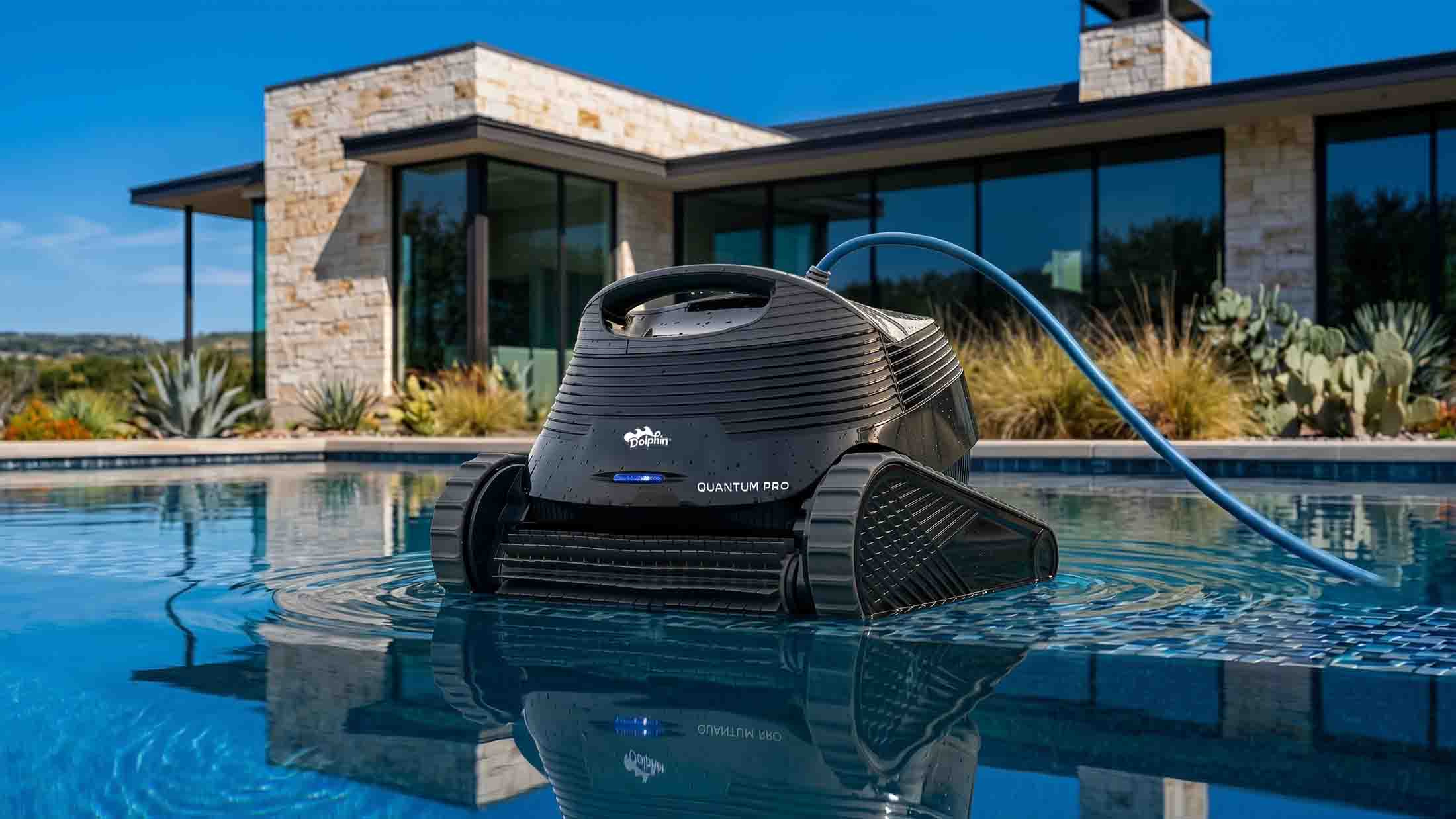
By pool type and installation
The best robotic pool cleaner for soft-sided pools, and when to skip one.
Top pick: Dolphin Escape
Live prices · Ships free · 30 Day Trial
Inflatable-ring and frame pools have thin liners, flexible walls and shallow water, so only a light robot rated for above-ground pools belongs in one, and only when the pool justifies it.
The quick answer
For a soft-sided pool, choose the Dolphin Escape: it is rated for above-ground pools, weighs 14.2 lb, finishes in 1.5 hours and is the lower-priced of the two picks. Step up to the Dolphin Cayman for a large frame pool, a long cable run or a built-in daily timer. The in-ground robots, the Quantum included, are the wrong tool here.
Soft-sided pools are the inflatable-ring and metal-frame pools sold under names like Intex, Bestway and Coleman: a thin PVC liner, held up by an air ring or a frame, sitting on a ground cloth over the lawn. Finding the best robotic pool cleaner for soft-sided pools starts with what makes them different. The floor is thin and follows every dip in the ground. The walls flex. The water is usually between 30 and 52 inches deep.
Those three facts narrow the field to robots rated for above-ground pools, and in these guides that means two. On a small ring pool that comes down in September, a robot can cost more than the pool and may not even stay under water. On a large frame pool used all summer, it is one of the better things you can buy for it.
The picks, ranked
The two robots that belong in a soft-sided pool.
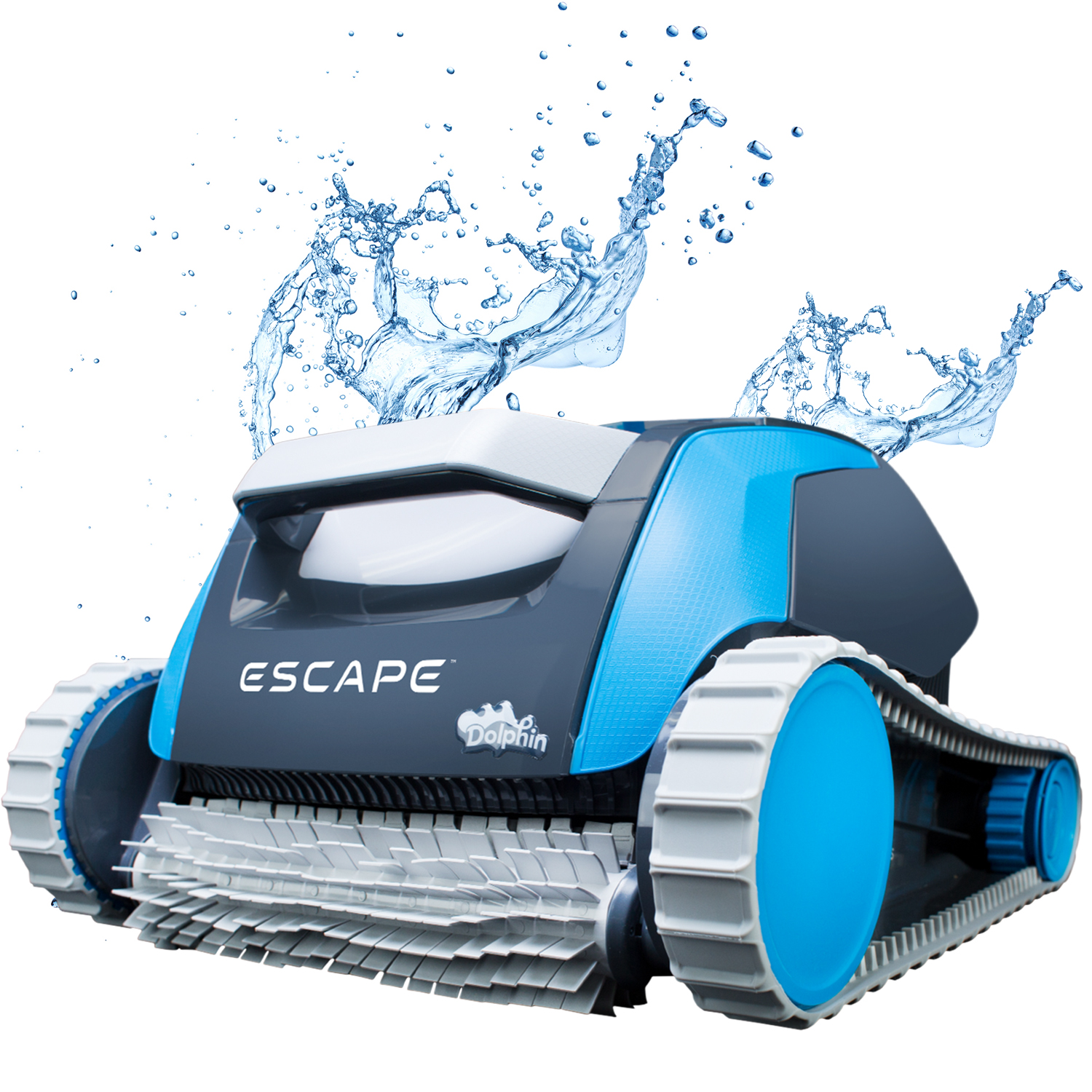
$959$659Save $300 off the list price
Temporarily out of stock
Pick 1: Lightest and best matched to soft-sided pools
Dolphin Escape
The Escape is the natural fit. It is rated for above-ground pools up to 33 ft, and its published surfaces and shapes include vinyl liner and round, oval and rectangular pools, which covers nearly every soft-sided pool sold. At 14.2 lb it is the lightest robot in this guide, so it goes over a flexible wall without a struggle. One HyperBrush spinning at twice the speed of standard Dolphin brushes does the scrubbing, dual 24-volt DC motors supply over 4,000 GPH of flow, and a cycle takes 1.5 hours, the shortest here.
Debris collects in a top-load MaxBin basket, 50% larger than standard Dolphin filters. Its 40 ft cable suits the sizes these pools come in.
- Best for
- Frame pools from about 15 ft up to 24 ft round, and rectangles of similar size, used through the summer.
- The trade-off
- No timer as standard; an Automation Timer power supply is an optional upgrade. It does not clean the waterline, and the 40 ft cable has no swivel.
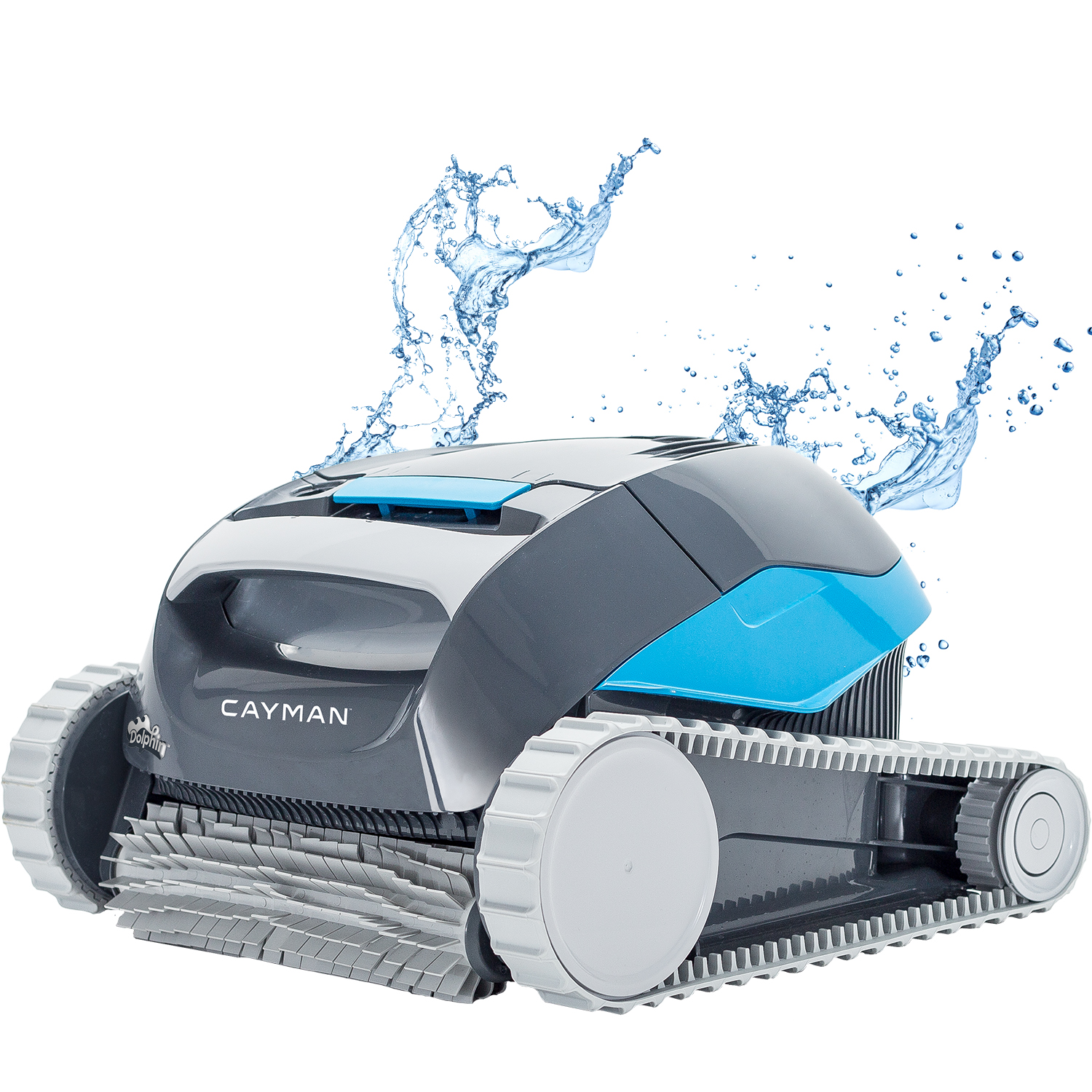
$1299$1049Save $250 off the list price
Temporarily out of stock
Pick 2: Large frame pools and long cable runs
Dolphin Cayman
The Cayman is the step up when the pool is big or the routine needs to run itself. Its 33 ft rating covers above-ground and in-ground pools alike, and it weighs 14.6 lb. What you gain is reach and automation: a 50 ft cable, 10 ft longer, for long rectangles, large rounds and distant outlets, and a timer on the power supply that starts a cycle every day with nothing to remember. Its 2-hour cycle gives a large floor more time, and the MaxBin basket lifts out through a top hatch with one tab.
It costs more, which is why it sits second: most soft-sided pools do not need the extra cable.
- Best for
- The largest frame pools, pools far from an outlet, and owners who want a cycle every day without thinking about it.
- The trade-off
- A higher price than the Escape for the same floor-and-wall cleaning. No waterline scrubbing, and its cable has no swivel either.


Side by side
Escape and Cayman side by side.
| Specification | Dolphin Escape | Dolphin Cayman |
|---|---|---|
| Price today | $659 | $1049 |
| Pool type | Above-ground and in-ground | In-ground and above-ground |
| Pool length | Up to 33 ft | Up to 33 ft |
| Cleans | Floor and walls | Floor and walls |
| Cable | 40 ft | 50 ft |
| Filtration | MaxBin basket; NanoFilter panels optional | MaxBin basket with fine panels; NanoFilter panels optional |
| Robot weight | 14.2 lb | 14.6 lb |
| Warranty | 2 years | 2 years |
What to look for
What a soft-sided pool asks of a robot.
-
An above-ground rating
Robots built only for in-ground pools are heavier and designed around rigid walls and deeper water. On a thin liner over lawn that is the wrong match. The Escape and the Cayman are both rated for above-ground pools, and vinyl liner is on the published surface list for each.
-
Weight
You will lift the robot over a wall that gives when you lean on it, often from a ladder. Lighter is safer for you and kinder to the top rail. At 14.2 lb and 14.6 lb, the Escape and the Cayman are the two lightest of the five Dolphins compared here.
-
Water depth
A robot has to be fully under water to work. Most frame pools are deep enough. The shallowest ring pools may not be, and a robot that breaks the surface draws air and stops cleaning properly. We do not publish a minimum depth, so check the manual against your own waterline.
-
A smooth floor
The liner drapes over whatever is beneath it. Wrinkles in the liner or the ground cloth trap dirt and can catch a brush, and a stone under the floor threatens the liner with or without a robot. Preparation matters more here than in any rigid pool.
-
Cable reach
Soft-sided pools rarely have an outlet beside them. The power supply sits back from the water by the distance in the manual, and the cable must still reach the far side of the floor. The Escape has 40 ft of cable and the Cayman has 50 ft.
Is a robot worth it for a soft-sided pool?
Be honest about the pool before you spend. A small inflatable-ring pool that goes up in June and comes down in September holds little water, collects little debris, and takes five minutes with a hand vacuum or a net. A robot may cost more than that pool did, and the water can be too shallow for it to stay submerged. In that case, keep your money.
The sums change with a frame pool of roughly 15 ft or more that stays up all summer. That is thousands of gallons, a floor too wide to reach from the edge, and a small cartridge pump that struggles to keep up. A robot has its own motors and its own filter, so it cleans the floor and walls however weak the pool pump is.
Prepare the floor before the first run.
Most trouble with robots in soft-sided pools starts under the liner. If the pool is not yet filled, clear the site of stones, roots and sticks, lay a ground cloth or foam pad flat, and smooth the liner outward from the center while the first inch of water goes in. Wrinkles are easy to push out with bare feet at that stage and close to impossible later.
If the pool is already full, walk the floor. A raised fold that you can pinch is where a robot may hang up or leave a dirty line. Work it toward the wall with your feet on a warm day when the vinyl is soft. Take the ladder out before each cycle so the robot and its cable have a clear floor.
Walls, waterline and what to expect.
Both picks are floor-and-wall robots, but a soft-sided wall is not a rigid one. It bows outward and gives under pressure, so expect the robot to clean the floor thoroughly, work the lower wall, and climb less high than it would on steel or concrete. Neither pick scrubs the waterline in any pool, so the ring of sunscreen and dust at the top of the liner stays a job for a soft cloth.
A robot also leaves the rest of pool care where it was. It does not replace the filter pump, sanitizer or skimming, and it is no substitute for hand brushing while you treat algae. Lift it out before you shock.
Setting up in a soft-sided pool.
- Measure the cable route before you order: from where the power supply will sit, over the wall, to the farthest point of the floor. On rounds larger than about 24 ft, the Escape's 40 ft cable needs that check.
- Lower the robot in gently instead of dropping it onto a thin floor, and let it sink and settle before you start the cycle.
- To take it out, draw the cable in until the robot reaches the surface, then lift the robot itself over the wall. Do not haul its weight up by the cable.
- Rest the wet robot on the grass or a caddy, not on the top rail or the air ring.
- Empty the basket after every cycle. Soft-sided pools sit on lawns, and grass clippings fill a filter quickly.
Questions, answered
Soft-sided pool questions.
Will a robot damage a thin soft-sided liner?
It is not what usually damages one. Vinyl liner is on the published surface list for both picks. The usual causes lie under the liner or in the water: a stone beneath the floor, or a sharp twig dragged along. Clear the site well and net out sharp debris first, and inspect an older liner before use.
Will the robot climb the walls of a soft-sided pool?
Partly. Both robots are built to clean walls, but a wall that flexes gives them less to grip against than a rigid one, so they tend to clean the lower wall and turn back sooner. Expect a clean floor and lower walls.
How shallow is too shallow for a pool robot?
The robot must stay fully submerged for the whole cycle. We do not publish a minimum depth for these robots, so compare the figure in the manual with your actual water depth, measured from the floor to the waterline, not the wall height printed on the box. Very shallow ring pools often fall short.
Is a robotic pool cleaner for soft-sided pools worth the money?
For a large frame pool used for months, yes: it saves vacuuming a floor you cannot reach and does not depend on a small pump. For a little ring pool used a few weeks a year, usually not. A fair test is whether cleaning currently takes you more than a few minutes a week.
Can I keep using the robot if I replace the pool?
Yes, within its limits. The Escape and the Cayman are each rated for above-ground and in-ground pools up to 33 ft, so the robot can move to a bigger frame pool, a rigid above-ground pool or a small in-ground pool.
The bottom line
The soft-sided decision rule.
First decide whether the pool earns a robot: roughly 15 ft or larger, deep enough to cover it, and up for the season. If it does, buy the Escape. Move to the Cayman only for a reason you can name: a cable run the Escape cannot make, a pool near the 33 ft limit, or a wish for a daily timer. Do not buy an in-ground robot for a soft-sided pool. Returns run 30 days with no restocking fees if the fit is wrong.
More buying guides
