



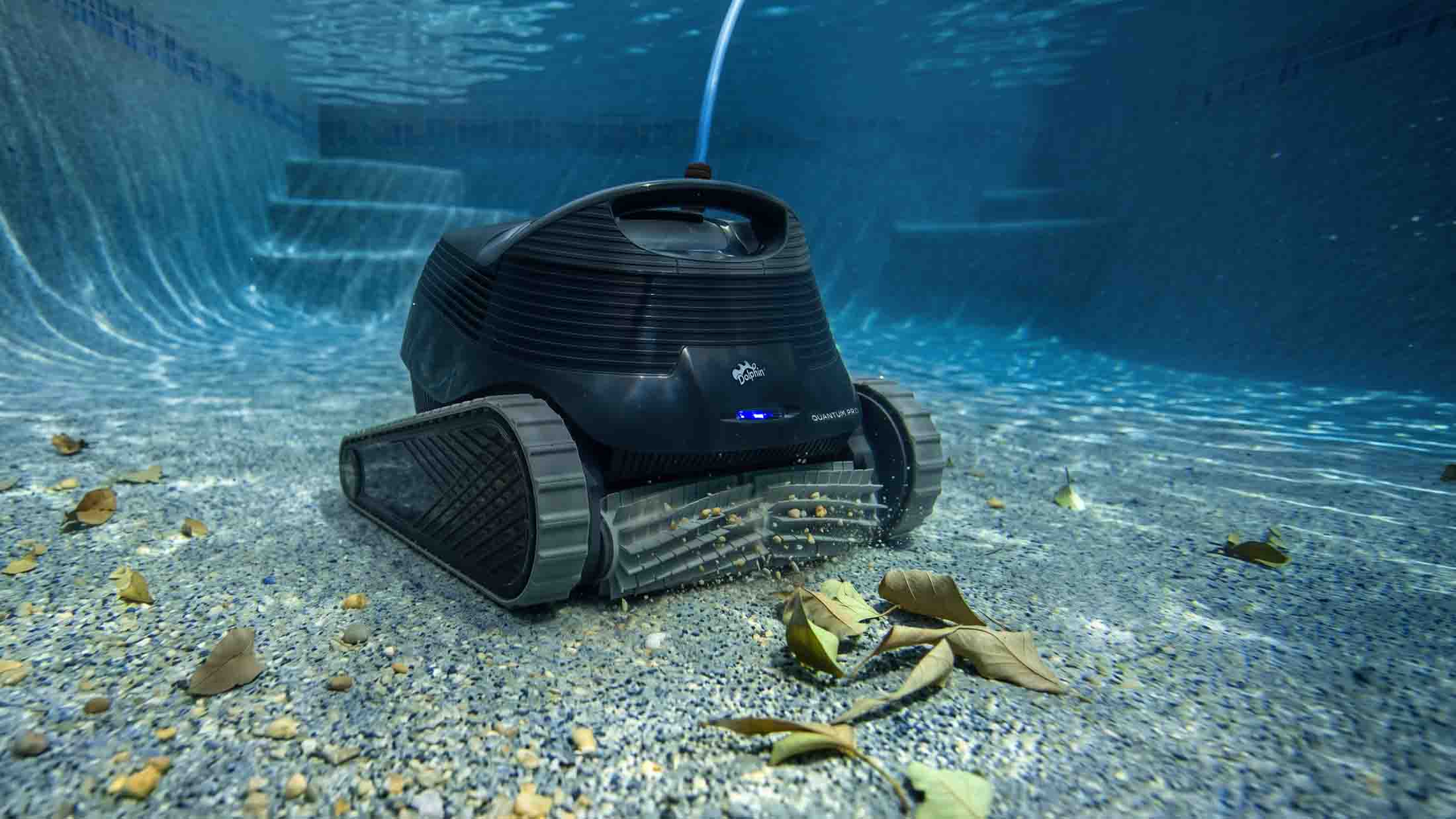
By pool surface
The best robotic pool cleaner for above-ground vinyl pools is a light one.
Top pick: Dolphin Escape
Live prices · Ships free · 30 Day Trial
A thin liner over sand, flexible walls and a small footprint call for a robot built for above-ground use, light enough for the floor and quick enough for the pool.
The quick answer
Choose the Dolphin Escape: it is built for above-ground pools first, weighs 14.2 lb, finishes in 1.5 hours and is the lower-priced pick. Choose the Dolphin Cayman instead if you want a timer that runs it every day as standard, or if your pool is a large round where the Escape's 40 ft cable would be stretched; the Cayman's is 50 ft.
An above-ground vinyl pool is a different structure from an in-ground one, and it needs a different robot. The liner is thin and sits on a bed of sand or foam. The walls flex. The floor shows every footprint. And the pool is usually well under 33 ft across, so a machine built for a 50 ft in-ground pool is the wrong size, the wrong weight and not rated for the job.
That narrows the field quickly. The best robotic pool cleaner for above-ground vinyl pools has to be rated for above-ground use, and of the robots in this guide only two are: the Escape, designed for above-ground pools first, and the Cayman, rated for both in-ground and above-ground. Both weigh under 15 lb, both list vinyl liner as a supported surface, and both clean the floor and the walls.
The picks, ranked
The two robots rated for above-ground vinyl, ranked.
$959$659Save $300 off the list price
Temporarily out of stock
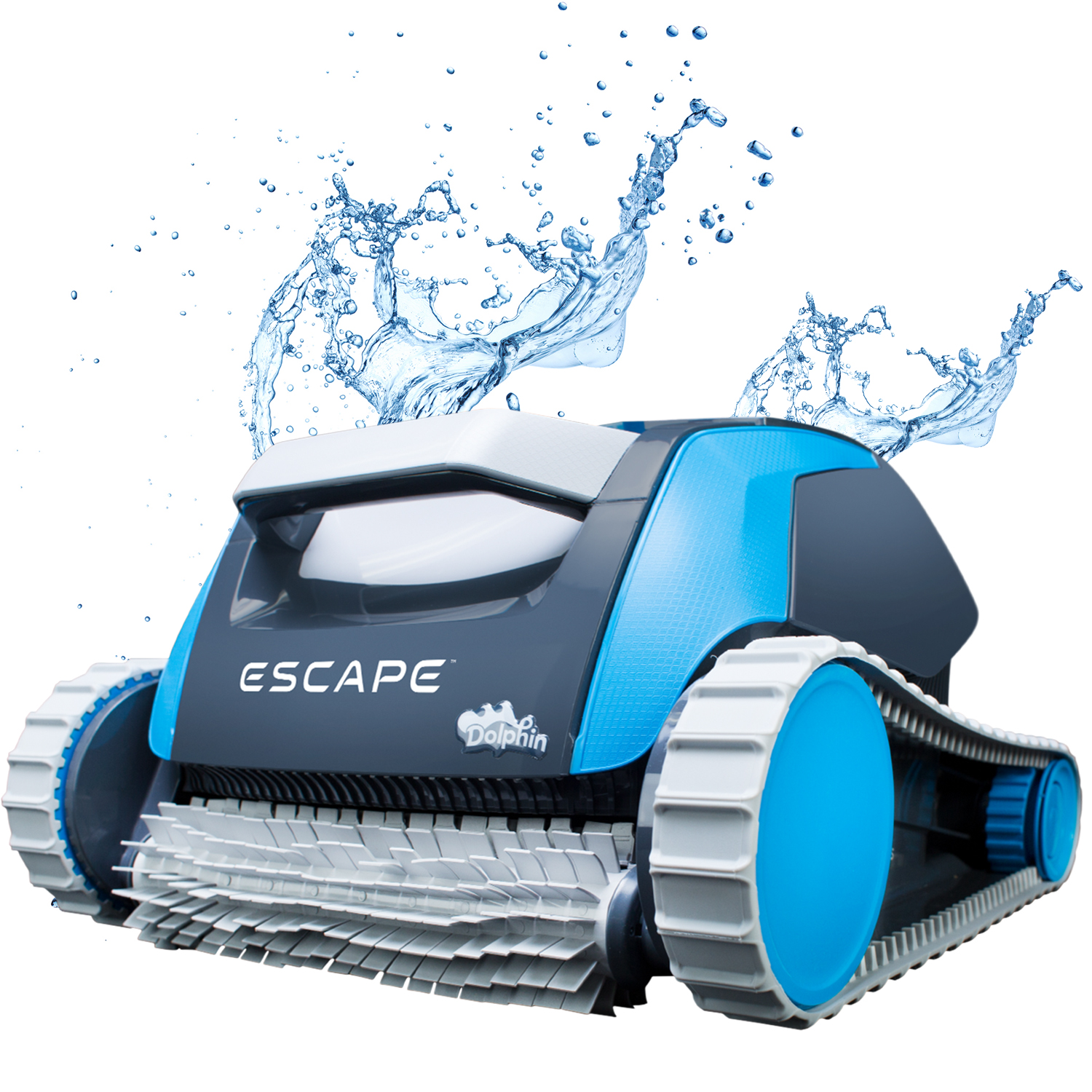
Pick 1: Best fit for above-ground liners, and the lower price
Dolphin Escape
The Escape is designed for above-ground pools first, and it shows in the numbers. At 14.2 lb it is the lighter of the two picks, kind to a sand base and easy to lift over the top rail. Its 1.5-hour cycle suits a small pool. Vinyl liner leads its published surface list, and round is among its listed shapes.
It cleans floor and walls with one HyperBrush spinning at twice the speed of standard Dolphin brushes, on HyperGrip tracks, driven by dual 24-volt DC motors moving over 4,000 gallons an hour. Debris goes into a top-load MaxBin basket, 50% larger than standard Dolphin filters. It is also the lower-priced of the two, so check the live price on the card.
- Best for
- Round, oval or rectangular above-ground vinyl pools up to 33 ft, especially 24 ft and under.
- The trade-off
- No timer as standard; the Automation Timer power supply is an optional upgrade. The 40 ft cable has no swivel, so measure the run on rounds over about 24 ft.
$1299$1049Save $250 off the list price
Temporarily out of stock
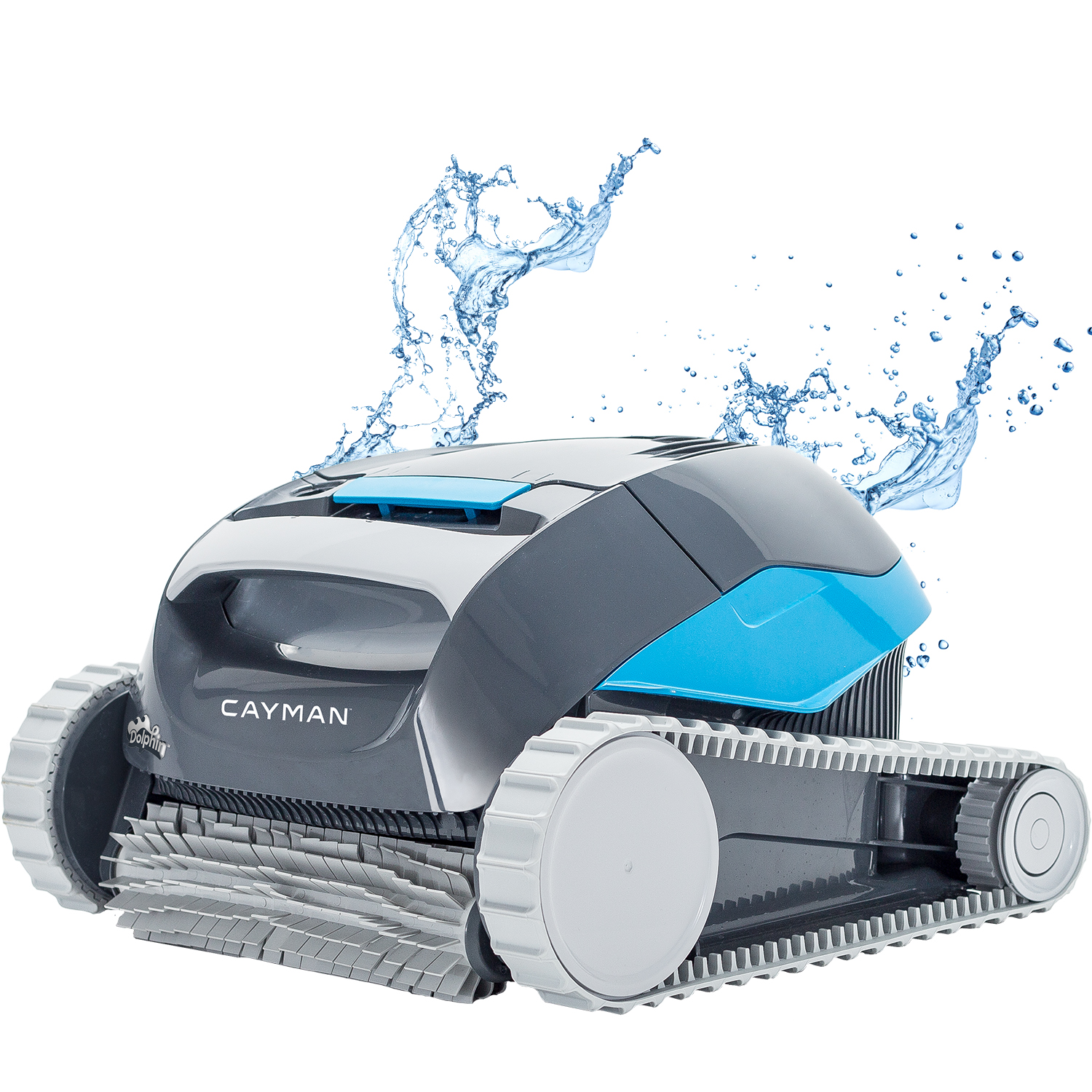
Pick 2: Daily timer and a longer cable
Dolphin Cayman
The Cayman is rated for both in-ground and above-ground pools up to 33 ft, and it adds two things the Escape lacks out of the box. Its power supply has a timer that runs a cycle every day, so the pool is cleaned whether or not anyone remembers. And its cable is 50 ft, ten more than the Escape's, which is the margin a large round needs.
The rest is close to the Escape: 14.6 lb, one HyperBrush at twice the speed of standard Dolphin brushes, HyperGrip tracks, dual 24-volt DC motors and a MaxBin basket that empties through a top hatch with one tab. The cycle is 2 hours. It costs more, which is why it is second here and not first.
- Best for
- Larger above-ground rounds and ovals, and owners who want cleaning every day without pressing a button.
- The trade-off
- The timer has one setting, every day. The 50 ft cable has no swivel, and it costs more than the Escape.


Side by side
Escape and Cayman, spec for spec.
| Specification | Dolphin Escape | Dolphin Cayman |
|---|---|---|
| Price today | $659 | $1049 |
| Brushes | HyperBrush | HyperBrush |
| Cleans | Floor and walls | Floor and walls |
| Traction | HyperGrip tracks | HyperGrip tracks |
| Pool length | Up to 33 ft | Up to 33 ft |
| Filtration | MaxBin basket; NanoFilter panels optional | MaxBin basket with fine panels; NanoFilter panels optional |
| Robot weight | 14.2 lb | 14.6 lb |
| Warranty | 2 years | 2 years |
What to look for
Five things to check for an above-ground liner pool.
-
An above-ground rating.
This is the pass-or-fail item. A robot rated only for in-ground pools is designed around rigid walls and a hard floor. Buy one whose maker lists above-ground pools, and vinyl liner, in writing.
-
Weight on a soft base.
Under the liner is packed sand or a foam pad, not concrete. A heavy machine turning in place can press hollows into sand over time. The two picks weigh 14.2 and 14.6 lb, which is also easy to lift over a tall wall.
-
Cycle length.
A small pool does not need a three-hour cycle. Ninety minutes to two hours covers a typical above-ground floor and walls, and a shorter cycle means the robot is out of the swimmers' way sooner.
-
Wrinkles, footprints and the cove.
Liner floors are rarely flat. Tracks ride over small wrinkles and shallow footprints, but a deep fold can turn a robot aside, and debris gathers in the dips. The cove, where floor curves into wall, is where dirt collects and where the climb begins.
-
Cable reach from the outlet.
The power supply sits back from the water, and the cable has to cross the whole pool from there. On a small pool any cable reaches. On a large round, measure before you choose.
Why the 50 ft in-ground robots stay off this list.
Three robots in this guide are rated for in-ground pools up to 50 ft: the Premier, the Sigma and the Quantum. None is rated for above-ground pools, so none is recommended here, however good the feature list looks.
They are also built for a different job. They weigh 18.3 to 24.6 lb, run cycles of 2 to 3 hours, and much of what you pay for is tile-line scrubbing and navigation suited to long, rigid walls. On a 24 ft liner pool that is money spent on things the pool cannot use, carried by a machine heavier than the floor wants.
Wrinkles, footprints and the cove.
Walk the floor before the first cycle. A robot's tracks ride over small wrinkles, but a tall fold can stop it or turn it away. Footprints and low spots in the sand hold debris in a shallow bowl. The brush reaches most of it; the rest shows as a faint ring you can brush out by hand.
The cove deserves a look too. It is where fine dirt settles and where the robot starts up the wall, and on a flexible wall the height it reaches varies from pool to pool. Neither robot scrubs the scum line at the top, so that stays a job for a soft cloth.
Cable arithmetic for a round pool.
The cable runs from the power supply, across the ground, over the wall, down to the floor and across to the far side. As an example only, with the power supply roughly 12 ft back from the water, a 24 ft round with 4 ft of water needs about 40 ft of cable to reach the far wall. Use the setback distance in your own manual, not our example.
That is why 24 ft is the size at which to stop and measure. The Escape is rated for pools up to 33 ft and that rating stands, but its 40 ft cable is the practical limit. Where the run is long, the Cayman's 50 ft cable is the safer choice.
What ends up in the basket.
Above-ground pools collect a particular mix: grass clippings and sand carried in on feet, bugs, and whatever the nearest tree drops. Both robots take it into a MaxBin basket that lifts out from the top. In a normal week, empty and rinse it every cycle or two.
The standard panels handle sand and leaves. For the fine dust and pollen that leave a film on a liner floor, NanoFilter panels are an optional add-on for both robots. A robot also works independently of the pool's pump and filter, which helps where the pump is small.
Before and during the first cycle.
- Check the floor for stones, screws or sharp twigs. They matter far more to a liner than any brush does.
- Pull the ladder or steps out, or lift them clear of the floor, so the robot can cover the whole pool.
- Lower the robot in by hand and let it sink and settle. Do not drop it onto the liner.
- Lay the cable out straight on the ground before starting. Neither cable has a swivel, so one that begins untwisted stays tidier.
- Lift the robot out before shocking and before closing for winter, and store it dry and out of direct sun.
Questions, answered
Above-ground liner pools: common questions.
Can I use an in-ground robot in an above-ground vinyl pool?
Only if it is also rated for above-ground pools. The Cayman is rated for both. The Premier, Sigma and Quantum are in-ground robots and are not rated for above-ground use, so we do not recommend them here, whatever the pool's size.
Will a robotic cleaner tear or wear a vinyl liner?
The parts that touch the liner are soft PVC brushes and rubber tracks, and vinyl liner is a published surface for both the Escape and the Cayman. The real hazards are sharp objects on the floor, which a robot can drag, and a liner already brittle with age. Clear the floor first.
Does the pool pump have to run while the robot cleans?
No. A robot has its own motors and its own filter basket, and it plugs into a standard outlet through its power supply. It does not connect to the skimmer, a hose or the pump. That independence is useful on above-ground pools, where the pump and filter are often small.
Can the best robotic pool cleaner for above-ground vinyl pools also clean an in-ground pool later?
Yes, within limits. The Escape and the Cayman are both rated for in-ground pools as well, up to 33 ft, and both list gunite, fiberglass and tile alongside vinyl. They clean floor and walls only, so a larger in-ground pool with a tile line is where a robot like the Quantum makes sense.
Should the robot stay in the pool between cleanings?
With the Cayman's daily timer, or an Escape fitted with the optional Automation Timer, the robot is made to stay in the water between scheduled cycles. Still lift it out at least weekly to empty and rinse the basket, and always before shocking. A standard Escape is started by hand, so it is simplest to lift it out when it finishes.
The bottom line
The decision in short.
Rule out anything not rated for above-ground pools; that leaves the Escape and the Cayman. Take the Escape if the pool is 24 ft or under, or the cable run measures comfortably inside 40 ft, and you are happy to press start. Take the Cayman if you want it to run every day by itself, or the run is long enough to need 50 ft of cable. Either way, clear the floor of anything sharp before the first cycle.
More buying guides
