



By pool surface
The best robotic pool cleaner for glass tile pools, with the limits stated.
Top pick: Dolphin Quantum
Live prices · Ships free · 30 Day Trial
A clean robot brush will not scratch glass tile, but glass is the slickest wall a robot can be asked to climb, so buy with a test cycle in mind.
The quick answer
Start with the Dolphin Quantum: it is the lowest-priced robot here that scrubs the waterline, its soft PVC HyperBrushes are non-abrasive, and it covers the tiled steps and shelves that glass pools usually have. Choose the Dolphin Premier instead if you want a 3-year warranty and the longest cycle. Either way, watch the first cycle on the walls before you rely on it.
Know this first
No robot on this page publishes glass tile as a supported surface; each lists tile. Glass is also the slickest finish a pool can have, so climbing to the waterline is less certain than on plaster, and we cannot promise it. Treat these as the closest matches and run a watched test cycle.
Two questions come up before any other with a glass-tiled pool. Will a robot scratch the tile, and will it actually climb it? The answers differ. The brushes on these robots are soft, non-abrasive PVC and do not scratch glass tile in normal use. Climbing is the less certain part: a robot that walks up plaster without effort may lose its footing near the top of a glass wall.
So the best robotic pool cleaner for glass tile pools is not one with a special glass rating, because none here has one. It is a waterline-capable robot with plenty of brush contact and track grip, bought from a store that will take it back if your walls defeat it. Our order: the Quantum, the Premier, the Dolphin Sigma, and for small pools the floor-and-wall Dolphin Cayman.
The picks, ranked
Closest matches for a glass-tiled pool, in order.

$1999$1599Save $400 off the list price
Temporarily out of stock
Pick 1: First robot to try on glass tile
Dolphin Quantum
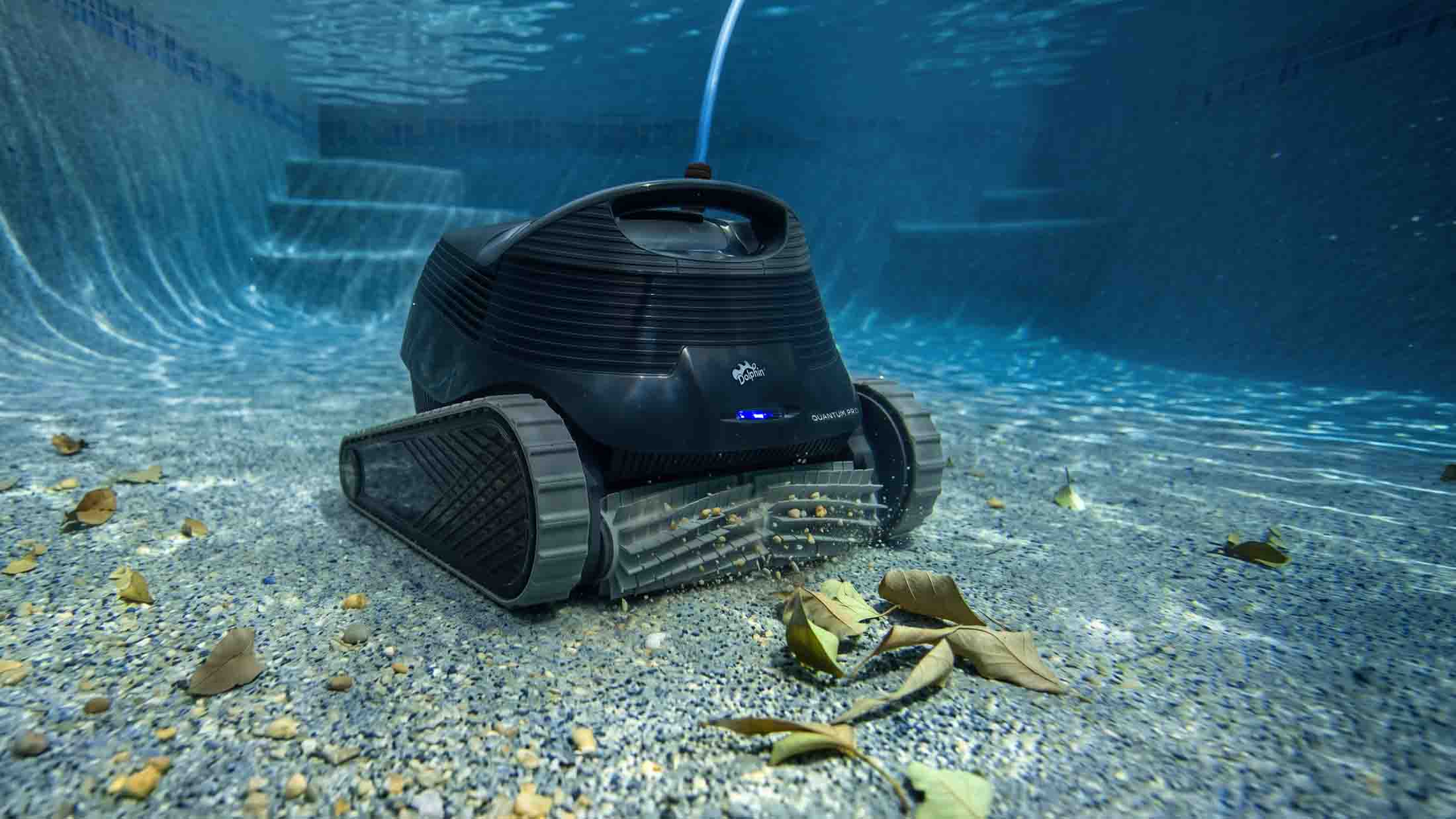
The Quantum goes first for three reasons. It scrubs the waterline, where glass loses its shine soonest. Its two HyperBrushes are soft PVC turning at twice the speed of standard brushes, on HyperGrip continuous rubber tracks. And its coverage includes stairs, sun shelves and Baja ledges, which in a glass-tiled pool are usually tiled too.
It is also the least expensive waterline robot on this page, which matters when the honest advice is to test first. The myDolphin Plus app starts and stops it over Wi-Fi, so a short watched trial is easy to run.
- Best for
- Glass tile pools up to 50 ft with tiled steps, benches or a shelf, and owners who want to test before spending more.
- The trade-off
- Its surface list says tile, not glass tile, with two brushes and a 2-year warranty. Climbing very slick glass is not promised.

$2499$1949Save $550 off the list price
Temporarily out of stock
Pick 2: More flow, a longer cycle, 3 years of cover
Dolphin Premier
The Premier is the pick if you would rather pay more for longer cover. It scrubs floor, walls and waterline with dual scrubbing brushes, and its dual ProLine motors move 4,500 gallons an hour, the strongest flow on this page alongside the Sigma. Flow is part of what presses a robot against a wall, so it is worth having on a slick one. Its 3-hour cycle is the longest here, its Multi-Media set includes NanoFilters, and the warranty is 3 years.
- Best for
- Owners who want waterline scrubbing with the longer warranty and are content with controls on the power supply.
- The trade-off
- No phone control for a quick watched trial, and steps and shelves are not in its coverage list. The glass caution applies.

$2999$2349Save $650 off the list price
Temporarily out of stock
Pick 3: Most brush contact, if the walls allow it
Dolphin Sigma
On paper the Sigma brings the most to a slick wall: four scrubbing brushes, three ProLine motors at 4,500 gallons an hour, and SmartNav 3.0 with an onboard gyroscope that tracks which way the robot is facing. It scrubs floor, walls and waterline in 2.5 hours and includes NanoFilters.
It sits third because it is the highest-priced pick here, and no spec settles whether a robot will hold on your particular glass. Paying the most before you know is the wrong order.
- Best for
- Large glass tile pools where a tracked robot is already known to climb the walls and maximum brushing is wanted.
- The trade-off
- The most expensive pick and, at 24.6 lb, the heaviest, with cartridges in place of a basket. The glass caveat applies equally.
$1299$1049Save $250 off the list price
Temporarily out of stock
Pick 4: Small glass-tiled pools, floor and walls only
Dolphin Cayman
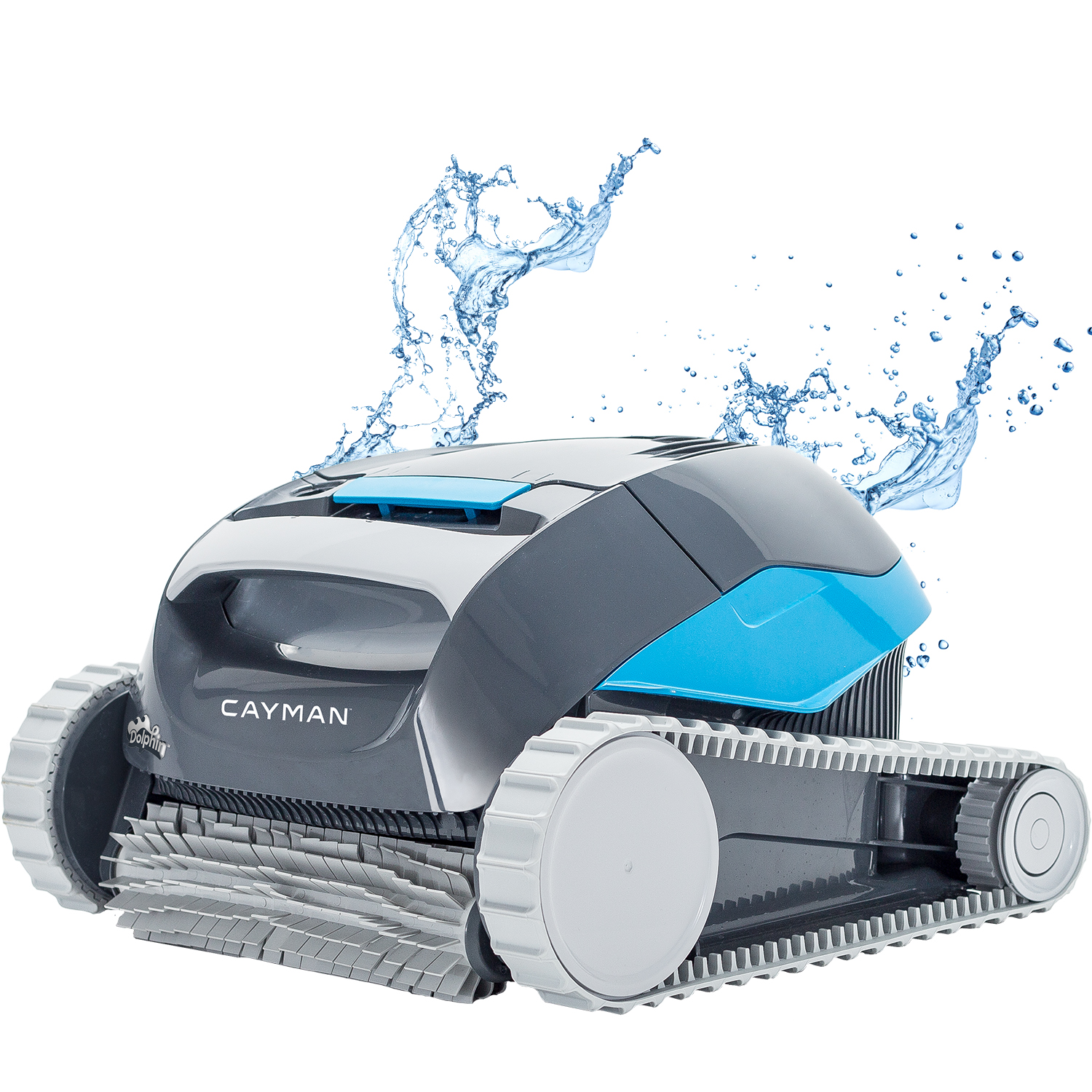
Glass tile often goes into small pools: plunge pools, spools and courtyard pools well under 33 ft. For those, the Cayman does the floor and the walls in a 2-hour cycle at a lower price, with one fast HyperBrush, HyperGrip tracks and a MaxBin basket that empties through a top hatch. At 14.6 lb it is easy to lift out and rinse.
It is last because it does not scrub the waterline, and on glass that band is the first place film shows.
- Best for
- Glass-tiled plunge pools and other pools of 33 ft or less where the tile line is wiped by hand.
- The trade-off
- No waterline scrubbing, no swivel on its 50 ft cable, and NanoFilter panels cost extra. Climbing glass is uncertain here too.


Side by side
Specs for the four picks, compared.
| Specification | Dolphin Quantum | Dolphin Premier | Dolphin Sigma | Dolphin Cayman |
|---|---|---|---|---|
| Price today | $1599 | $1949 | $2349 | $1049 |
| Brushes | Dual HyperBrush | Dual scrubbing brushes | Quad scrubbing brushes | HyperBrush |
| Cleans | Floor, walls, waterline, sun shelves and stairs | Floor, walls and waterline | Floor, walls and waterline | Floor and walls |
| Traction | HyperGrip tracks | HyperGrip tracks | HyperGrip tracks | HyperGrip tracks |
| Pool length | Up to 50 ft | Up to 50 ft | Up to 50 ft | Up to 33 ft |
| Filtration | XXL MaxBin basket with standard and NanoFilter panels | Multi-Media: NanoFilters, oversized leaf bag and standard fine filters | NanoFilters and standard filter cartridges | MaxBin basket with fine panels; NanoFilter panels optional |
| Robot weight | 18.3 lb | 20.3 lb | 24.6 lb | 14.6 lb |
| Warranty | 2 years | 3 years | 3 years | 2 years |
What to look for
Four things to judge a robot on for glass tile.
-
Soft brushes, kept clean.
PVC brushes are softer than glass and do not scratch it in normal use. The risk is what gets carried under them: sand packed into a brush or track and dragged along the wall. Rinse the robot before it goes in.
-
Traction where there is least of it.
Glass gives rubber tracks almost no texture to grip, and grout joints are often thin. Continuous tracks, more brush contact and strong water flow all help hold a robot to the wall. None makes the climb certain.
-
Waterline reach.
Glass is chosen because it shines, and the band at the surface is where body oil and sunscreen dull it first. A robot that scrubs the waterline on a schedule does the job you would otherwise do with a soft cloth.
-
What the maker actually publishes.
Each robot here lists tile as a supported surface. None lists glass tile by name. That is not a warning against using one. It means the fit gets judged in your pool, during the return window.
How to run a watched test cycle.
Do this on the first day, in daylight, with the filter clean. Lower the robot in, start a cycle and stay for the first half hour. Decide beforehand how much wall coverage you need: a robot that cleans the floor and the lower wall is still doing most of the work.
- Watch the first wall climb. Does it reach the surface, stop partway, or slide back from the same height each time?
- If it slips, rinse the filter, brush the walls by hand to clear any slick film, and try again the next day.
- If it still cannot hold, call us with what you saw. There may be a brush option better suited to a slick finish, and our 30 day returns with no restocking fees cover the case where there is not.
Grit is the scratch risk, not the brush.
Glass is harder than a PVC brush, so the brush alone does not mark it. Sand is another matter. A few grains wedged into a brush, a track or the underside of the robot can ride across the tile for an entire cycle, and glass shows a fine scratch in a way plaster never would. So after a windstorm, or a day of sandy feet going in and out, net out the worst of the grit before the robot runs, and rinse the robot itself.
What a robot will not do for glass tile.
It will not remove hardened calcium scale, and on glass you should not attack scale with an abrasive stone either; use the method your tile maker or builder approves. It will not clean tile above the water level or a spillway. And it is no reason to rush a new installation: ask the builder how long the grout needs before any automatic cleaner goes in.
What it will do is take soft film off the glass on a schedule, so the finish you paid for is not hidden under a week of sunscreen and dust.
Habits that protect glass tile.
- Hose the brushes and tracks before every run, so no sand rides into the pool on them.
- Carry the robot to the water or roll it on a caddy; never drag it over the deck. No robot here includes a caddy.
- After the first few cycles, look along the tile in low-angle light. You are checking for a cleaner band and confirming nothing has marked the glass.
- Store the robot off the ground and out of direct sun, where blown sand cannot settle into the brushes.
Questions, answered
Glass tile and robots: straight answers.
Will a robotic pool cleaner scratch glass tile?
Not in normal use. The brushes are soft, non-abrasive PVC and the tracks are rubber, both softer than glass. Scratches come from grit trapped between the robot and the tile, so rinse the brushes and tracks before each run and do not drag the robot across the deck.
Does any robot list glass tile as a supported surface?
None of the robots in this guide does. Each lists tile, without separating ceramic, porcelain and glass. So the best robotic pool cleaner for glass tile pools is chosen on brush contact, traction and waterline reach, then confirmed with a test cycle in your own pool.
Can a robot climb glass tile walls all the way to the waterline?
Sometimes fully, sometimes only partway, and we will not promise either. It depends on the tile size, the grout joints, the wall shape and how clean the surface is. Small mosaic tile with many grout joints generally offers tracks more to grip than large-format glass.
Does glass tile on a sun shelf or steps get cleaned too?
Only by a robot that lists those areas. Among our picks that is the Quantum, whose coverage includes sun shelves, Baja ledges and stairs along with floor, walls and waterline. With the Premier, Sigma and Cayman, steps and shelves stay a hand job.
The bottom line
Decide in this order.
First decide whether you want the waterline scrubbed. On glass that is usually the point, which leads to the Quantum, then to the Premier or Sigma if warranty or brush count is worth more to you. Then buy with a test in mind: run it, watch the walls, and keep it only if what it does in your pool is enough. For a small pool where wiping the band by hand is no burden, choose the Cayman.
More buying guides
