



By pool surface
The best robotic pool cleaner for aggregate pools depends on how rough yours is.
Top pick: Dolphin Quantum
Live prices · Ships free · 30 Day Trial
Aggregate runs from stones you can feel underfoot to a polished surface as smooth as plaster, and the brushes, filter and upkeep you need change along that range.
The quick answer
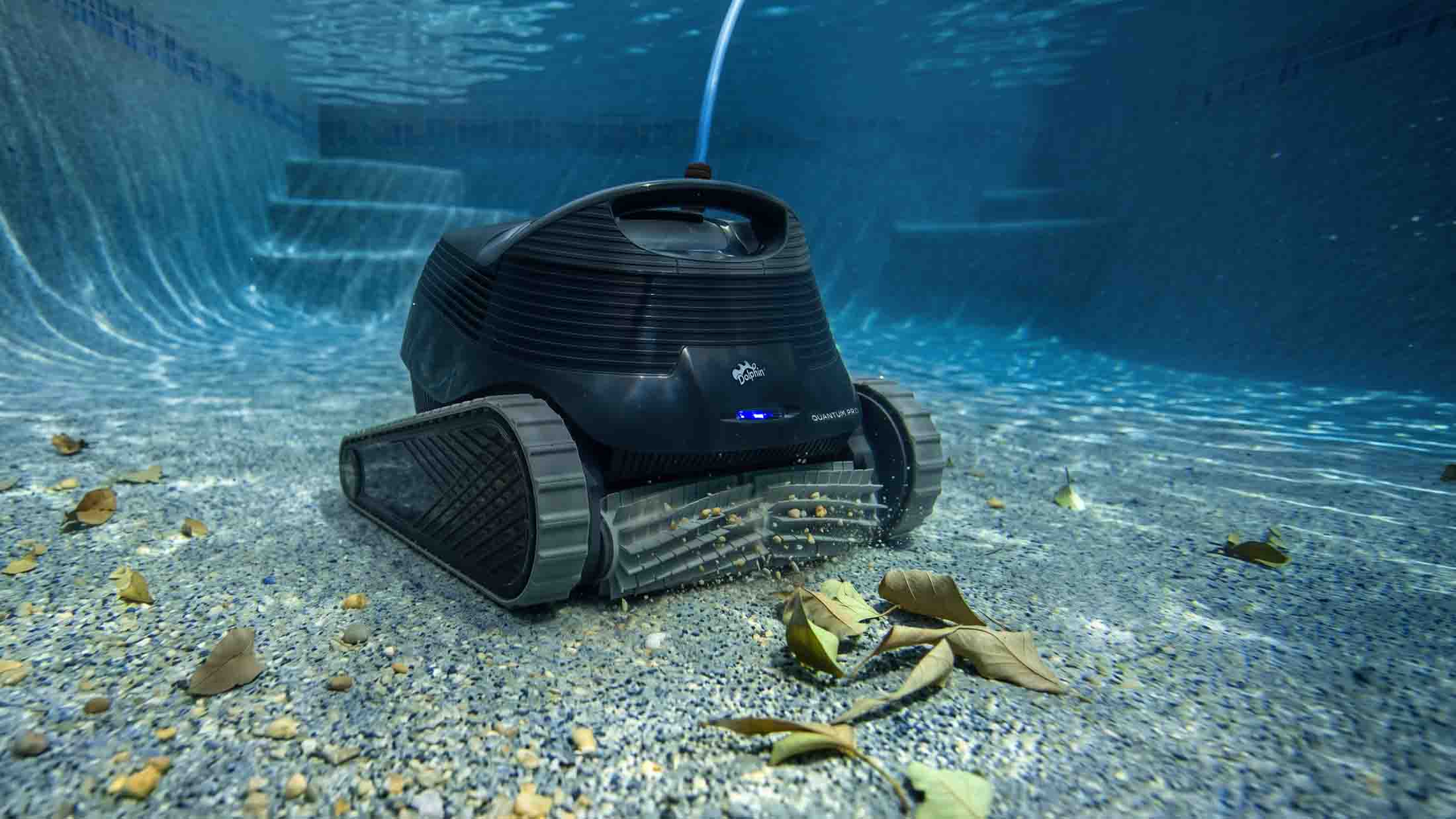
For most aggregate finishes the Dolphin Quantum is the pick: two HyperBrushes at twice the speed of standard brushes reach into the texture, a full set of NanoFilter panels catches the dust that texture holds, and pebble is on its surface list. On rough exposed aggregate, with a larger budget, the Dolphin Sigma adds two more brushes and gyroscope navigation.
Aggregate is a family of finishes, not one surface. Exposed aggregate leaves small stones standing proud of the cement, so the floor feels like a river bed. Polished aggregate is ground nearly as smooth as plaster. Quartz blends sit in between, and glass-bead blends are smoother again. A robot behaves differently on each, so choosing the best robotic pool cleaner for aggregate pools starts with knowing which one you own.
The rougher the finish, the more it hides. Dust settles in the low spots between stones, where a slow brush passes over it, and puffs back out when someone swims. So this page ranks robots on brush action and fine filtration first: the Quantum, the Sigma, the Dolphin Premier, and the Dolphin Cayman for pools of 33 ft and under. Each lists pebble among its published surfaces, and aggregate behaves the same way.
The picks, ranked
Four robots for aggregate finishes, ranked.
$1999$1599Save $400 off the list price
Temporarily out of stock
Pick 1: Best match across the aggregate range
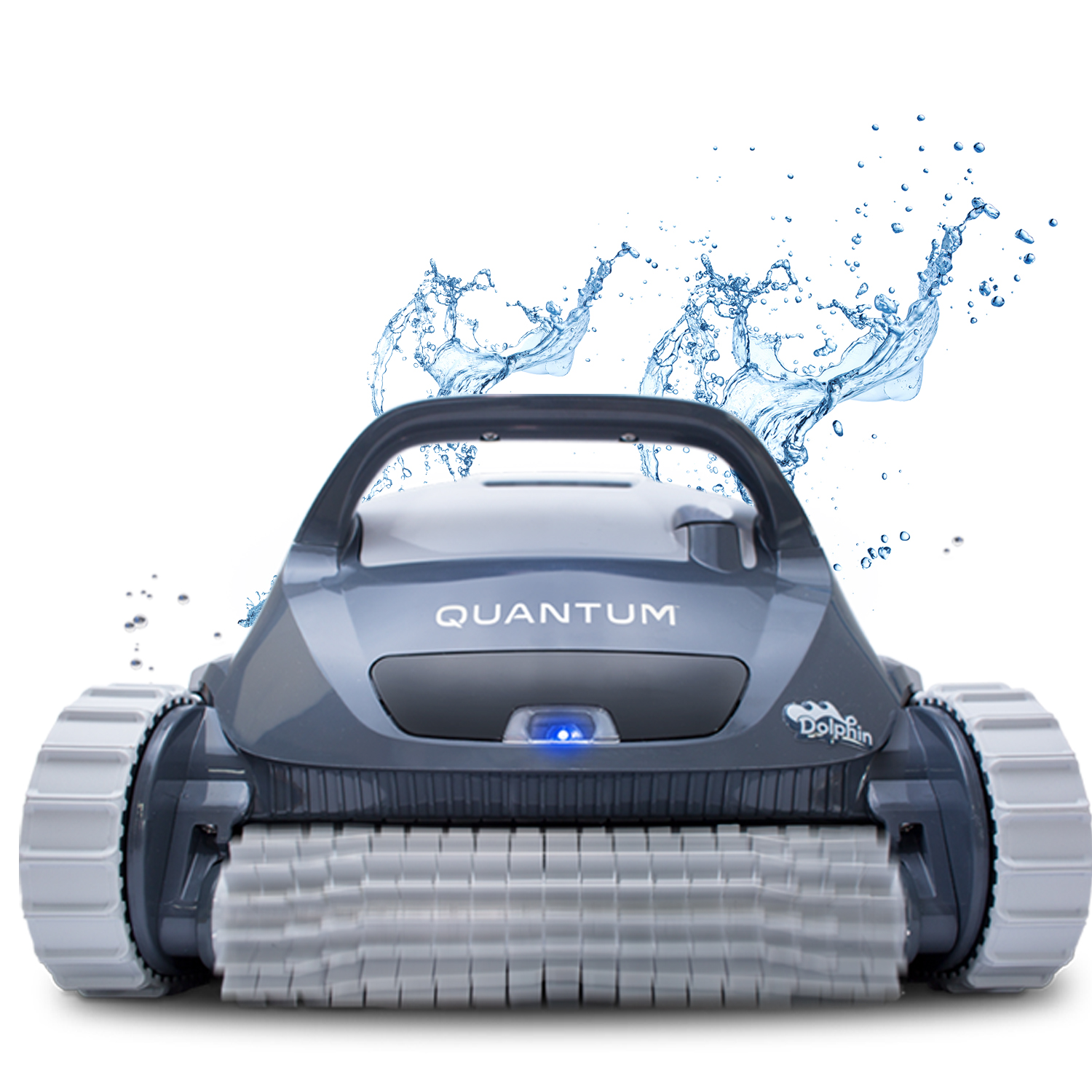
Dolphin Quantum
The Quantum covers both ends of the range. For rough finishes it has two HyperBrushes spinning at twice the speed of standard brushes, which is what gets into the hollows between stones, and a full set of NanoFilter panels in the box for the dust those hollows hold.
For smooth polished and glass-bead finishes it scrubs the waterline and covers stairs, sun shelves and Baja ledges, the things a plaster-like pool is judged on. Pebble is on its surface list, and it is the lowest-priced robot here rated for pools up to 50 ft.
- Best for
- Exposed, polished, quartz or glass-bead pools up to 50 ft that need one robot for texture, floor and tile line.
- The trade-off
- Two brushes, not four. On the roughest exposed aggregate expect to replace brushes sooner, and note the 2-year warranty.
$2999$2349Save $650 off the list price
Temporarily out of stock
Pick 2: Most brushing for rough exposed aggregate
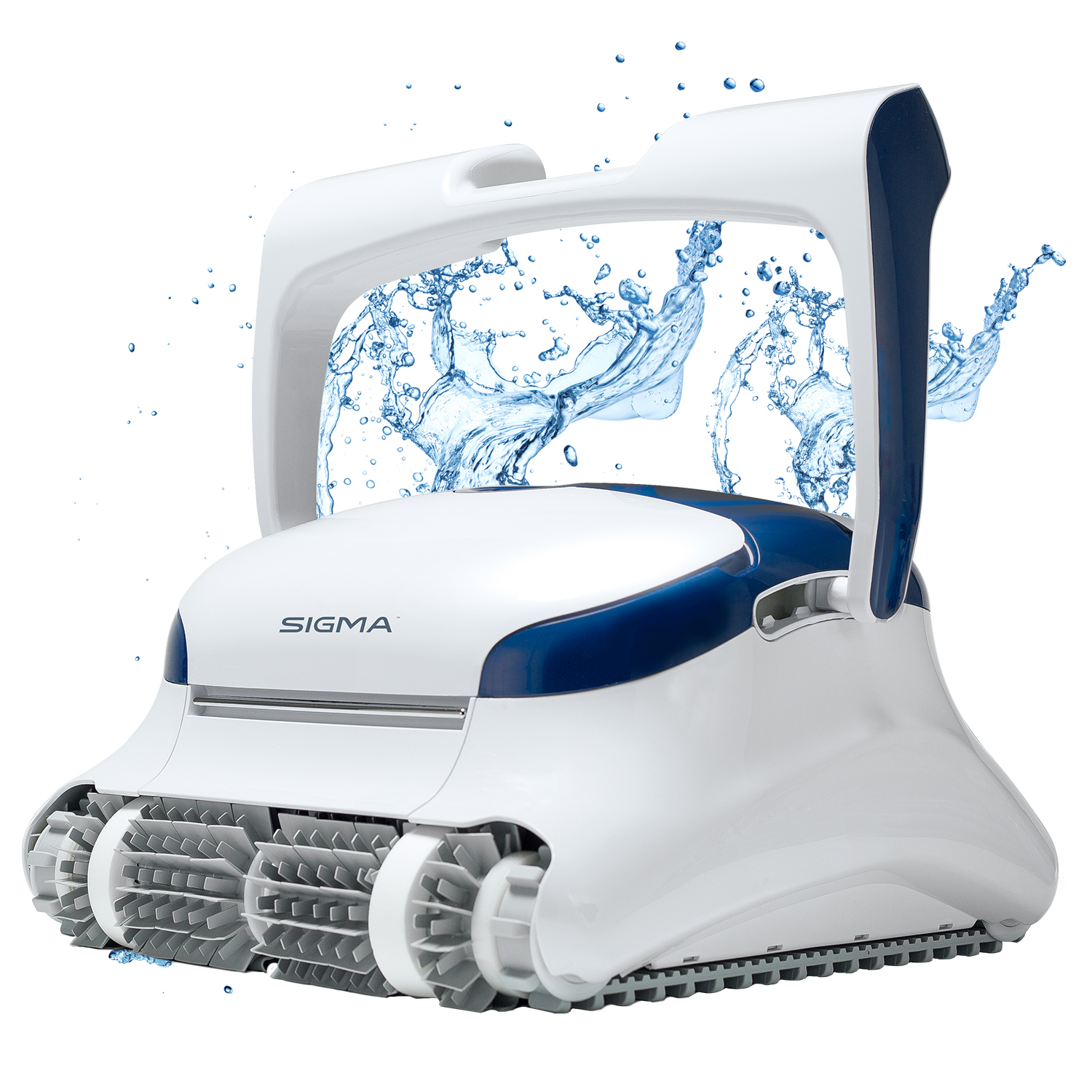
Dolphin Sigma
Rough exposed aggregate rewards brush contact above everything, and the Sigma has four scrubbing brushes where the other picks have two or one. Three ProLine motors move 4,500 gallons an hour to pull in what the brushes knock loose, and NanoFilters come included alongside standard cartridges. SmartNav 3.0 with an onboard gyroscope keeps the route orderly on a finish where a missed strip is hard to see. It cleans floor, walls and waterline in 2.5 hours, and the warranty is 3 years.
- Best for
- Large pools with coarse exposed aggregate or heavy texture, where brushing is the whole point.
- The trade-off
- It is the highest-priced robot here, the heaviest at 24.6 lb, and four brushes means four to replace when rough stone wears them.
$2499$1949Save $550 off the list price
Temporarily out of stock
Pick 3: Long cycle and long warranty on textured floors
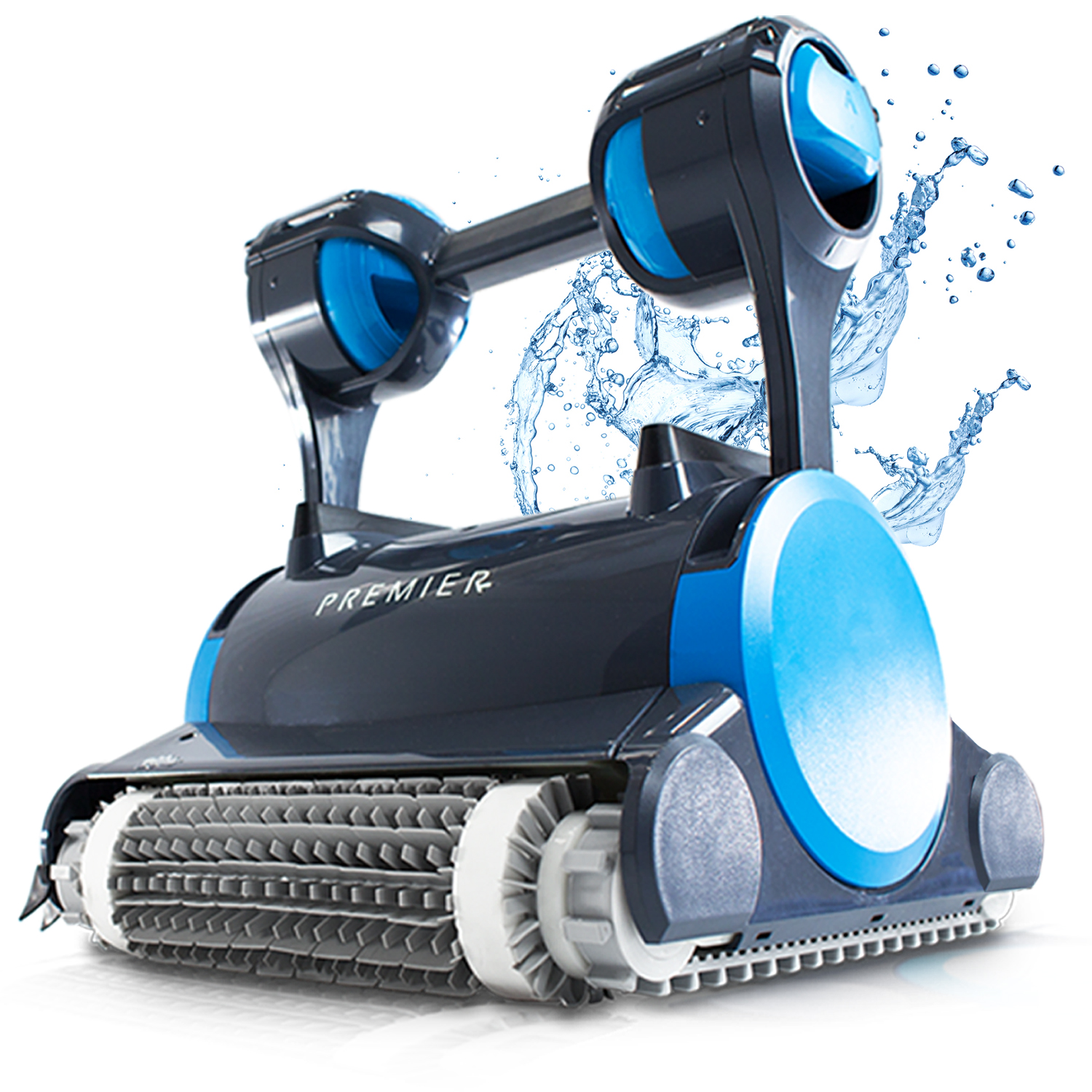
Dolphin Premier
The Premier's case on aggregate is time and flow. Its 3-hour cycle is the longest here, and dual ProLine motors move 4,500 gallons an hour through whichever media you fit: NanoFilters for trapped dust, standard fine filters, or the oversized leaf bag in fall. It scrubs floor, walls and waterline with dual scrubbing brushes and lists pebble among its surfaces.
It ranks behind the Quantum because its brushes turn at standard speed and it costs more, and behind the Sigma because it has half as many brushes. The 3-year warranty is the reason to choose it anyway.
- Best for
- Textured pools with trees nearby, where a leaf bag, NanoFilters and longer warranty cover in one box make sense.
- The trade-off
- Brush speed is standard, so on the roughest finishes it relies on its longer cycle more than on brush action. Controls are on the power supply only.
$1299$1049Save $250 off the list price
Temporarily out of stock
Pick 4: Aggregate pools of 33 ft and under
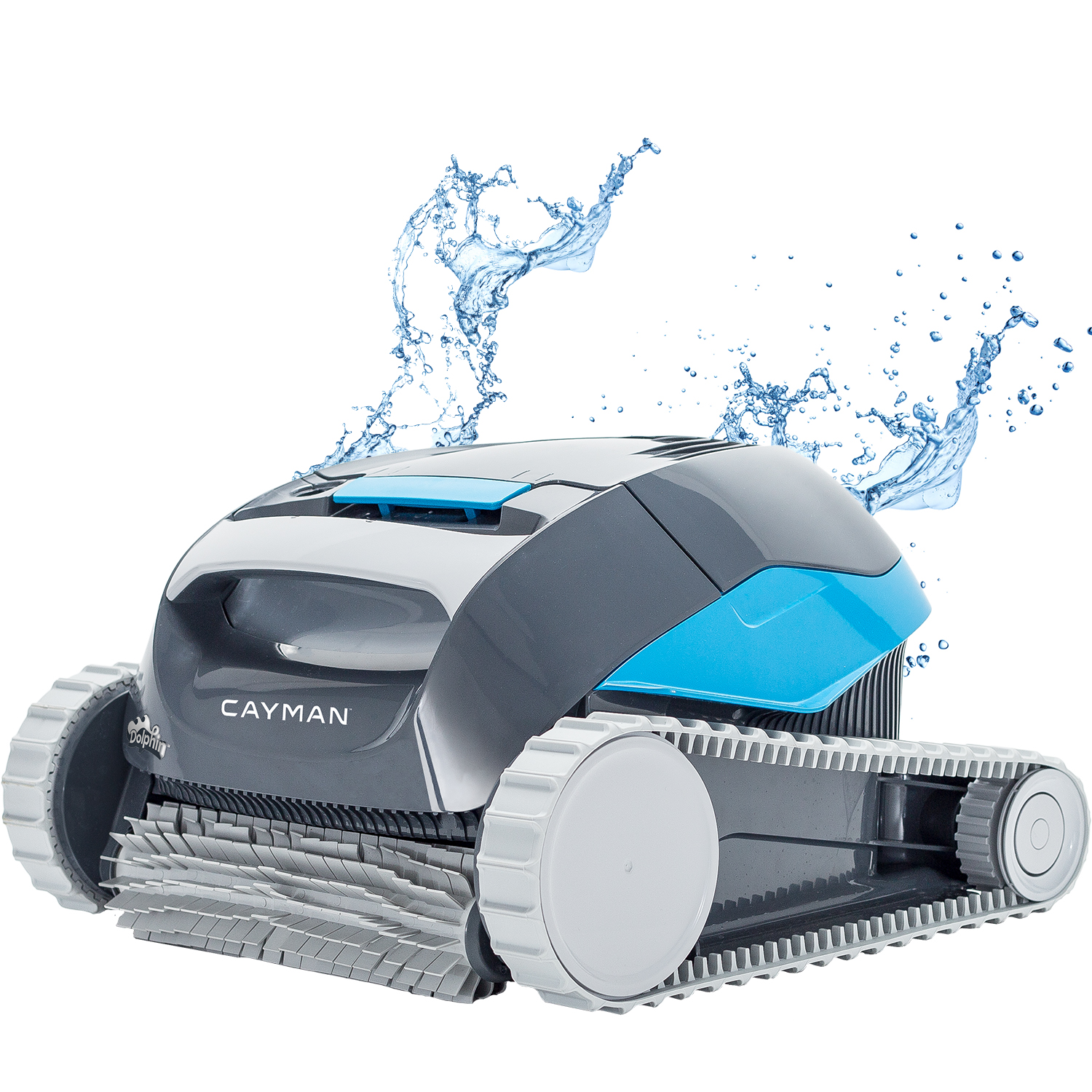
Dolphin Cayman
For a smaller aggregate pool the Cayman brings the same fast-brush idea at a lower price: one HyperBrush at twice the speed of standard Dolphin brushes, HyperGrip tracks, and pebble on its published surface list. It cleans the floor and walls of pools up to 33 ft in 2 hours, and its timer runs every day, which suits a finish that collects dust daily.
Two things hold it to fourth place. It does not scrub the waterline, and NanoFilter panels are an optional add-on, so plan to buy them if fine dust is the complaint.
- Best for
- Smaller exposed or polished aggregate pools where floor and wall cleaning is enough.
- The trade-off
- No waterline scrubbing, one brush, and the ultra-fine panels this finish calls for are sold separately.


Side by side
Brushes, filters and coverage at a glance.
| Specification | Dolphin Quantum | Dolphin Sigma | Dolphin Premier | Dolphin Cayman |
|---|---|---|---|---|
| Price today | $1599 | $2349 | $1949 | $1049 |
| Brushes | Dual HyperBrush | Quad scrubbing brushes | Dual scrubbing brushes | HyperBrush |
| Cleans | Floor, walls, waterline, sun shelves and stairs | Floor, walls and waterline | Floor, walls and waterline | Floor and walls |
| Traction | HyperGrip tracks | HyperGrip tracks | HyperGrip tracks | HyperGrip tracks |
| Pool length | Up to 50 ft | Up to 50 ft | Up to 50 ft | Up to 33 ft |
| Filtration | XXL MaxBin basket with standard and NanoFilter panels | NanoFilters and standard filter cartridges | Multi-Media: NanoFilters, oversized leaf bag and standard fine filters | MaxBin basket with fine panels; NanoFilter panels optional |
| Robot weight | 18.3 lb | 24.6 lb | 20.3 lb | 14.6 lb |
| Warranty | 2 years | 3 years | 3 years | 2 years |
What to look for
What to weigh, from rough to smooth.
-
Where your finish sits on the scale.
Run a bare foot across the floor. If you feel individual stones, treat the pool as rough: brushing and fine filtration come first. If it feels like a countertop, treat it like plaster and put waterline scrubbing and coverage first.
-
Brush speed and brush count.
Texture is cleaned by the brush reaching into the hollows between stones. Faster brushes make more passes for every foot the robot travels, and more brushes put more contact on each pass. Compare both for exposed aggregate and quartz.
-
Fine filtration.
The dirt that hides in aggregate is mostly dust-fine. Standard panels stop sand and leaves but pass the finest particles back into the water. Ultra-fine NanoFilter media holds them. Check whether it comes in the box or costs extra.
Find your finish on the roughness scale.
Builders sell aggregate under many trade names, so set the brochure aside and go by feel. Wade in and drag a bare foot across the floor, then run your palm along a wall below the water level. What you feel says more about the robot you need than the name on the contract.
The table sorts the four common types from roughest to smoothest. If your pool sits between two rows, shop for the rougher one: a robot chosen for texture also does well on a smooth finish.
| Finish | How it feels | What it asks of a robot |
|---|---|---|
| Exposed aggregate | Small rounded stones you can feel underfoot | Fast or multiple brushes, ultra-fine media, brush checks each season |
| Quartz blend | Fine, even grit, like fine sandpaper | Good brush speed and ultra-fine media |
| Glass-bead blend | Smooth, with a slight pebbled sparkle | Waterline scrubbing and clean filters for wall grip |
| Polished aggregate | Flat and smooth, close to plaster | Treat as plaster: waterline, coverage, fine media for dust |
Why a textured floor looks dusty again by evening.
Fine dust settles into the low spots of a textured floor. A robot with standard panels stirs it up and lets the finest of it pass straight back through the filter, and it drifts down again within hours. The pool looks clean at noon and gray by six.
The fix has two parts. Brushes lift the dust out of the texture, and a filter fine enough keeps it. NanoFilter panels do the second part. They also load faster than standard panels, so rinse them after each cycle while the pool is catching up.
Brush wear, new finishes and other limits.
Exposed stone is abrasive, and it wears brushes. That is normal, not a defect, and it comes with a rough finish whichever automatic cleaner you use. Brushes are wear parts on any robot; a rough floor simply uses them up sooner.
A robot will not remove calcium nodules, mineral stains or the mottling some aggregate develops, and it will not smooth a rough patch. If stones or beads are coming loose, that is a finish problem for the builder, not something to brush harder.
One note on the Escape: its published surface list does not include pebble, so it is left off this page.
Running a robot on aggregate, week to week.
- Start with the NanoFilter panels fitted. If they clog within one cycle, run a cycle on standard panels to take out the coarse load, then switch back.
- On the Quantum or the Premier, set the timer to every 2 days for rough finishes and every 3 days for polished ones.
- Brush steps, corners and the base of the walls by hand once a week.
- Check the brushes each spring, and on exposed aggregate keep a spare set on hand so a worn pair does not cost you weeks of poor cleaning.
Questions, answered
Questions owners of aggregate pools ask.
Is the best robotic pool cleaner for aggregate pools different for exposed and polished finishes?
The ranking shifts more than the shortlist does. For exposed aggregate, brushing and fine filtration decide it, which favors the Quantum's fast HyperBrushes and the Sigma's four brushes. Polished aggregate behaves like plaster, so waterline scrubbing, coverage and price decide it, and the Quantum's lead grows.
Do Dolphin robots list aggregate as a supported surface?
They list pebble, not the word aggregate. The Quantum, Sigma, Premier and Cayman all publish pebble among their surfaces, and exposed aggregate, quartz and glass-bead finishes behave the same way under a robot.
How often will I replace brushes on exposed aggregate?
There is no fixed interval; it depends on how coarse the stone is and how often the robot runs. Expect it to be sooner than on plaster or vinyl. When the fins look worn or flattened and the floor is not coming up as clean, it is time.
Will a robot pull stones or glass beads out of the finish?
Not out of a sound finish. The brushes are soft PVC and the tracks are rubber, softer than the stone and the cement holding it. If you find loose pebbles or beads in the basket, the finish is shedding on its own. Show the builder.
Can a robot go into a brand-new aggregate pool?
Wait for the builder. New cement-based finishes go through a startup period with its own brushing and chemistry routine, and automatic cleaners are normally kept out until it is finished. Your builder sets that date.
The bottom line
Match the robot to the roughness.
Feel the floor first. If it is rough enough to notice, buy for brushing and fine filtration: the Quantum for most pools, the Sigma when the stone is coarse and the budget allows. If it is polished smooth, buy as you would for plaster, which again favors the Quantum. Take the Premier if the leaf bag and longer warranty matter most, and the Cayman if the pool is 33 ft or under and floor and walls are enough.
More buying guides
