



By pool surface
The best robotic pool cleaner for stainless steel pools is a match, not a rating.
Top pick: Dolphin Quantum
Live prices · Ships free · 30 Day Trial
Steel shells are smooth, hard and often built with overflow edges, so the questions are wall traction, grit and gutters, not whether the brushes are gentle enough.
The quick answer
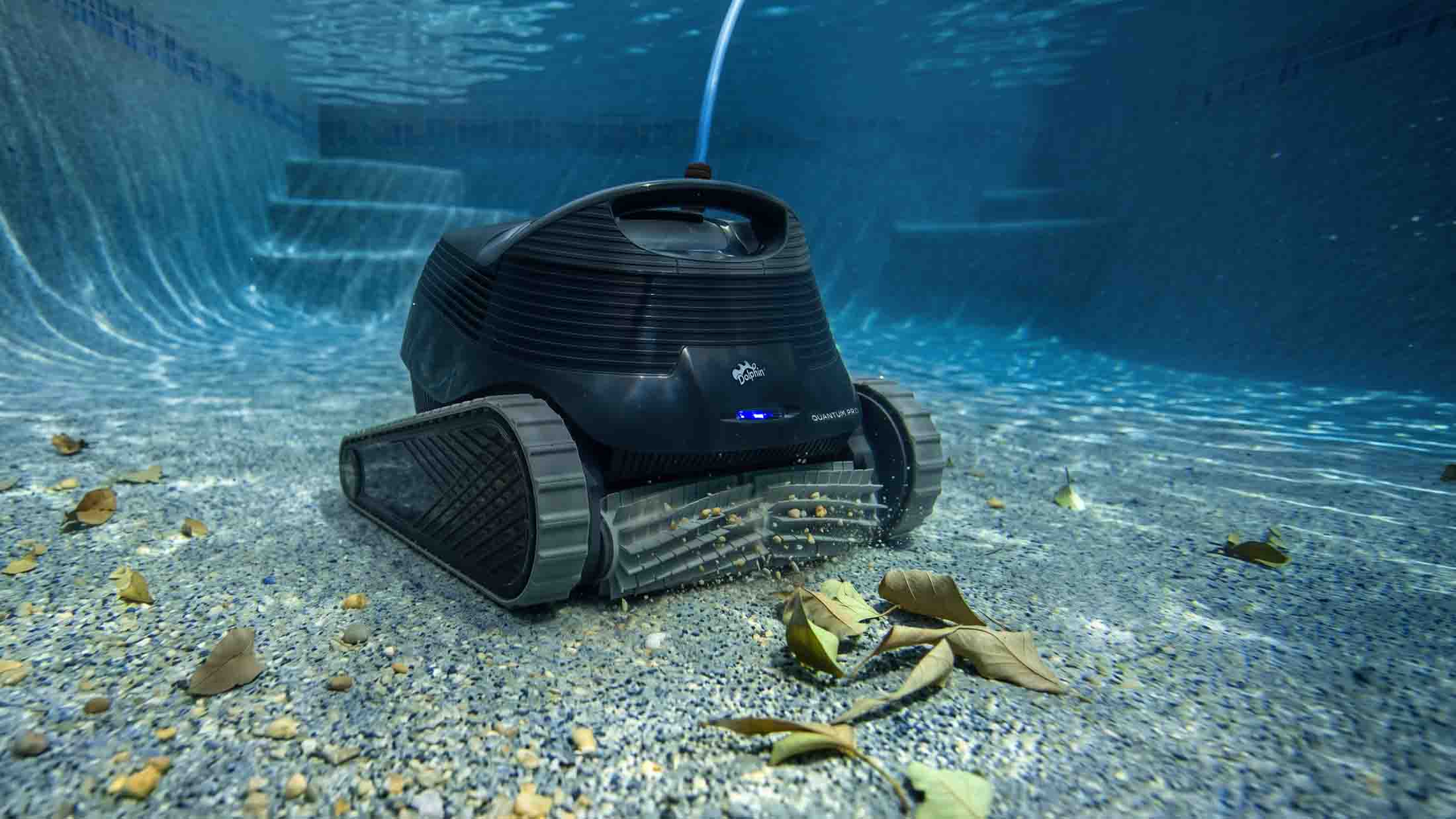
Our first match is the Dolphin Quantum: soft PVC brushes and rubber tracks that do not mark steel, waterline scrubbing, coverage of stairs and shelves, and an 18.3 lb body that is manageable to lift over an overflow edge. The Dolphin Premier is the alternative if you want a 3-year warranty and a timer with no app. Check with your builder before either goes in.
Know this first
None of these robots publishes stainless steel in its list of supported surfaces. We have matched them as smooth, hard-surface cleaners, not certified ones. Confirm with your pool builder before buying, expect wall climbing on polished metal to vary, and note that a robot cleans the basin, not an overflow gutter.
A stainless steel pool is a welded metal shell, usually brushed or polished, and usually found where a concrete pool would be awkward: on a rooftop, indoors, or as a perimeter-overflow showpiece. It is smooth, hard and unforgiving of grit. It is also a surface that no robot in this guide names in its specifications.
That does not rule a robot out. It means the best robotic pool cleaner for stainless steel pools is picked by matching what steel has in common with the smooth surfaces these robots do list, such as tile and fiberglass, and then checked with the people who built the pool. On that basis our order is the Quantum, the Premier, the Dolphin Sigma and, for small basins, the Dolphin Cayman.
The picks, ranked
Smooth-surface matches for a steel pool, in order.
$1999$1599Save $400 off the list price
Temporarily out of stock
Pick 1: Closest all-round match for a steel basin
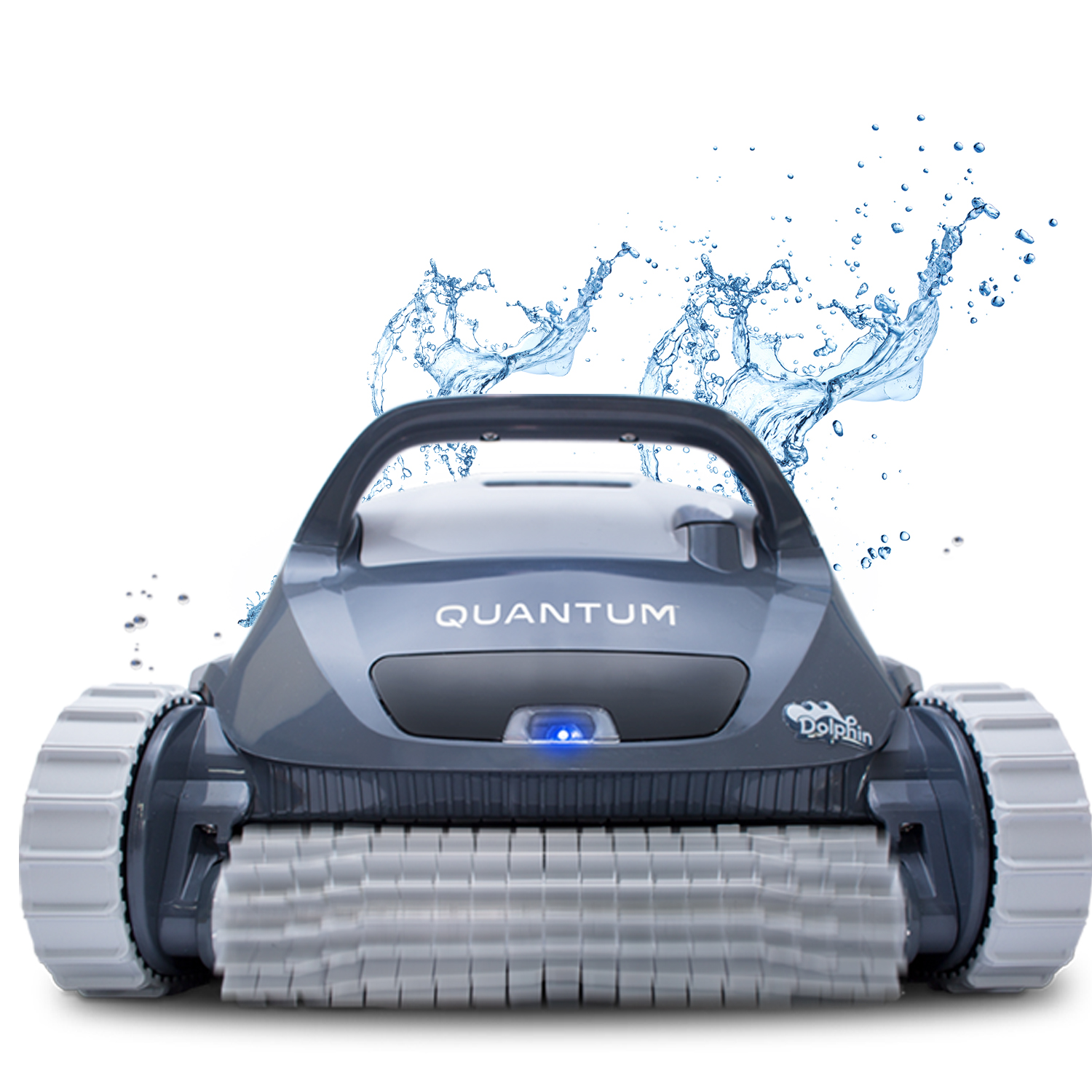
Dolphin Quantum
The Quantum matches a steel pool on the points that count. What touches the shell is soft: two PVC HyperBrushes and HyperGrip continuous rubber tracks. It scrubs the waterline, where sunscreen and oil show on steel as a dull band, and its coverage includes stairs and shelves.
At 18.3 lb it is the lightest of the three waterline picks here, which you will notice when lifting it over a raised or overflow edge. A full set of NanoFilter panels is included to keep fine grit out of circulation.
- Best for
- Residential steel pools up to 50 ft with steps or a shelf, where the builder approves a tracked cleaner.
- The trade-off
- Stainless steel is not on its surface list, wall climbing on polished metal is not promised, and the warranty is 2 years.
$2499$1949Save $550 off the list price
Temporarily out of stock
Pick 2: Timer on the power supply, 3 years of cover
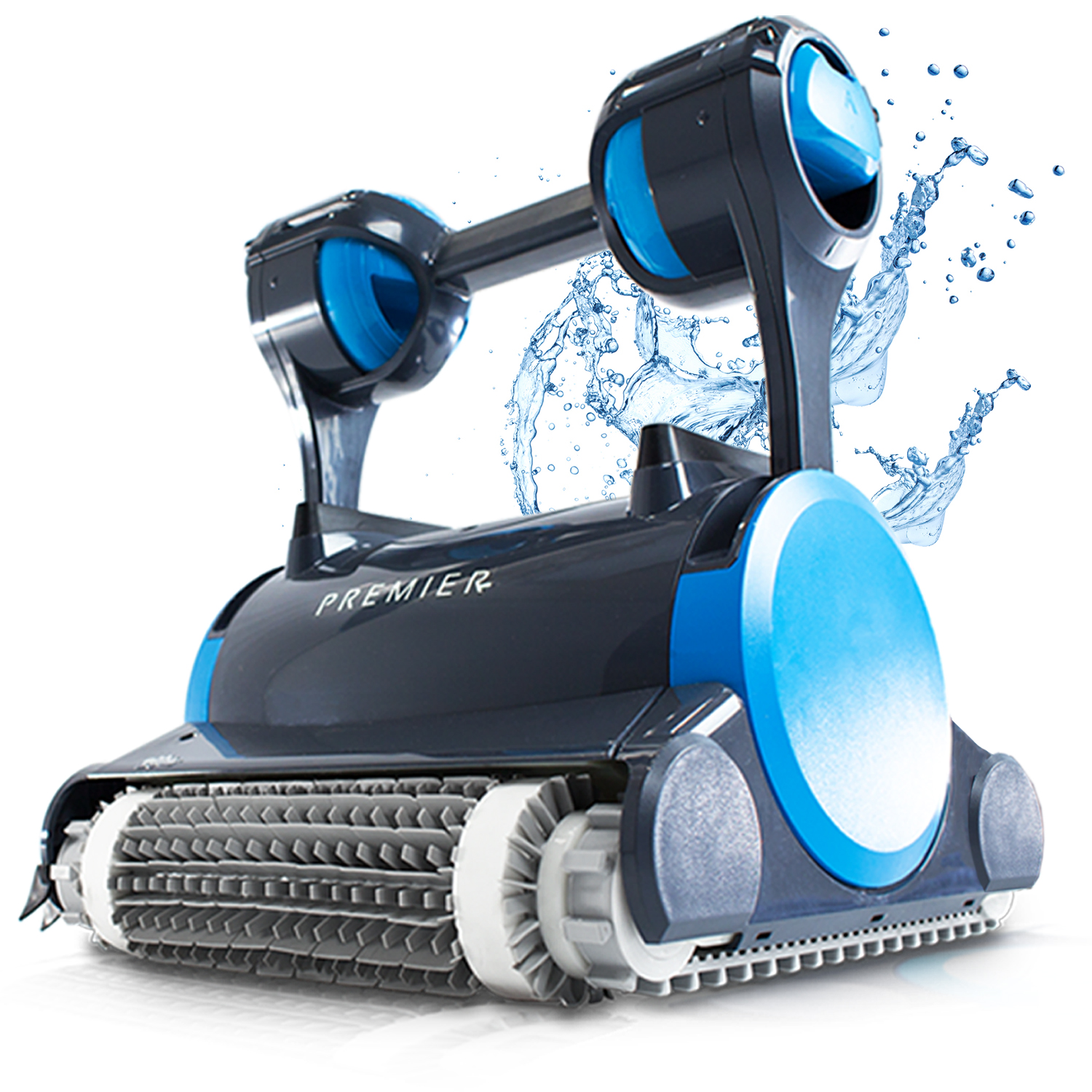
Dolphin Premier
Steel pools often sit where a phone signal does not reach well: plant rooms, basements, rooftops. The Premier needs none. Its weekly timer and its full-filter indicator are on the power supply, and it runs a 3-hour cycle across floor, walls and waterline with dual scrubbing brushes and 4,500 gallons an hour of flow. NanoFilters are included in the Multi-Media set. The warranty is 3 years, not prorated. It is second because it costs more than the Quantum, weighs 20.3 lb, and does not list steps or shelves in its coverage.
- Best for
- Indoor, basement or rooftop steel pools with patchy signal, and owners who value the longer warranty.
- The trade-off
- Heavier to lift over an edge than the Quantum, and without step coverage. The same surface caveat applies.
$2999$2349Save $650 off the list price
Temporarily out of stock
Pick 3: Most brushes and motors here, heaviest to lift
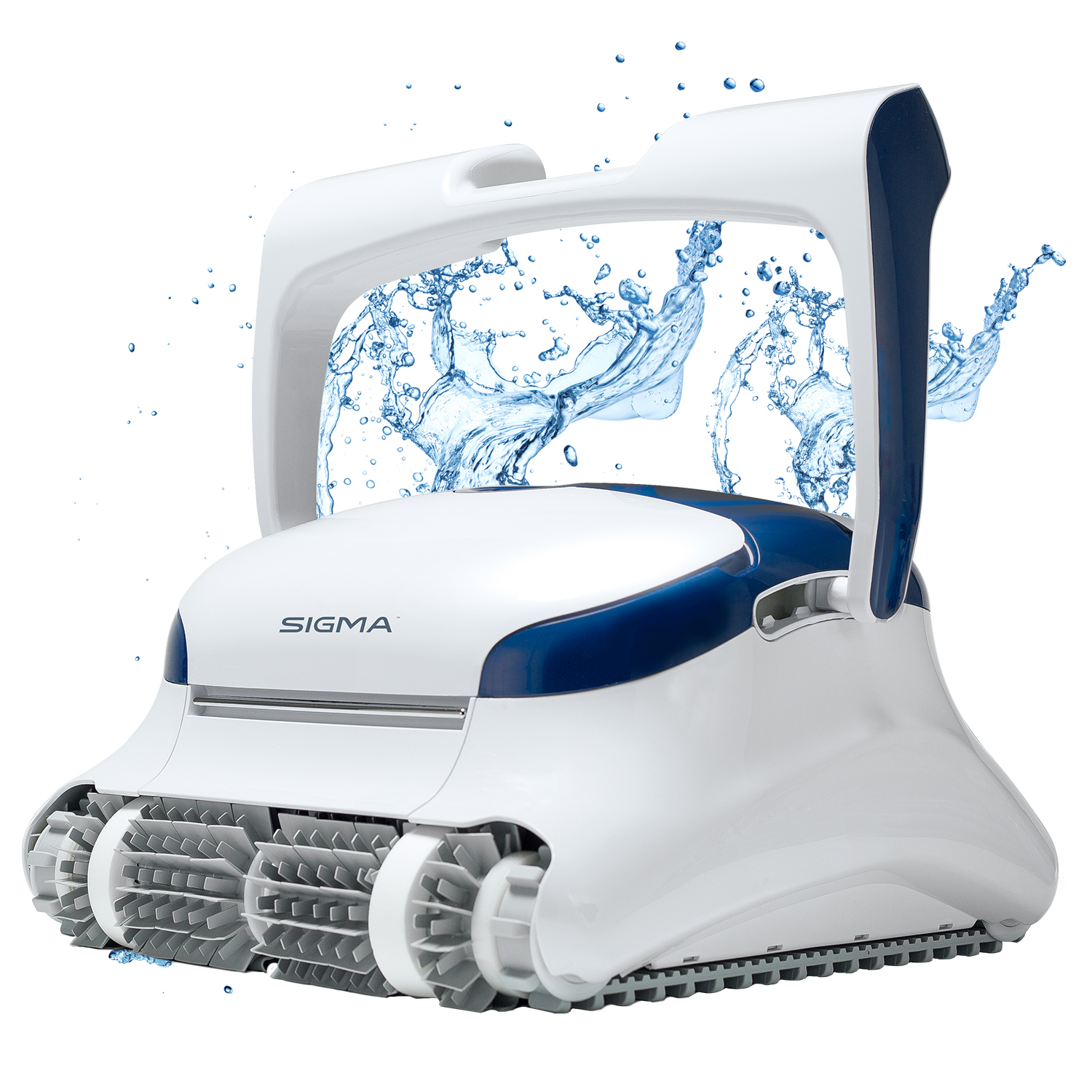
Dolphin Sigma
The Sigma offers the most contact with a slick wall: four scrubbing brushes, three ProLine motors at 4,500 gallons an hour, and SmartNav 3.0 with an onboard gyroscope. It scrubs floor, walls and waterline in 2.5 hours, is scheduled by day and time in the myDolphin Plus app, and carries a 3-year warranty.
It is third for practical reasons. It is the heaviest pick here at 24.6 lb, which counts against it on a rooftop or over an overflow edge, and it is the highest-priced.
- Best for
- Large steel lap or family pools at ground level, where weight is no issue and app scheduling is wanted.
- The trade-off
- Heaviest and highest-priced pick here, and its app needs a signal that reaches the pool. Steel is not on its surface list either.
$1299$1049Save $250 off the list price
Temporarily out of stock
Pick 4: Small steel plunge pools, floor and walls
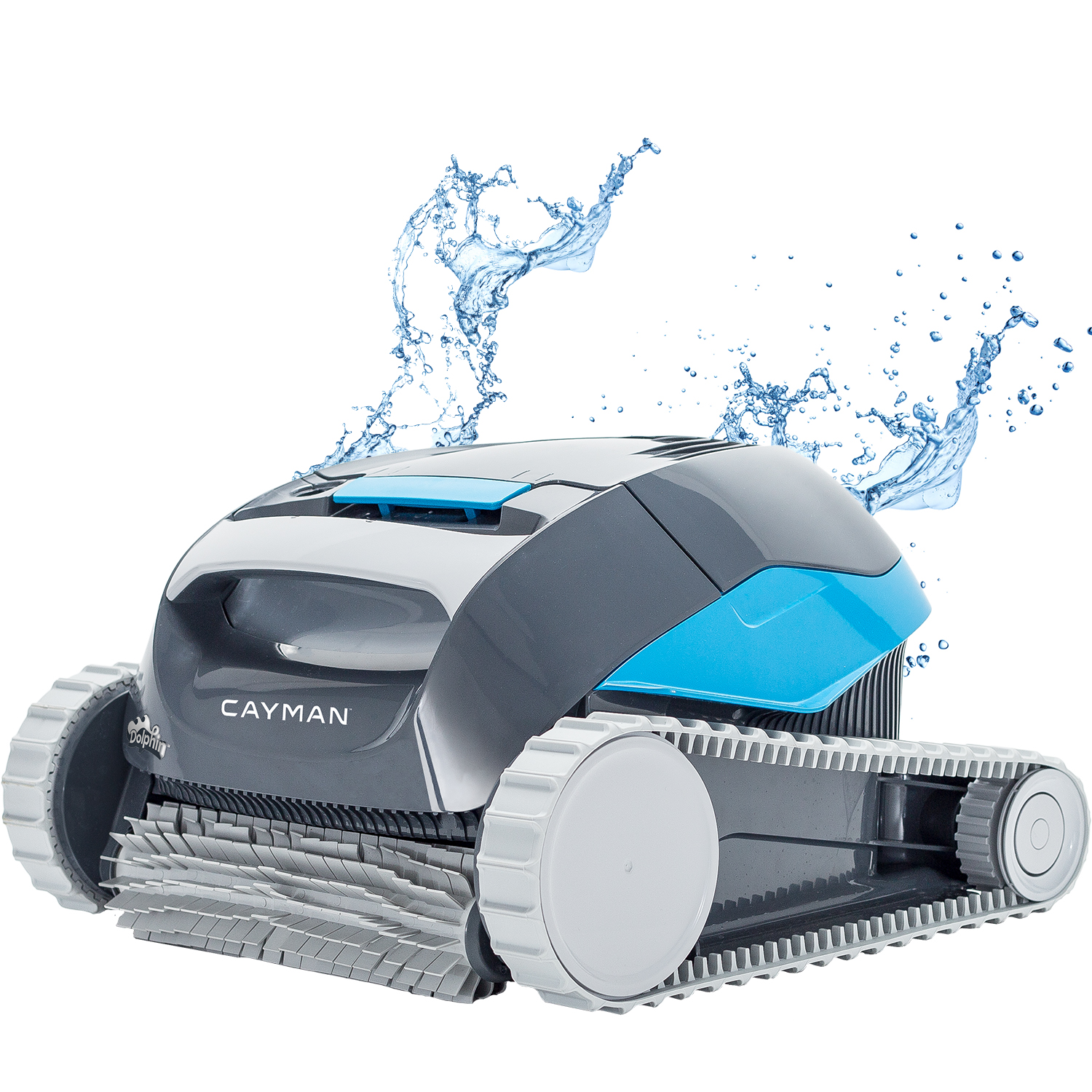
Dolphin Cayman
Stainless pools are often compact: plunge pools and spa-sized basins well inside the Cayman's 33 ft rating. For those, a 14.6 lb robot that cleans floor and walls in 2 hours is often all that is needed. It runs one HyperBrush on HyperGrip tracks, empties through a top hatch, and its timer runs it daily from the power supply.
It does not scrub the waterline, so the band at the surface, which shows clearly on steel, stays a wipe-down job.
- Best for
- Compact steel plunge pools and basins of 33 ft or less, where the waterline is wiped by hand.
- The trade-off
- No waterline scrubbing, NanoFilter panels are an optional add-on, and steel is not a published surface for it either.


Side by side
How the four matches compare.
| Specification | Dolphin Quantum | Dolphin Premier | Dolphin Sigma | Dolphin Cayman |
|---|---|---|---|---|
| Price today | $1599 | $1949 | $2349 | $1049 |
| Brushes | Dual HyperBrush | Dual scrubbing brushes | Quad scrubbing brushes | HyperBrush |
| Cleans | Floor, walls, waterline, sun shelves and stairs | Floor, walls and waterline | Floor, walls and waterline | Floor and walls |
| Traction | HyperGrip tracks | HyperGrip tracks | HyperGrip tracks | HyperGrip tracks |
| Pool length | Up to 50 ft | Up to 50 ft | Up to 50 ft | Up to 33 ft |
| Filtration | XXL MaxBin basket with standard and NanoFilter panels | Multi-Media: NanoFilters, oversized leaf bag and standard fine filters | NanoFilters and standard filter cartridges | MaxBin basket with fine panels; NanoFilter panels optional |
| Robot weight | 18.3 lb | 20.3 lb | 24.6 lb | 14.6 lb |
| Warranty | 2 years | 3 years | 3 years | 2 years |
What to look for
What actually matters on a steel shell.
-
Nothing hard touching the metal.
The parts that meet the pool are soft PVC brushes and rubber tracks, and neither marks steel. The risk is grit trapped beneath them, so rinse the robot before each run and filter finely enough to take grit out of circulation.
-
Traction on polished metal.
Brushed steel offers a little texture; mirror-polished steel offers almost none. Tracks, brush contact and water flow hold a robot to a wall, and how far it climbs on your finish is something to observe, not assume.
-
The joint between floor and wall.
Robots turn up a wall most easily where a curved cove joins it to the floor. Some steel pools are welded at a crisp right angle, and on a square joint a robot may clean only the floor and the base of the wall.
-
Overflow edges and gutters.
On a perimeter-overflow pool the water runs over the rim into a channel. A robot works inside the basin. The gutter, the grating and the balance tank are cleaned by hand, and the first cycle should be watched at the rim.
Three questions for your pool builder.
A steel pool is an engineered product, and the firm that built it knows things no robot manual does. Put these three questions to them before you buy. If the builder names a type of cleaner to avoid, take that seriously: their word on the shell outranks our advice.
- Is a tracked robotic cleaner with PVC brushes acceptable on this finish, whether brushed, polished or bead-blasted?
- What is the radius where the floor meets the walls, and are there floor fittings, lights, sensors or a movable floor the robot should stay clear of?
- For an overflow pool: is it acceptable for a cleaner to work up to the rim, and where should the cable and power supply sit?
Overflow edges, gutters and what stays a hand job.
On a deck-level or perimeter-overflow pool the waterline is the rim itself. A waterline-scrubbing robot works up the wall toward it, so stay close during the first cycle and see how it behaves at the top.
The channel beyond the rim is outside any robot's reach. Leaves and grit collect in the gutter and under the grating, and they are cleared by hand or with a hose, on the builder's schedule. The same goes for the balance tank. A robot shortens the list of jobs; it does not finish it.
Grit, not rubber, is what marks steel.
A brushed steel floor shows a new scratch as a bright line across the grain. Rubber and PVC will not make one. A grain of sand under a track can. So the care routine for a steel pool is mostly about keeping grit off the robot and out of the water.
Rinse the brushes and tracks before every run. Fit the NanoFilter panels so fine grit is captured, not blown back across the floor. On rooftops and coastal sites, where wind delivers sand daily, net the pool before the robot runs.
First cycle in a steel pool.
- Get the builder's reply in writing before the robot goes in, and keep it with the pool paperwork.
- Rinse the robot, then run the first cycle in daylight and stay with it. Note how high it climbs and what it does at the rim.
- Place the power supply where the cable reaches the far end of the basin without crossing a gutter grating, at the setback distance your manual gives.
- For a heated or chilled basin, check the water temperature range in the robot's manual before the first run.
Questions, answered
Steel pool questions worth asking first.
Is any robotic pool cleaner certified for stainless steel?
None in this guide. Their published surface lists cover finishes such as tile, fiberglass, vinyl and plaster, and stop there. So the best robotic pool cleaner for stainless steel pools is a judged match on soft contact parts, traction and coverage, confirmed with your builder.
Will rubber tracks or PVC brushes leave marks on stainless steel?
No. Both are far softer than steel. Marks come from hard particles, usually sand, carried under a track or packed into a brush. Rinsing the robot before each run and filtering with ultra-fine panels deals with most of that risk.
Can a robot clean the gutter of a perimeter-overflow pool?
No. A robot cleans inside the basin: the floor, the walls and, on the waterline models, the top of the wall. The overflow channel, its grating and the balance tank are separate spaces it cannot enter.
Will a robot climb the walls of a polished steel pool?
It may climb fully, partly or hardly at all, and we will not promise which. Brushed finishes give tracks more to work with than mirror polish. Even a robot that stays on the floor and lower walls still does the bulk of the cleaning.
Can I run a robot in an indoor stainless steel pool?
Yes. These are corded robots that plug into a standard outlet through a power supply, so there is nothing to charge. Indoors, plan where the power supply will sit at the distance the manual requires. The Quantum's timer works without Wi-Fi, and its app is there if the signal reaches.
The bottom line
How to decide for a steel pool.
Start with the builder, not the product page. Once a tracked cleaner is approved, choose on waterline coverage, lifting weight and filtration: the Quantum for most residential steel pools, the Premier where a longer warranty and a no-phone timer matter, the Sigma for a large ground-level pool, the Cayman for a compact basin. Then run a watched first cycle and judge the wall climbing with your own eyes.
More buying guides
