



By steps, ledges and tricky features
Best robotic pool cleaner for beach entry pools, and the stretch it will not reach.
Top pick: Dolphin Quantum
Live prices · Ships free · 30 Day Trial
A zero-entry slope runs out of water before it runs out of floor, so every robot stops somewhere short of the top; what differs is where.
The quick answer
The Dolphin Quantum is our pick for a beach-entry pool because it works in the shallowest water of this group: sun shelves, Baja ledges and stairs are all in its published coverage. The Sigma is the alternative for a long or steep entry, since its gyroscope senses the incline. Neither cleans the last stretch where the water thins out to nothing.
Know this first
No robotic cleaner cleans a beach entry all the way to the dry edge. A robot climbs the slope until the water is too shallow to keep it submerged, then turns back. On some pools it can run up far enough to draw air and stop. Plan to brush or hose down the top few feet yourself.
A beach entry, also called a zero entry, slopes from dry deck down to swimming depth with no step and no wall. It is the hardest part of a pool to keep clean, because the top of the slope is warm, sunlit and walked on with sandy feet. Owners looking for the best robotic pool cleaner for beach entry pools usually want to know one thing: how far up will it go?
A robot treats the slope as floor and climbs it until there is not enough water to stay under. Then it turns back. Everything below that turning point gets cleaned on every cycle. Everything above it is yours.
The picks, ranked
Four robots for a beach-entry pool, shallowest-working first.
$1999$1599Save $400 off the list price
Temporarily out of stock
Pick 1: Works in the shallowest water of the four
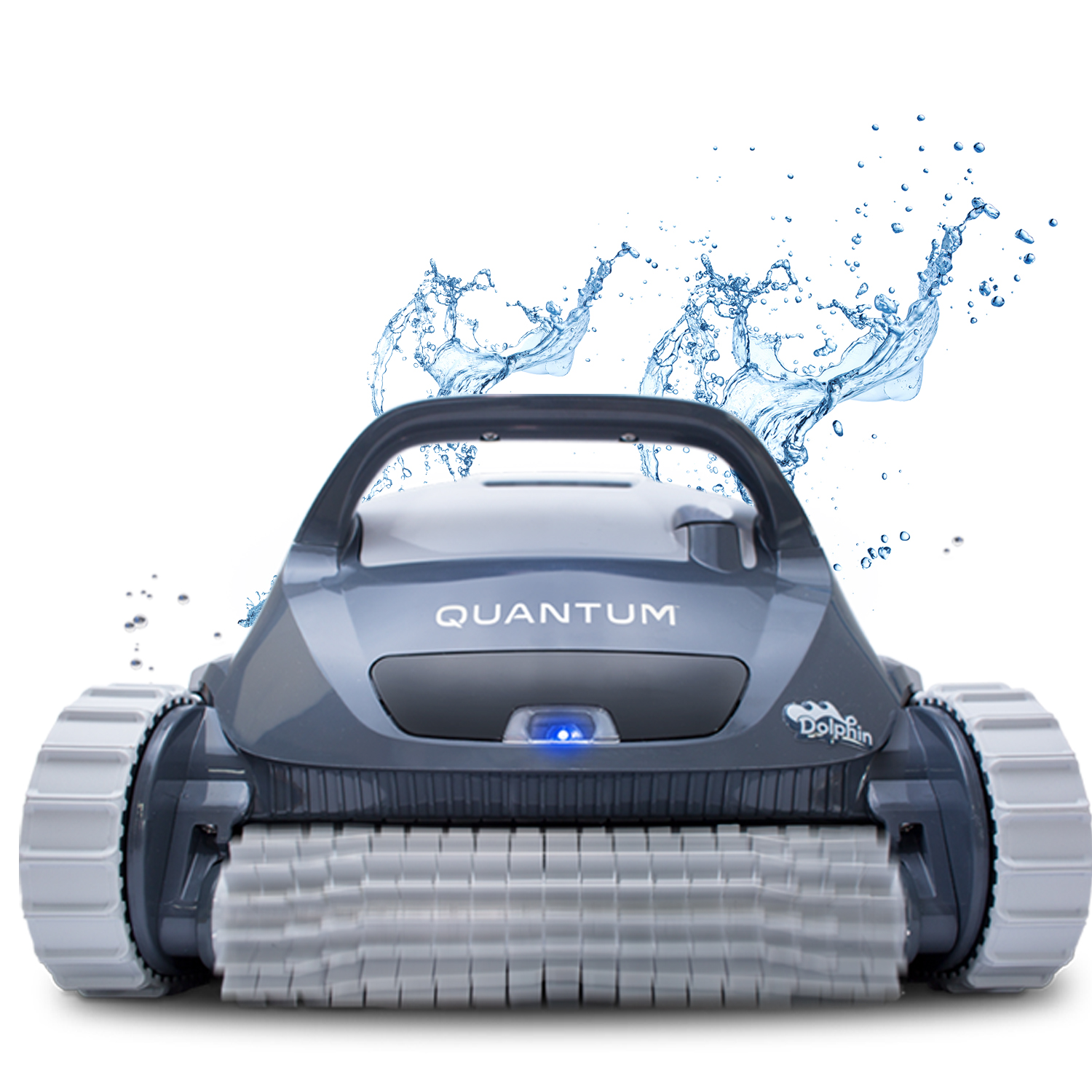
Dolphin Quantum
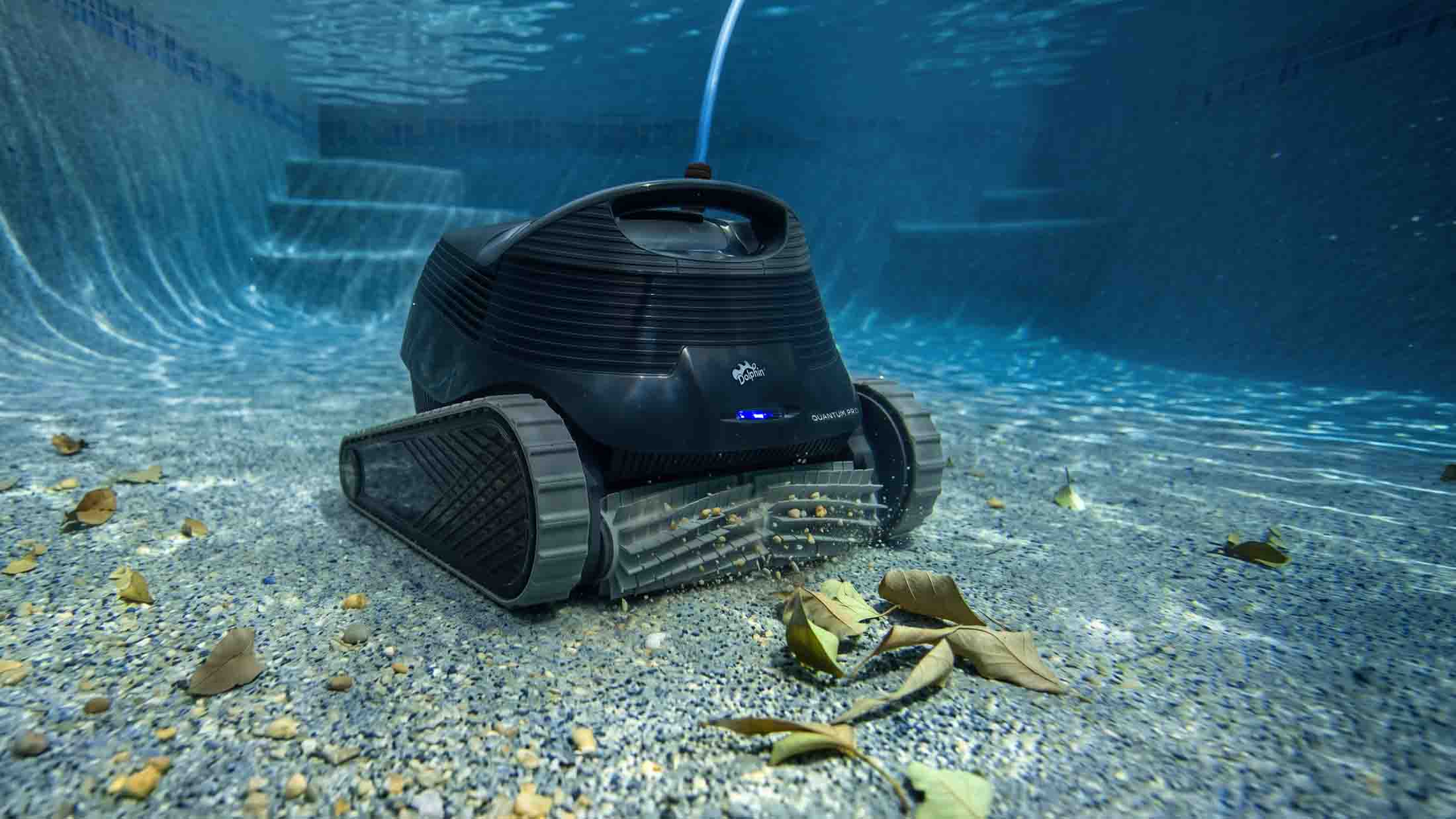
A beach entry is a floor that gets shallower until it stops, and the Quantum is the robot here published for the shallowest surfaces: sun shelves, Baja ledges and stairs. That does not take it to the dry edge, but it should put its turning point at least as high up the slope as any other pick. HyperGrip continuous rubber tracks hold on textured ramps, and a full set of NanoFilter panels is in the box for tracked-in sand.
- Best for
- Zero-entry pools up to 50 ft, especially ones that also have a sun shelf or wide steps.
- The trade-off
- It still stops short of the top. If it runs up and draws air on your slope, start it from the deep end.
$2999$2349Save $650 off the list price
Temporarily out of stock
Pick 2: Best sense of the slope
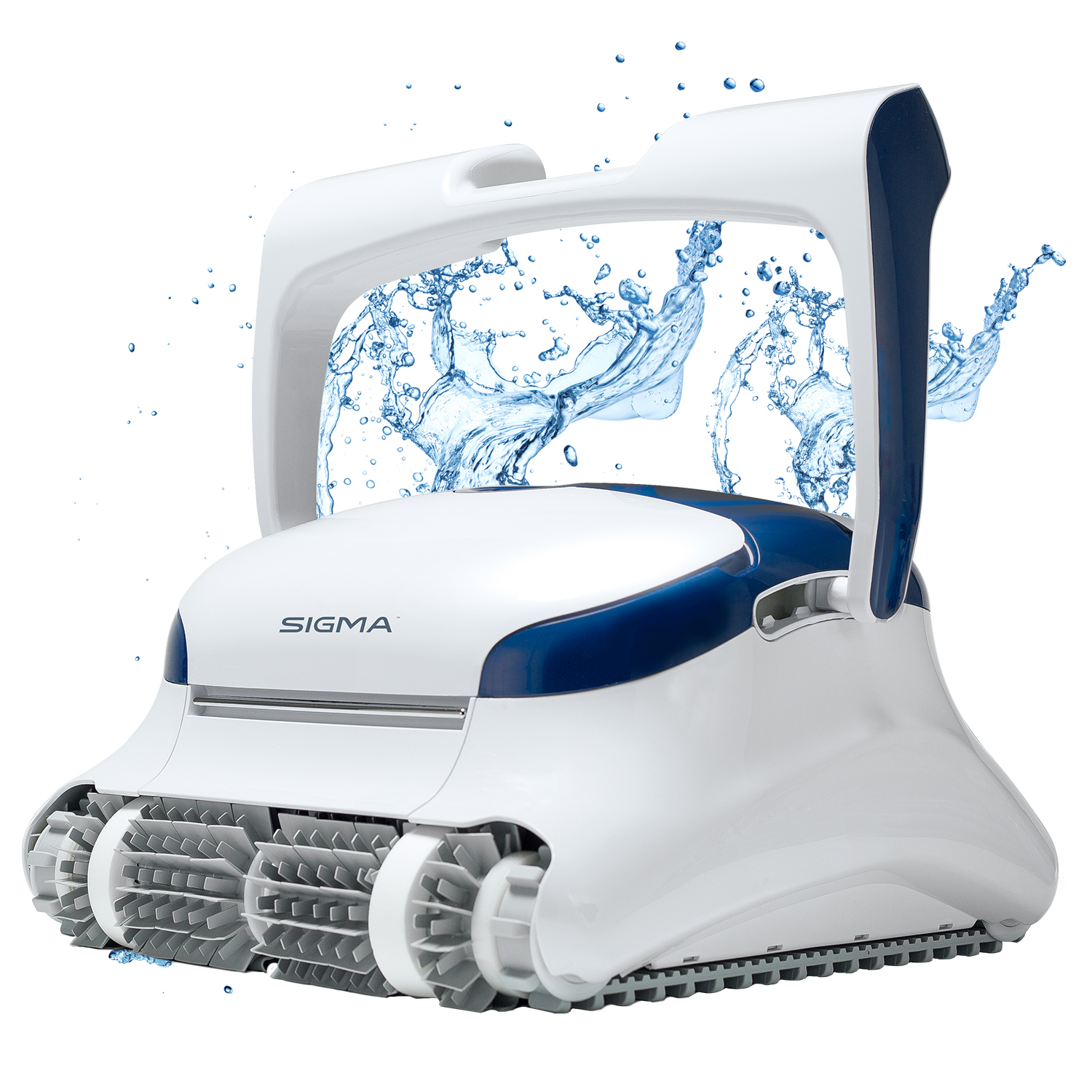
Dolphin Sigma
The Sigma is the pick that knows it is on a hill. The gyroscope in SmartNav 3.0 senses the incline, which helps on a long or steep entry where a robot can otherwise mistake a ramp for a wall or carry on too far. Four scrubbing brushes work a textured surface harder than two, three ProLine motors move 4,500 GPH, and NanoFilters are included for sand. It is second because its published coverage does not include shelves or ledges, and it is the highest-priced robot here.
- Best for
- Long or steep beach entries, and pools where the entry is one feature among several.
- The trade-off
- Highest price in this guide and, at 24.6 lb, the heaviest to carry back if it does stop on the slope.
$2499$1949Save $550 off the list price
Temporarily out of stock
Pick 3: Best for sand and leaves at the foot of the slope
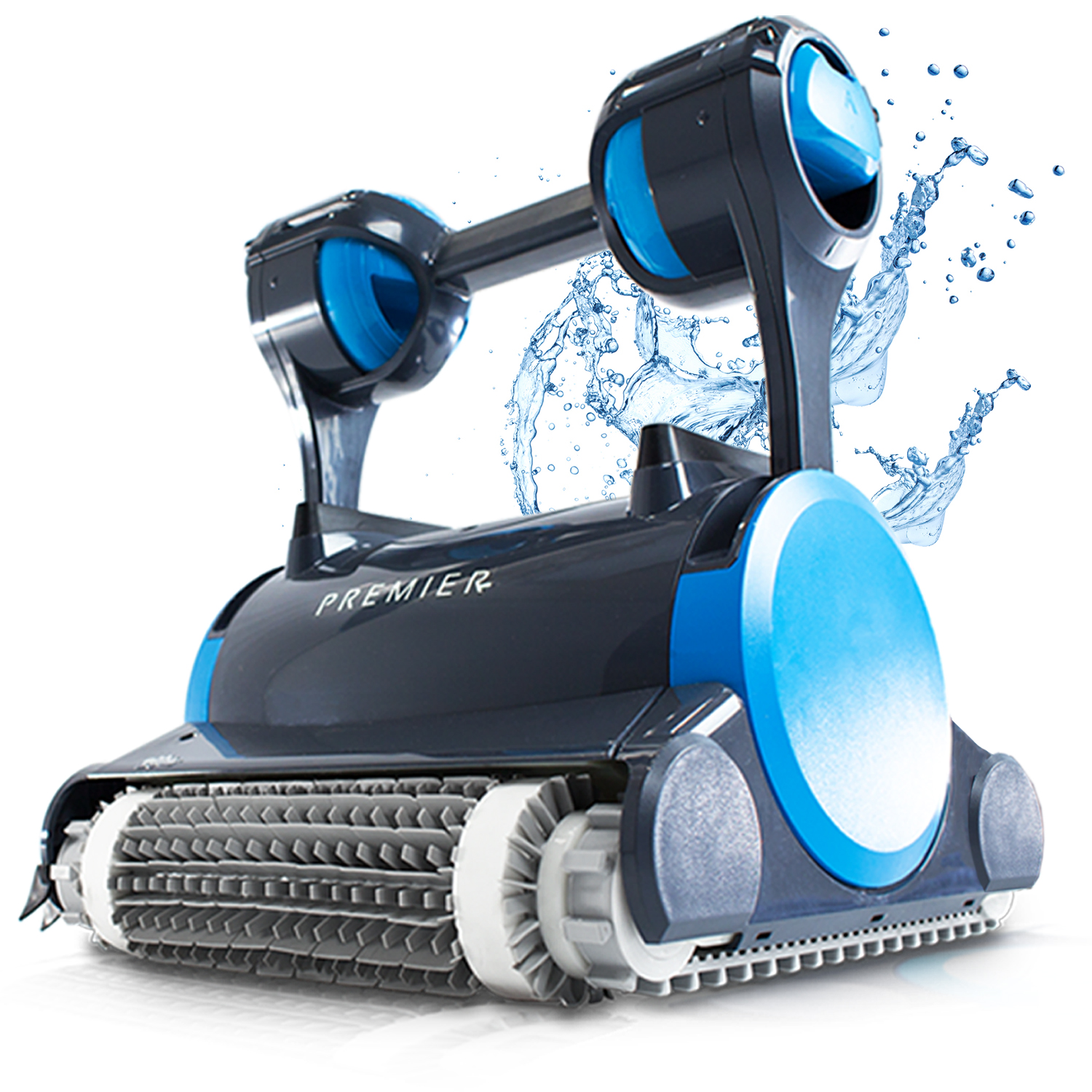
Dolphin Premier
What lands on a beach entry rolls downhill, and the Premier is the best-equipped robot here for whatever is waiting at the bottom. Its Multi-Media set covers both ends of the range: NanoFilters for fine sand, and the oversized leaf bag for the leaves and blossoms that blow in across an entry with no wall to stop them. It ranks third because nothing in its published coverage reaches into shallow water the way the Quantum's list does.
- Best for
- Windy sites where the open entry lets leaves and sand blow straight in.
- The trade-off
- Shelves and shallow ledges are not in its coverage, so expect more of the upper slope left to you. It costs more than the Quantum.
$1299$1049Save $250 off the list price
Temporarily out of stock
Pick 4: Lower-cost pick for entries on pools up to 33 ft
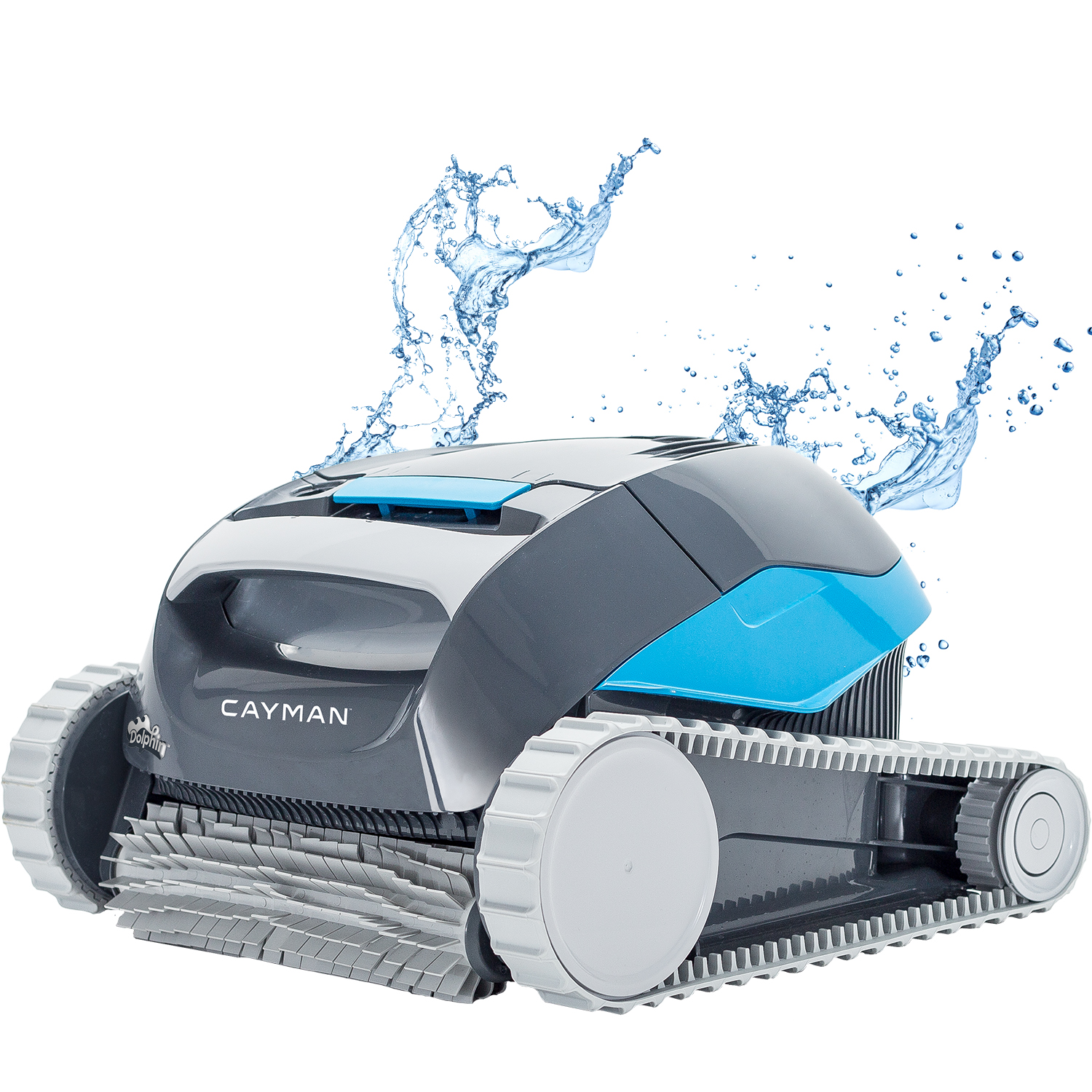
Dolphin Cayman
In a smaller pool with a short beach entry, the Cayman cleans the slope below its turning point and the rest of the floor and walls in 2 hours. Its timer runs it every day, which suits an entry that collects sand daily. HyperGrip tracks and a single fast HyperBrush handle textured finishes. It comes with fine panels; for the finest sand, add the optional NanoFilter panels. At 14.6 lb it is the easiest pick to lift off the slope and set back in deeper water if it stops.
- Best for
- Compact zero-entry pools of 33 ft or less that need cleaning daily.
- The trade-off
- No waterline scrubbing and no shelf coverage, and NanoFilter panels cost extra.


Side by side
The four picks, spec by spec.
| Specification | Dolphin Quantum | Dolphin Sigma | Dolphin Premier | Dolphin Cayman |
|---|---|---|---|---|
| Price today | $1599 | $2349 | $1949 | $1049 |
| Cleans | Floor, walls, waterline, sun shelves and stairs | Floor, walls and waterline | Floor, walls and waterline | Floor and walls |
| Traction | HyperGrip tracks | HyperGrip tracks | HyperGrip tracks | HyperGrip tracks |
| Navigation | SmartNav 2.0 | SmartNav 3.0 with gyroscope | SmartNav 2.0 | SmartNav 2.0 |
| Cable | 55 ft with anti-tangle swivel | 55 ft with 360° anti-tangle swivel | 55 ft with 360° anti-tangle swivel | 50 ft |
| Robot weight | 18.3 lb | 24.6 lb | 20.3 lb | 14.6 lb |
| Warranty | 2 years | 3 years | 3 years | 2 years |
What to look for
What matters on a sloping entry.
-
How shallow the robot is meant to work
A robot needs water over its body to keep the pump primed. The Quantum publishes sun shelves, Baja ledges and stairs in its coverage, the shallowest surfaces any robot here is listed for. We do not quote a minimum depth; the manual for each model gives it.
-
Behavior on an incline
On a slope the robot has to tell an incline from a wall and decide when to turn. The Sigma's onboard gyroscope senses the tilt directly. The other three rely on SmartNav 2.0 scanning and turn back when the water runs out.
-
Grip on a wet ramp
A beach entry is often finished in pebble or another textured surface for footing, which gives tracks something to bite on. All four picks drive on HyperGrip tracks. Grip matters most on the way back down, when the robot has to turn around on the slope.
-
Fine filtration for sand
Sand comes in on feet and settles at the bottom of the slope and in the texture of the entry. Standard panels let the finest of it through. NanoFilter panels are included with the Quantum, the Premier and the Sigma, and are an optional add-on for the Cayman.
Where the robot turns back, and why.
A robot has to stay submerged for its pump to work. As it climbs a beach entry the water over it thins. At some point the top of the robot nears the surface, the pump starts to pull air, and the robot either turns around or loses suction and stops.
Where that happens depends on the slope. On a steep entry the water gets shallow quickly, so the robot turns early and cleanly. On a very gentle one it can creep a long way up before the depth runs out, and those are the pools where a stopped robot is more likely. Watch the first two or three cycles so you know which kind you have.
The top few feet are yours to brush.
No setting changes this, so build it into the routine. It takes a couple of minutes.
- Brush the shallow stretch downhill, toward deeper water, so the robot collects what you move.
- Where the entry meets dry deck, hose the last foot toward the pool before the cycle.
- Do it before the scheduled cycle, not after. Debris pushed downhill once the robot has finished sits there until the next run.
- Check the tide line. A beach entry has a long, shallow edge where film dries on, and a soft brush deals with it.
Sand on pebble and textured entries.
Textured finishes give bare feet grip, and they give sand somewhere to hide. Each grain sits in a pocket of the surface, out of the main flow. Brushing lifts it, and fine filtration keeps it: with standard panels the finest sand passes straight through the robot and settles again.
So on a sandy beach entry, run NanoFilter panels as the default and rinse them after each cycle, because fine media loads quickly. A foot rinse or a mat beside the entry does more than any filter. The Escape is not a pick here: it is designed for above-ground pools, which do not have beach entries.
Running a robot in a zero-entry pool.
- Put the robot in at the deep end, not on the slope, so it starts fully submerged with the air out of its body.
- Stay for the first few cycles and note the point on the slope where it turns back. That line is where your brushing starts.
- If it runs up the entry and stops, lift it into deeper water, let the air bubble out and restart. If it happens every cycle, talk to us about your slope.
- Rinse NanoFilter panels after every sandy cycle. Sand left to dry in fine media is harder to wash out.
Questions, answered
Beach-entry questions.
Can a robotic pool cleaner be used in a zero-entry pool?
Yes. It cleans the floor, the walls and the lower part of the slope as it would in any in-ground pool. What it cannot do is clean the shallowest stretch of the entry, where there is too little water for it to stay submerged. That part needs a brush or a hose.
Will the robot drive up the beach and out of the pool?
It should not leave the water. As the water thins the robot turns back, or it draws air, loses suction and stops on the slope. A stop like that is a nuisance more than a fault, and it is most likely on very gradual entries. Starting the robot from the deep end helps.
What is the minimum water depth a Dolphin needs to work?
We do not quote a figure here because it varies by model; the manual for each robot gives it. As a guide to relative ability, the Quantum is the pick with sun shelves, Baja ledges and stairs in its published coverage, which makes it the best choice of the four for shallow water.
Is the best robotic pool cleaner for beach entry pools worth putting on a timer?
Yes, once you have watched it and know it turns back cleanly on your slope. An entry collects debris every day, so frequent scheduled cycles keep it from building up. If the robot tends to stop on the slope, sort that out first, because an unattended robot that stalls simply waits there.
The bottom line
Pick for the slope you have.
Every robot stops short of the top, so choose by what happens below that line. For the shallowest reach and the best price among the 50 ft robots here, the Quantum. For a long or steep entry, the Sigma and its gyroscope. For wind-blown leaves and sand together, the Premier. For a pool of 33 ft or less, the Cayman. Then keep a brush by the entry, because the first few feet are always yours.
More buying guides
