



By debris and dirt problem
The best robotic pool cleaner for algae, and what no robot can do about it.
Top pick: Dolphin Sigma
Live prices · Ships free · 30 Day Trial
Sanitizer kills algae; a robot scrubs the surfaces where it tries to settle and filters out what brushing and chlorine have loosened.
The quick answer
No robot kills algae or replaces chlorine and balanced water. For the part a robot can do, scrubbing and fine filtering, the Dolphin Sigma leads with quad brushes, NanoFilters and wall and waterline coverage. The Dolphin Quantum is the runner-up and the better value: two HyperBrushes at twice standard speed, NanoFilter panels included, and coverage of the steps and ledges where algae often starts.
It pays to be exact here, because many pages are not. A robotic cleaner does not kill algae. It does not sanitize water, and it does not replace the hand brushing that an algae treatment needs. Algae is beaten by chlorine at the right level, balanced water and good circulation. If the pool is green today, the fix is in the chemical aisle, not on this page.
What the best robotic pool cleaner for algae does is narrower and still useful. It scrubs the floor, walls and waterline on a schedule, so algae has a harder time taking hold, and it filters out the algae that brushing and chlorine have loosened or killed. Brush count and fine filtration decide how well. On that basis the order is the Sigma, the Quantum, the Premier and the Cayman.
The picks, ranked
Four robots ranked for scrubbing and filtering algae.

$2999$2349Save $650 off the list price
Temporarily out of stock
Pick 1: Most brushes on walls, floor and waterline
Dolphin Sigma
Brush count comes first with algae, and the Sigma has four scrubbing brushes where the other picks have two or one. Three ProLine motors drive 4,500 GPH through included NanoFilters, so what the brushes break loose is held, not redistributed. It climbs walls and scrubs the waterline, two places algae favors, and SmartNav 3.0 with a gyroscope keeps coverage consistent from one cycle to the next. The app schedules by day and time, which makes a regular scrubbing routine easy to keep.
- Best for
- In-ground pools up to 50 ft with recurring algae on walls or tile, where maximum scrubbing justifies the price.
- The trade-off
- It is the highest-priced pick, weighs 24.6 lb, and its published coverage does not list steps or ledges.

$1999$1599Save $400 off the list price
Temporarily out of stock
Pick 2: Fast brushes that reach steps and ledges
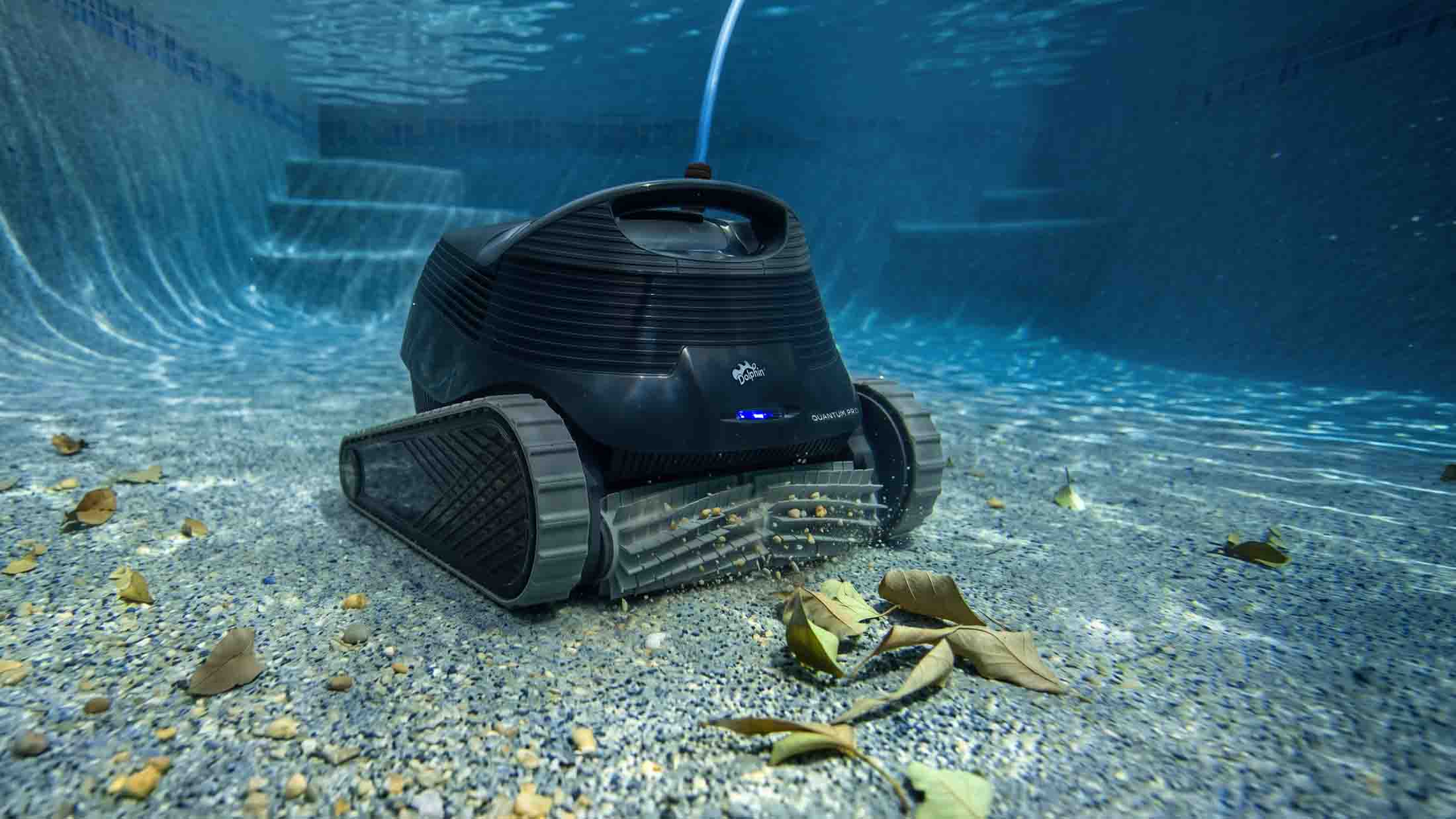
Dolphin Quantum
The Quantum has half the Sigma's brush count, but its dual HyperBrush spins at twice the speed of standard brushes, and it goes where the other picks' published coverage does not: stairs, sun shelves and Baja ledges, as well as the floor, walls and waterline. Those warm, shallow, slow-moving areas are where a first patch of algae commonly shows. NanoFilter panels are included, the XXL MaxBin opens from the top for washing, and the timer on the power supply keeps the scrubbing regular.
- Best for
- Pools with steps, a tanning ledge or a sun shelf, and owners who want prevention on a timer at a middle price.
- The trade-off
- Two brushes, not four, and a 2-year warranty. It is an in-ground robot only.

$2499$1949Save $550 off the list price
Temporarily out of stock
Pick 3: Longest scrub per cycle, longest warranty
Dolphin Premier
The Premier's case is time on the surface. Its cycle runs 3 hours, the longest in this guide, with dual scrubbing brushes working the floor, walls and waterline throughout and 4,500 GPH pulling what they loosen into included NanoFilters. After a treatment, the Multi-Media system lets you start with standard fine filters for the bulk and finish with NanoFilters for the residue. It sits behind the Quantum here because its brushes turn at standard speed and its published coverage does not list steps or ledges.
- Best for
- Owners who want long, thorough cycles and a 3-year warranty, run from a simple timer on the power supply.
- The trade-off
- No app, standard-speed brushes, and a higher price than the Quantum.
$1299$1049Save $250 off the list price
Temporarily out of stock
Pick 4: Floor-and-wall scrubbing for smaller pools
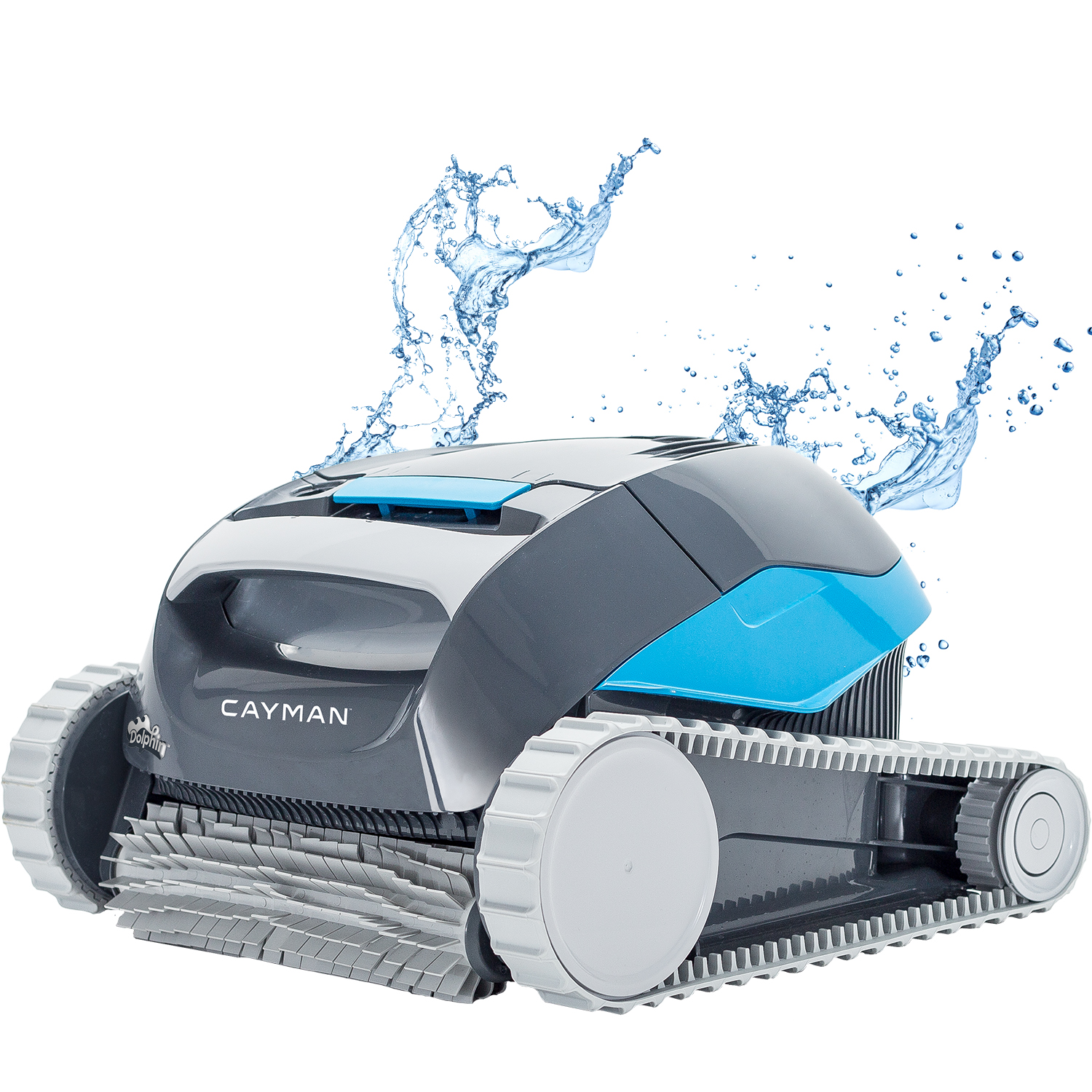
Dolphin Cayman
For a pool of 33 ft or less, in-ground or above-ground, the Cayman provides the core of what helps with algae: a HyperBrush at twice standard speed on the floor and walls, over 4,000 GPH, and a timer that runs every day, so the scrubbing happens whether or not anyone remembers. Its limits are clear. It has one brush. It does not clean the waterline, where algae often shows first. And its included fine panels pass the finest material, so add the optional NanoFilter panels if algae is your reason for buying.
- Best for
- Pools 33 ft and under where daily floor and wall scrubbing is the goal and the budget is modest.
- The trade-off
- One brush, no waterline cleaning, and the NanoFilter panels are an optional add-on.


Side by side
Brushes, filters and coverage compared.
| Specification | Dolphin Sigma | Dolphin Quantum | Dolphin Premier | Dolphin Cayman |
|---|---|---|---|---|
| Price today | $2349 | $1599 | $1949 | $1049 |
| Filtration | NanoFilters and standard filter cartridges | XXL MaxBin basket with standard and NanoFilter panels | Multi-Media: NanoFilters, oversized leaf bag and standard fine filters | MaxBin basket with fine panels; NanoFilter panels optional |
| Filter access | Cartridges | Top-load, one-click open | Top-load, no tools | Top hatch, one-tab emptying |
| Brushes | Quad scrubbing brushes | Dual HyperBrush | Dual scrubbing brushes | HyperBrush |
| Flow rate | 4,500 GPH | 4,000 GPH | 4,500 GPH | Over 4,000 GPH |
| Cycle time | 2.5 hours | 2 hours | 3 hours | 2 hours |
| Cleans | Floor, walls and waterline | Floor, walls, waterline, sun shelves and stairs | Floor, walls and waterline | Floor and walls |
| Scheduling | Weekly scheduler by day and time | Weekly timer: every day, every 2 days or every 3 days | Weekly timer: every day, every 2 days or every 3 days | Timer: every day |
| Warranty | 3 years | 2 years | 3 years | 2 years |
What to look for
What decides how much a robot helps with algae.
-
Brushes, and how many
Algae starts as a thin film that clings to surfaces, and suction alone does not shift it. Active brushes break that film so the filter can take it. More brushes, or faster ones, mean more scrubbing on each pass.
-
Fine filtration
Algae cells, alive or dead, are tiny. Standard panels pass much of what the brushes lift, and it lands again elsewhere. Ultra-fine media holds it. NanoFilters come with the Sigma and Premier, NanoFilter panels with the Quantum; for the Cayman they are an optional add-on.
-
Walls, waterline and steps
Algae prefers places with little circulation: wall seams, the tile line, steps, ledges and shaded corners. Check each robot's published coverage against where your algae appears. A robot that cleans only the floor and walls leaves the tile line to you.
-
A schedule you will keep
Prevention is repetition. A robot that scrubs every day or two from a timer or app, with nobody remembering to start it, does more than a stronger one used now and then. It still needs sanitizer in the water to finish the job.
Who does what in an algae problem.
It helps to separate three jobs. When all three are covered, algae struggles to get established. When the first is missing, the other two only move green around.
- Killing it: chlorine at the right level, balanced pH and, for stubborn types, an algaecide. No robot does any part of this.
- Loosening it: brushing. A robot's brushes cover the floor and walls on every cycle. Corners, fittings and the shallowest steps still need a hand brush, and so does the whole pool during a treatment.
- Removing it: filtration. The pool filter clears the water; the robot's filter takes what settles on the surfaces.
Using a robot for prevention.
This is where a robot earns its keep. Set it to run every day or two through the warm months. Each cycle scrubs away the thin film that algae grows from and lifts debris, which uses up chlorine as it decays, off the floor. Keep testing and balancing the water as usual: the robot is one part of prevention, not the whole of it.
Watch the places the robot does not reach in your pool. If the same corner or step shows a faint green shadow each week, brush it by hand and see whether a return jet can be aimed toward it.
During and after an outbreak.
When the pool is green, take the robot out. It should not sit in the water while you shock: remove it before adding chemicals and check the manual before putting it back. Brush the whole pool by hand, shock, and run the pump until the water turns from green to cloudy blue or gray. Then the robot returns, with its finest filter fitted, to collect what has settled.
Afterward, wash the filter panels or cartridges thoroughly and rinse the robot itself, brushes included. Algae carried on a dirty filter goes straight back into the pool on the next cycle.
Habits that keep algae from getting a start.
- Test the water at least weekly in summer, and after heavy rain or a busy weekend. A robot cannot make up for low chlorine.
- Aim a return jet toward any dead spot where green appears first, and run the pump long enough each day to keep water moving there.
- Brush steps, corners and behind ladders by hand once a week, pushing debris toward the floor where the robot will collect it.
- Rinse swimsuits, toys and floats that have been in a lake or another pool before they go into yours.
Questions, answered
Algae and robots: straight answers.
Will a robotic pool cleaner get rid of algae on its own?
No. It removes algae from surfaces and holds it in a filter, but it does not kill what is growing in the water, so the pool turns green again unless the chemistry is corrected. Treat the water first. After that, a robot shortens the clean-up and keeps the surfaces scrubbed.
Can I run the robot while the pool is green?
It is better not to. A live bloom clogs a fine filter within minutes, and the pool is about to be shocked, which the robot should not sit through. Treat, brush and filter until the water clears to cloudy, then bring the robot back to collect the settled residue.
Is the best robotic pool cleaner for algae one with more brushes or a finer filter?
Ideally both, which is why the Sigma is first here: four brushes and NanoFilters included. If you must choose, match the weakness in your pool. A film that keeps forming on walls and tile points to brushing. A dust that settles after treatment and clouds when disturbed points to filtration.
Does a robot remove black algae?
Not reliably. Black algae roots into plaster and protects itself with a tough outer layer, so it needs a stiff brush worked hard on each spot, direct chemical treatment and persistence. A robot's brushes are not made for that. A robot helps with general cleanliness around the treatment.
Do I still need to brush by hand if the robot scrubs the walls?
Yes, but far less. The robot covers the broad surfaces on every cycle. Your brush is for what it misses: tight corners, behind ladders and rails, around lights and fittings, and very shallow steps. During any algae treatment, brush the entire pool by hand.
The bottom line
The decision rule for algae.
Fix the water first; no robot on this page changes that. Then choose by where algae shows up. Walls and tile, and you want the most scrubbing available: the Sigma. Steps, ledges or a shelf, or a tighter budget with the tile line still covered: the Quantum. Long cycles from a simple timer: the Premier. A pool of 33 ft or less: the Cayman, or for above-ground pools the lower-priced Dolphin Escape. Unsure? Chat with a Dolphin Expert.
More buying guides
