



By debris and dirt problem
The best robotic pool cleaner for dead algae left behind by a shock.
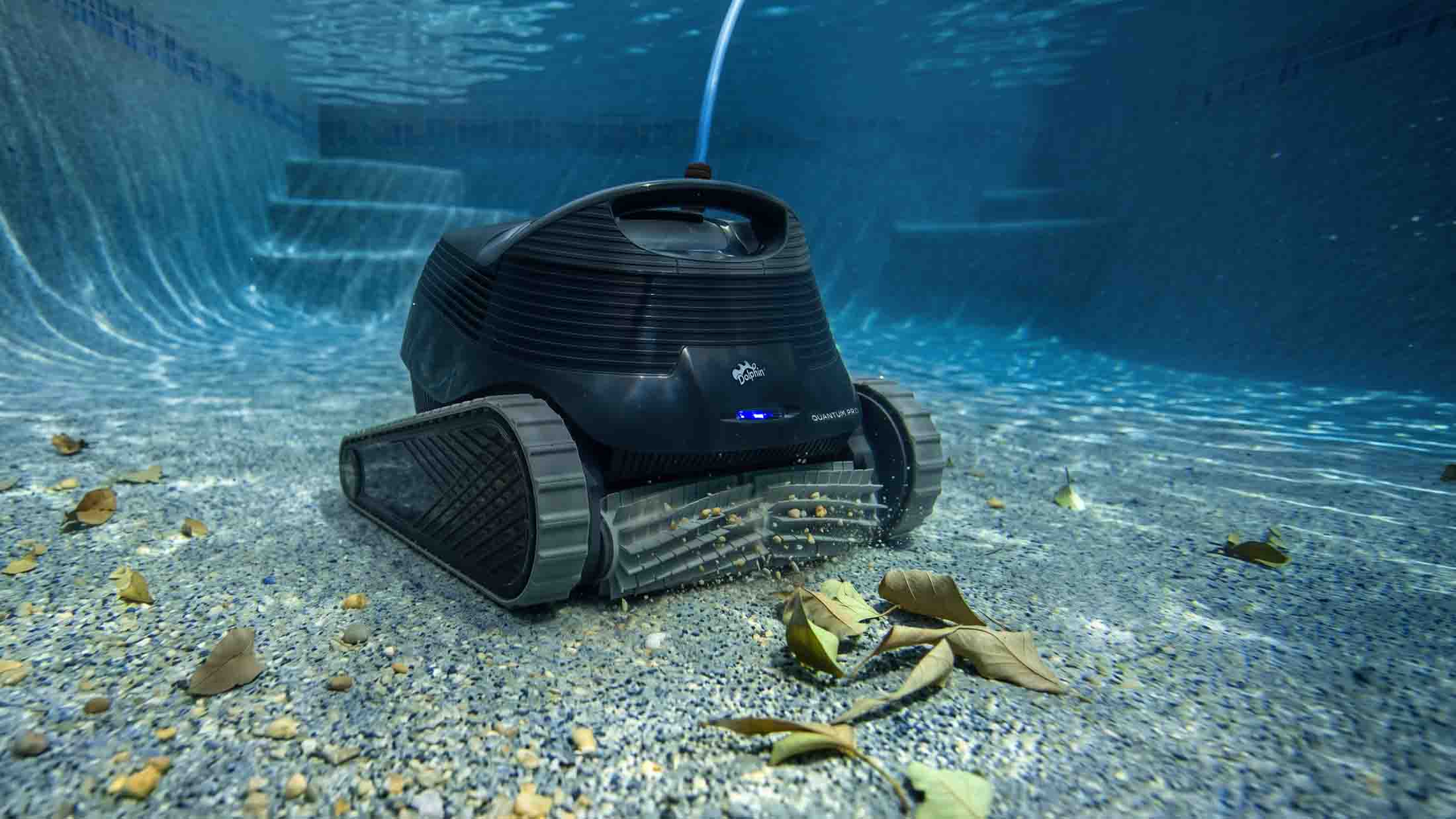
Top pick: Dolphin Quantum
Live prices · Ships free · 30 Day Trial
What a shock leaves on the floor is among the finest debris a pool holds, so it takes NanoFilter-class media, settled water and repeated rinsing.
The quick answer
Dead algae passes through standard panels, so the pick has to include ultra-fine media. The Dolphin Quantum leads: NanoFilter panels come in the box, the XXL MaxBin gives the dust more filter area to load, and the basket opens with one click for the several rinses this job takes. The Premier is next, with NanoFilters and a full-filter light on the power supply. Wait for chlorine to return to normal before either goes in.
The shock worked. The green is gone, the water has turned from pea soup to cloudy blue, and the floor is now covered in a pale gray or tan powder. Touch it with a brush and it bursts into a cloud, drifts for an hour and lands somewhere else. That powder is dead algae, and it is the last and most tedious stage of clearing a pool.
It is also about the finest debris you will ever ask a robot to collect, which is why the best robotic pool cleaner for dead algae is defined by its filter and little else. The Quantum, the Premier and the Sigma all include ultra-fine media. The Cayman does not, although NanoFilter panels can be added. Method counts as much as machine, so this page covers both.
The picks, ranked
Four robots ranked for the post-shock clean-up.

$1999$1599Save $400 off the list price
Temporarily out of stock
Pick 1: Most filter area for the finest debris
Dolphin Quantum
Dead algae punishes small filters, and the Quantum has the most generous one in this guide: the XXL MaxBin, with over 400 square inches of filter area and a full set of NanoFilter panels included. More area means more floor cleared before the first rinse. When that rinse comes, one click opens the basket from the top, and a 2-hour cycle lets you fit two or three rounds into a day. Its coverage includes stairs and ledges, where a share of the dust always settles.
- Best for
- In-ground pools up to 50 ft recovering from a bloom, especially those with steps or a ledge.
- The trade-off
- Even this basket needs rinsing mid-cycle on a heavy layer, and the warranty is 2 years.

$2499$1949Save $550 off the list price
Temporarily out of stock
Pick 2: Full-filter indicator for a fast-loading job
Dolphin Premier
With dead algae the filter can be full long before the cycle is over, and a robot running on a blocked filter is only stirring. The Premier's full-filter indicator on the power supply removes the guesswork: when it lights, stop, rinse and restart. NanoFilters are included with the Multi-Media system and lift out from the top with no tools. At 4,500 GPH and 3 hours a cycle it is thorough once the heaviest layer has gone, and its waterline scrub removes the gray scum line a bloom leaves on the tile.
- Best for
- Owners who want a clear rinse signal and a 3-year warranty, and do not need an app.
- The trade-off
- A 3-hour cycle makes repeated rounds slower, and it is priced above the Quantum.

$2999$2349Save $650 off the list price
Temporarily out of stock
Pick 3: Quad brushes for dust lodged in the surface
Dolphin Sigma
Dead algae does not only lie on the floor. It lodges in plaster pores, tile grout and the texture of pebble finishes, where it shows as a gray shadow after the loose dust has gone. The Sigma's quad scrubbing brushes work that residue out, three ProLine motors pull it into included NanoFilters at 4,500 GPH, and the app flags a loaded filter. It ranks third for this job because it is the highest-priced robot here, and cartridges take more handling through a day of repeated rinsing.
- Best for
- Textured or older finishes that keep a gray shadow after the loose dust is gone.
- The trade-off
- The highest price in this guide, and cartridges are more work than a basket when you rinse again and again.
$1299$1049Save $250 off the list price
Temporarily out of stock
Pick 4: Only with NanoFilter panels added
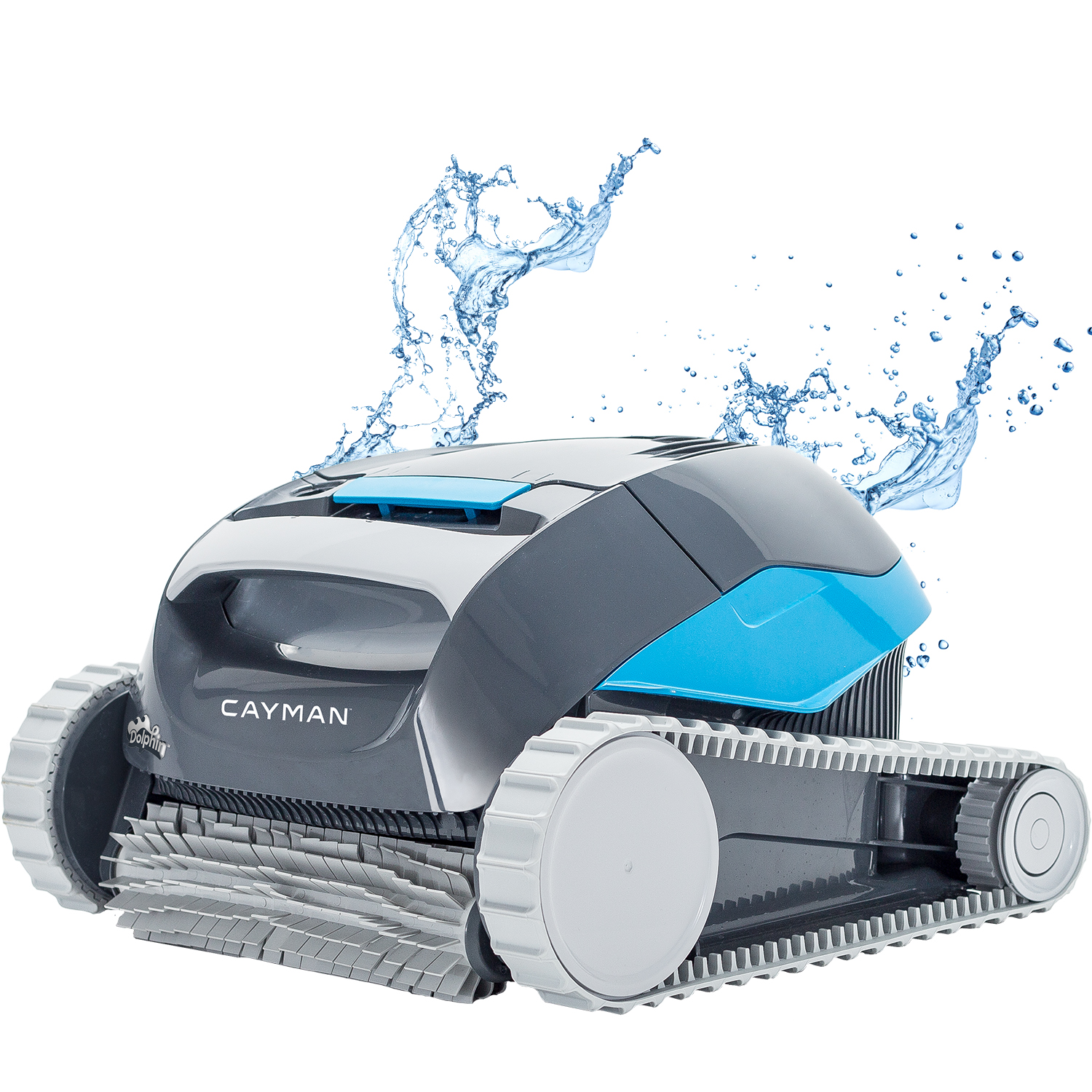
Dolphin Cayman
Out of the box, the Cayman is the wrong tool for dead algae. Its standard fine panels pass much of it, so the robot lifts the dust and returns it to the water. Add the optional NanoFilter panels and the picture changes for pools up to 33 ft, in-ground or above-ground: a 2-hour floor-and-wall cycle, a MaxBin basket that empties through a top hatch, and a weight of 14.6 lb that makes repeated lifting easy. The same condition applies to the Dolphin Escape.
- Best for
- Owners of smaller pools who will buy the fine panels along with the robot.
- The trade-off
- Standard panels pass dead algae, and without waterline cleaning the scum line on the tile is yours to scrub.


Side by side
Filter media and cycle length, pick by pick.
| Specification | Dolphin Quantum | Dolphin Premier | Dolphin Sigma | Dolphin Cayman |
|---|---|---|---|---|
| Price today | $1599 | $1949 | $2349 | $1049 |
| Filtration | XXL MaxBin basket with standard and NanoFilter panels | Multi-Media: NanoFilters, oversized leaf bag and standard fine filters | NanoFilters and standard filter cartridges | MaxBin basket with fine panels; NanoFilter panels optional |
| Filter access | Top-load, one-click open | Top-load, no tools | Cartridges | Top hatch, one-tab emptying |
| Brushes | Dual HyperBrush | Dual scrubbing brushes | Quad scrubbing brushes | HyperBrush |
| Flow rate | 4,000 GPH | 4,500 GPH | 4,500 GPH | Over 4,000 GPH |
| Cycle time | 2 hours | 3 hours | 2.5 hours | 2 hours |
| Cleans | Floor, walls, waterline, sun shelves and stairs | Floor, walls and waterline | Floor, walls and waterline | Floor and walls |
| Scheduling | Weekly timer: every day, every 2 days or every 3 days | Weekly timer: every day, every 2 days or every 3 days | Weekly scheduler by day and time | Timer: every day |
| Warranty | 2 years | 3 years | 3 years | 2 years |
What to look for
What it takes to hold dead algae.
-
NanoFilter-class media
Dead algae cells are far smaller than the openings in a standard panel. Run standard panels and you will watch a gray plume leave the robot. Ultra-fine media is the minimum: NanoFilters on the Premier and Sigma, NanoFilter panels on the Quantum.
-
Filter area
This debris loads a filter faster than anything else in a pool, sometimes within the first part of a cycle. The more filter area a robot has, the more floor it clears before flow drops and it needs rinsing.
-
Quick removal and rinsing
Plan on rinsing several times before the floor is clear. A filter that lifts out from the top with no tools makes each round a short interruption, and a robot that signals a full filter saves wasted running.
-
Chemical timing
A robot should not sit in shock-level chlorine. Whichever model you choose, it goes in only when the chlorine reading is back in the normal range. That wait also gives the dead algae time to settle, which helps.
Make sure it is dead.
Dead algae is pale: gray, white or light tan. It lies loose on the floor, clouds the instant it is disturbed and does not cling to walls. If what you see is still green or yellow, or it sticks to the surface and smears when brushed, some of it is alive and the treatment is not finished. Keep the chlorine up and keep brushing.
A second check is the water test. If the chlorine level holds overnight, the bloom is over and what remains is clean-up.
The sequence, from shock to clear floor.
The order matters more than the robot. Done in sequence, the residue of a bad bloom usually clears in a few rounds over a day or two. Done out of sequence, the same dust simply circulates.
- Let the chlorine fall back to the normal range. Check the manual for your robot, and do not hurry this.
- Turn the pump off in the evening and leave the pool still overnight, so the dust settles in an even layer.
- In the morning, lower the robot in gently with ultra-fine media fitted and start the cycle.
- Rinse the filter when it loads, which may be well before the cycle ends, and send the robot back.
- Restart the pump between rounds so the pool filter can clear the cloud. Repeat until the floor stays clear.
When to vacuum to waste first.
If the layer is thick enough to hide the floor or drift into piles, a robot is slow going: its filter fills in minutes, again and again. A manual vacuum with the filter valve set to waste sends that sludge straight out of the pool in a fraction of the time. You lose some water and need to refill, and not every system has a waste setting. Once the bulk is gone, the robot finishes the job and collects the thin film that keeps appearing for a few days.
Details that speed the clean-up.
- Rinse NanoFilter panels until the water runs completely clear. Dead algae leaves a gray slime in fine media that blocks it if left to dry.
- Do not brush just before the robot runs. Brushing belongs to the treatment stage; now it only lifts the dust out of the robot's reach.
- Keep everyone out of the pool until the floor is clear. Each swim puts the dust back into the water for hours.
- When the job is done, wash the filter, rinse the robot and refit the standard panels for everyday cleaning.
Questions, answered
After the shock: common questions.
How soon after shocking can the robot go back in?
When the chlorine has dropped back to the normal range you keep for swimming, and not before. Depending on the dose, the sun and pump hours, that can take anywhere from a day to several. Test instead of guessing, and check the manual for your model's guidance.
Why is the pool cloudy again every time the robot runs?
Some of the dust is passing through or being stirred. Check three things. Is ultra-fine media fitted? Standard panels release dead algae as a cloud. Is the filter full? A loaded filter stops collecting. Was the pool left to settle with the pump off? If all three are right, a faint haze is normal and the pool filter clears it.
Is the best robotic pool cleaner for dead algae different from the best one for a live bloom?
Yes. A live bloom is a chemical problem, and the robot's contribution is scrubbing, so brush count leads. Dead algae is a filtration problem, so ultra-fine media and filter area lead. That is why the Quantum heads this page, while the four-brush Sigma comes first for scrubbing.
Will dead algae clog my pool filter too?
It can. The same fine dust that loads a robot's panels also loads a cartridge or sand filter, so pressure rises quickly during a clean-up. Clean or backwash more often than usual until the water clears. Every pass the robot makes with ultra-fine media takes some of that burden off the pool filter.
Can I leave dead algae on the floor until it goes away?
It will not go away. It is organic matter, and left in the pool it keeps using up chlorine and gives the next bloom something to feed on. Clearing it promptly, by vacuum, robot or both, is part of finishing the treatment.
The bottom line
What to do, in order.
Wait for the chlorine, settle the pool overnight, and vacuum a heavy layer to waste. Then let filter area decide the robot. For an in-ground pool up to 50 ft, the Quantum has the most of it, with NanoFilter panels included. Take the Premier for its full-filter light, or the Sigma for a textured finish. For a pool of 33 ft or less, the Cayman works once NanoFilter panels are added. Returns run for 30 days with free exchanges, should the first choice not suit your pool.
More buying guides
