



By debris and dirt problem
The best robotic pool cleaner for pollen, from yellow film to sunken dust.
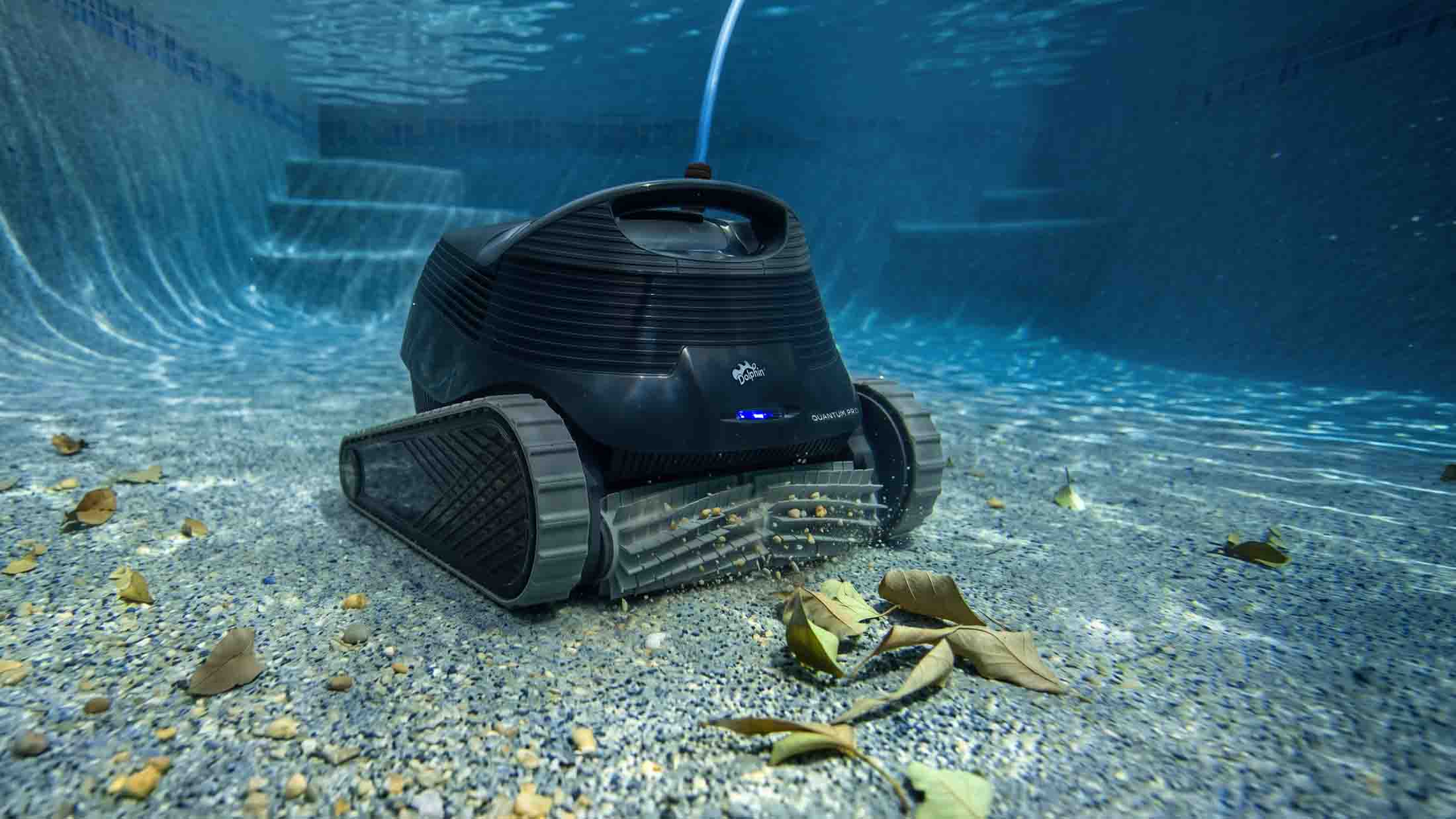
Top pick: Dolphin Quantum
Live prices · Ships free · 30 Day Trial
Pollen is the skimmer's problem while it floats and the robot's once it sinks, and only ultra-fine filters hold it when it does.
The quick answer
Sunken pollen is too fine for standard filters, so pick a robot with ultra-fine media included. The Dolphin Quantum is our first choice: NanoFilter panels in the box, a one-click top-load basket for the rinse-every-time weeks, and waterline scrubbing for the yellow ring. Choose the Premier if your trees also drop catkins, because its oversized leaf bag swaps in when the strings arrive.
For a few weeks each spring the pool wears a yellow-green skin. It gathers in the corners, coats the tile and streaks the surface whenever the wind shifts. Then it waterlogs and sinks, and the floor takes on a dusty yellow tint that puffs away when a foot or a brush comes near. Many owners assume the worst at this point and reach for algaecide.
Usually it is only pollen, and what it needs is filtration fine enough to hold it. The best robotic pool cleaner for pollen is one with ultra-fine media and a routine to match. The Quantum, the Premier and the Sigma include that media, and the Cayman accepts it as an optional add-on. None of them replaces the skimmer, which does the first half of the job.
The picks, ranked
Four robots ranked for pollen season.
$1999$1599Save $400 off the list price
Temporarily out of stock
Pick 1: Fine panels and the easiest daily rinse
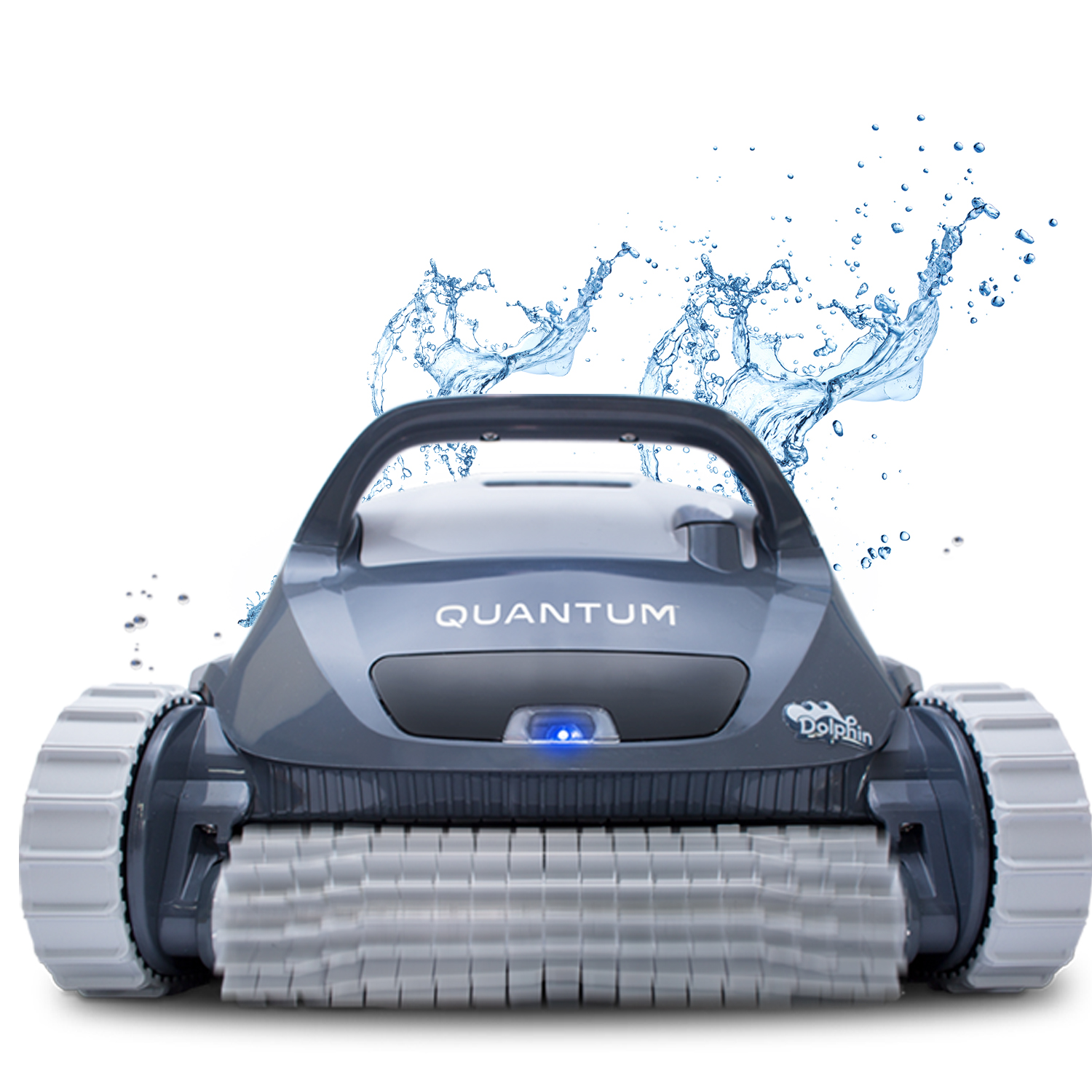
Dolphin Quantum
Pollen season is a rinsing season, and the Quantum makes that painless. NanoFilter panels are included, and the XXL MaxBin they sit in opens from the top with one click, so the after-every-run rinse is a short trip to the hose. A 2-hour cycle on the every-day timer stops each day's fall from building up. The waterline pass scrubs away the yellow ring, and coverage of stairs and sun shelves counts for more than usual, because sunken pollen drifts into still, shallow water first.
- Best for
- In-ground pools up to 50 ft near pines, oaks or open fields, with steps or a shelf that collect yellow dust.
- The trade-off
- In a heavy catkin drop, run the standard panels first to clear the bulk. Ultra-fine panels clog on stringy debris.
$2499$1949Save $550 off the list price
Temporarily out of stock
Pick 2: Pollen filters plus a leaf bag for catkins
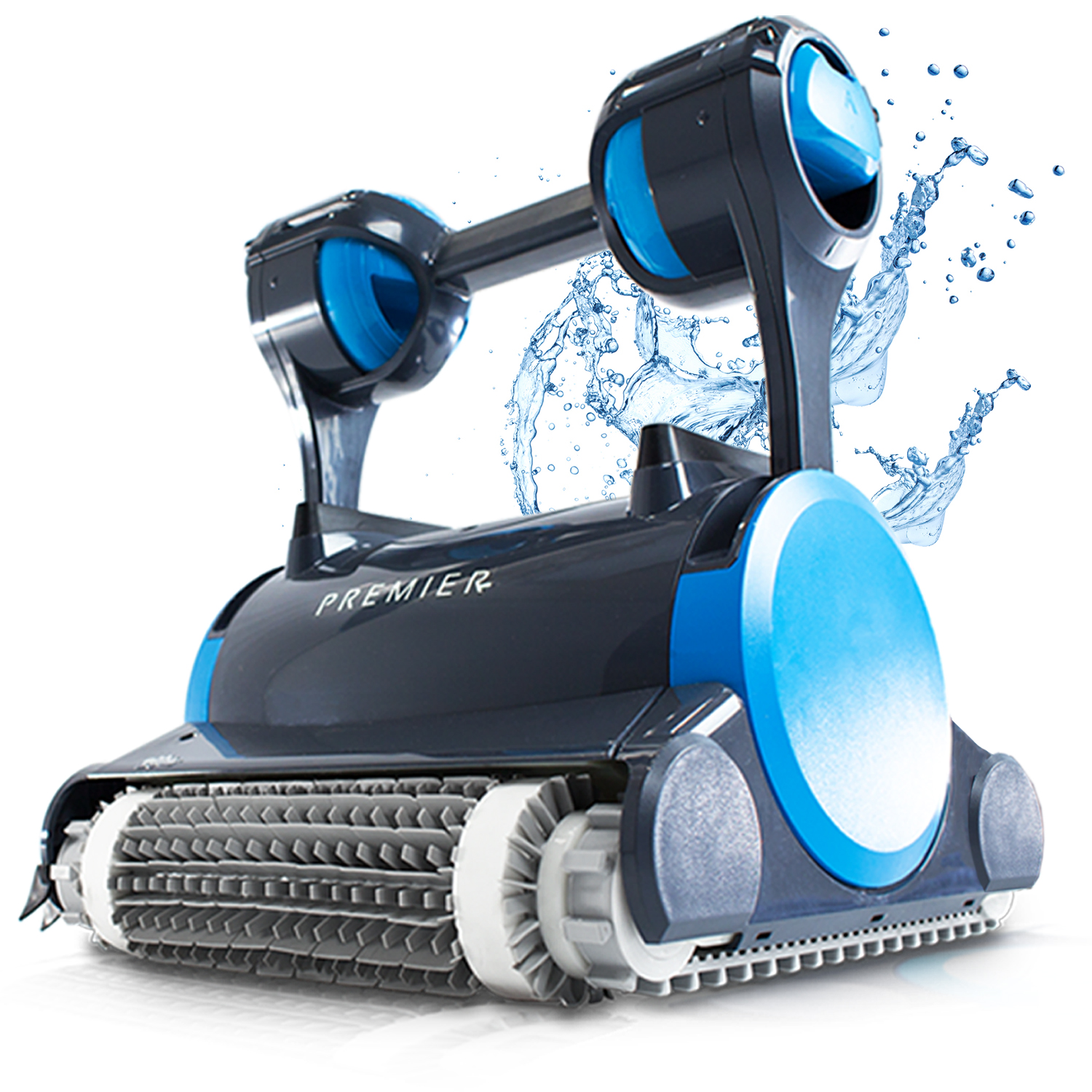
Dolphin Premier
Under oaks and pines, pollen season comes in two parts: a week of yellow powder and a week of brown strings. The Premier is the one robot here with a dedicated tool for each. Its Multi-Media system includes NanoFilters for the powder and an oversized leaf bag for catkins, and they change over in seconds, with no tools. The full-filter indicator on the power supply earns its place when pollen closes a fine filter sooner than expected. It cleans the waterline too, and carries a 3-year warranty.
- Best for
- Yards with mature oaks or pines, where powder and catkins arrive together or back to back.
- The trade-off
- No app, a cycle that runs 3 hours and a price above the Quantum's. Its published coverage does not list steps or shelves.
$2999$2349Save $650 off the list price
Temporarily out of stock
Pick 3: Quad brushes for the film pollen leaves behind
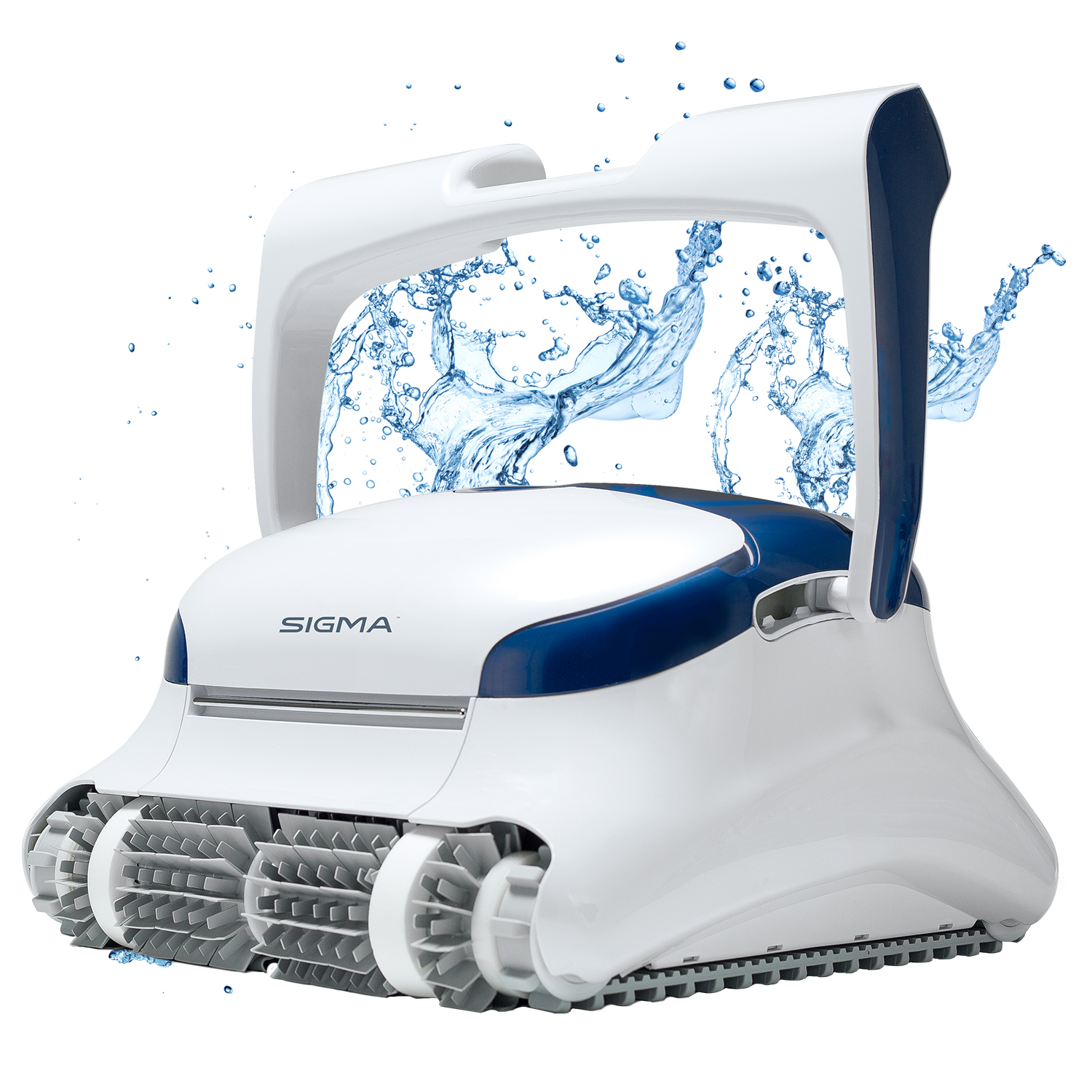
Dolphin Sigma
Sunken pollen leaves a slick yellow film on walls and floor that light brushing smears instead of lifting. The Sigma puts quad scrubbing brushes and three ProLine motors on it, with NanoFilters included to hold what comes off. Its app schedules by day and time and tells you when the cartridges need rinsing, which in pollen weeks is often. Price puts it third: it is the highest-priced pick here, and pollen is a filtration job before it is a scrubbing one.
- Best for
- Owners who want the strongest scrubbing on walls and tile, and a phone alert at rinse time.
- The trade-off
- The highest price in this guide, and cartridges take longer to deal with than a basket when you rinse daily.
$1299$1049Save $250 off the list price
Temporarily out of stock
Pick 4: Daily pollen runs for pools up to 33 ft
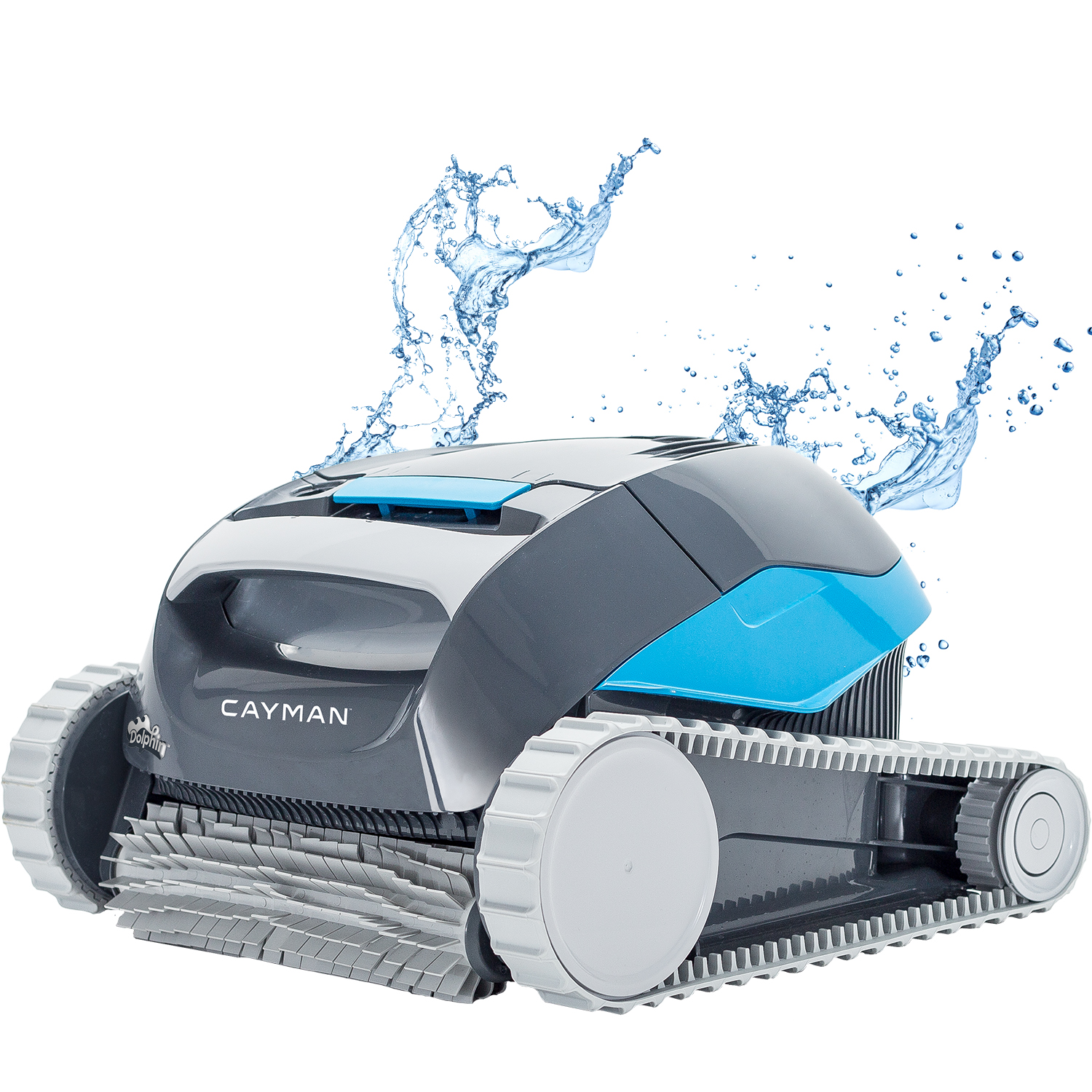
Dolphin Cayman
During pollen weeks the Cayman's daily timer does exactly what the season calls for. It is rated for in-ground and above-ground pools up to 33 ft, cleans the floor and walls in 2 hours, and its MaxBin basket lifts out through a top hatch for the frequent rinse. The panels it ships with are too coarse for pollen, so buy the optional NanoFilter panels at the same time. And it does not clean the waterline, so the yellow ring is yours to wipe.
- Best for
- Smaller pools, in-ground or above-ground, where a daily floor clean is the priority.
- The trade-off
- The fine panels cost extra, the cable has no swivel, and pools over 33 ft are beyond its rating.


Side by side
Pollen-season specs compared.
| Specification | Dolphin Quantum | Dolphin Premier | Dolphin Sigma | Dolphin Cayman |
|---|---|---|---|---|
| Price today | $1599 | $1949 | $2349 | $1049 |
| Filtration | XXL MaxBin basket with standard and NanoFilter panels | Multi-Media: NanoFilters, oversized leaf bag and standard fine filters | NanoFilters and standard filter cartridges | MaxBin basket with fine panels; NanoFilter panels optional |
| Filter access | Top-load, one-click open | Top-load, no tools | Cartridges | Top hatch, one-tab emptying |
| Brushes | Dual HyperBrush | Dual scrubbing brushes | Quad scrubbing brushes | HyperBrush |
| Flow rate | 4,000 GPH | 4,500 GPH | 4,500 GPH | Over 4,000 GPH |
| Cycle time | 2 hours | 3 hours | 2.5 hours | 2 hours |
| Cleans | Floor, walls, waterline, sun shelves and stairs | Floor, walls and waterline | Floor, walls and waterline | Floor and walls |
| Scheduling | Weekly timer: every day, every 2 days or every 3 days | Weekly timer: every day, every 2 days or every 3 days | Weekly scheduler by day and time | Timer: every day |
| Warranty | 2 years | 3 years | 3 years | 2 years |
What to look for
What pollen asks of a robot.
-
Media fine enough for pollen grains
Pollen is among the smallest things that land in a pool. Standard panels let most of it through, and it returns to the water as a faint yellow cloud. NanoFilter-class media is the answer, and it should stay fitted all season.
-
Rinsing you will actually do
Fine filters loaded with pollen turn pasty and close up quickly, so in peak weeks you rinse after every run. That is only sustainable if the filter comes out in seconds. Top-load access is worth more here than an extra brush.
-
Waterline scrubbing
Floating pollen clings to the tile and dries into a yellow ring exactly at water level. A robot that cleans the waterline takes that off as it goes. A floor-and-wall robot leaves it for hand cleaning.
-
Room for bulky tree debris
Oaks, pines and birches shed more than powder. Catkins and pollen strings are bulky and tangle together, which makes them a capacity problem, not a filtration one. A big basket or a leaf bag keeps them from blocking the robot mid-cycle.
Pollen or mustard algae? Check before you treat.
Yellow dust on the floor and walls has two common causes, and they need opposite responses. One is a filtration job, the other a chemical one. A soft brush and two days of watching will tell you which. If it is pollen, save the chemicals and fit the fine panels.
- Pollen brushes away in a puff and settles somewhere else. Mustard algae brushes away and returns to the same spot.
- Pollen appears everywhere at once and matches what is on the car and the patio furniture. Mustard algae favors shaded walls and steps.
- Pollen comes with a floating film and a yellow skimmer basket. Mustard algae does not float.
- Pollen ends when the trees finish. Mustard algae keeps returning until the water is treated.
Floating first, sinking later: who does what.
Fresh pollen floats, and a robot works underwater, so the first line of defense is the skimmer. Run the pump longer during pollen weeks, and slip a skimmer sock over the skimmer basket: a fine mesh sleeve that catches pollen before it reaches the pool filter, cheap enough to rinse or replace daily.
What escapes waterlogs and sinks. This is the robot's share. With ultra-fine panels fitted it vacuums the yellow dust off the floor and walls and holds it. With standard panels it stirs it. Neither the skimmer nor the robot does the other's job, which is why a pool with only one of them stays yellow.
A routine for the pollen weeks.
Set the timer to every day for the length of the season. Rinse the filter after every cycle, not weekly: pollen forms a paste on fine media, and by the second run a loaded filter passes very little water. Hose it until the yellow stops running. The robot can stay in the pool between daily cycles; it only needs to come out for the rinse. When the trees are done, go back to standard panels and your normal schedule. As always, take the robot out before shocking or adding chemicals.
Small moves that get you through the season.
- Fit a skimmer sock on the first yellow morning and check it daily. A clogged sock starves the pump, so swap it before it is solid.
- Run the robot early in the day, after the night's pollen has had time to sink and before swimmers stir it.
- Hose off the deck and the pool cover before opening it. Pollen sitting on either goes straight into the water otherwise.
- Rinse the robot's panels on the grass. Pollen washed across the deck dries, blows and lands in the pool a second time.
Questions, answered
Pollen questions, answered.
Does a robot pick up pollen floating on the surface?
No. Robots clean the floor, the walls and, on some models, the waterline. Floating pollen belongs to the skimmer, helped by a skimmer sock and longer pump hours. The robot's turn comes when the pollen sinks, and the waterline pass on the Quantum, Premier and Sigma scrubs off the ring that floating pollen leaves on the tile.
Why do the filters clog so quickly in pollen season?
Pollen grains are tiny and slightly sticky, so they coat fine media in an even layer. That is the filter working, not failing. Rinse after each cycle during peak weeks. A larger filter area, such as the Quantum's XXL MaxBin, takes longer to coat, but nothing removes the need to rinse.
Will pollen turn the pool green?
Pollen itself is not algae and does not grow. It is organic material, though, and a heavy load left in the water uses up chlorine as it breaks down, which can leave an opening for algae. Remove it promptly and keep the water balanced. A robot helps with removal; it does not replace sanitizer.
What should I do about the stringy catkins that come with oak and pine pollen?
Treat them as leaves. Catkins are bulky and mat together, and ultra-fine panels clog on them almost at once. Net what floats, then run standard panels in the Quantum's basket, or the oversized leaf bag in the Premier, to clear the bulk. Go back to ultra-fine media afterward for the powder.
Is the best robotic pool cleaner for pollen worth buying for a season that lasts a few weeks?
On pollen alone, perhaps not, and you do not have to decide on that basis. The features that deal with pollen, ultra-fine panels, a daily timer and waterline cleaning, are the same ones that handle dust, silt and dead algae through the rest of the year.
The bottom line
Pollen, decided.
First confirm it is pollen, then let the skimmer take the floating half. For the sunken half in an in-ground pool up to 50 ft, buy the Quantum. Buy the Premier if catkins are part of your spring, the Sigma for the heaviest scrubbing. For a pool of 33 ft or less, buy the Cayman with NanoFilter panels; the Dolphin Escape takes the same optional panels in an above-ground pool. Shipping is free by FedEx in 1 to 3 days, which helps when the trees have already started.
More buying guides
