



By debris and dirt problem
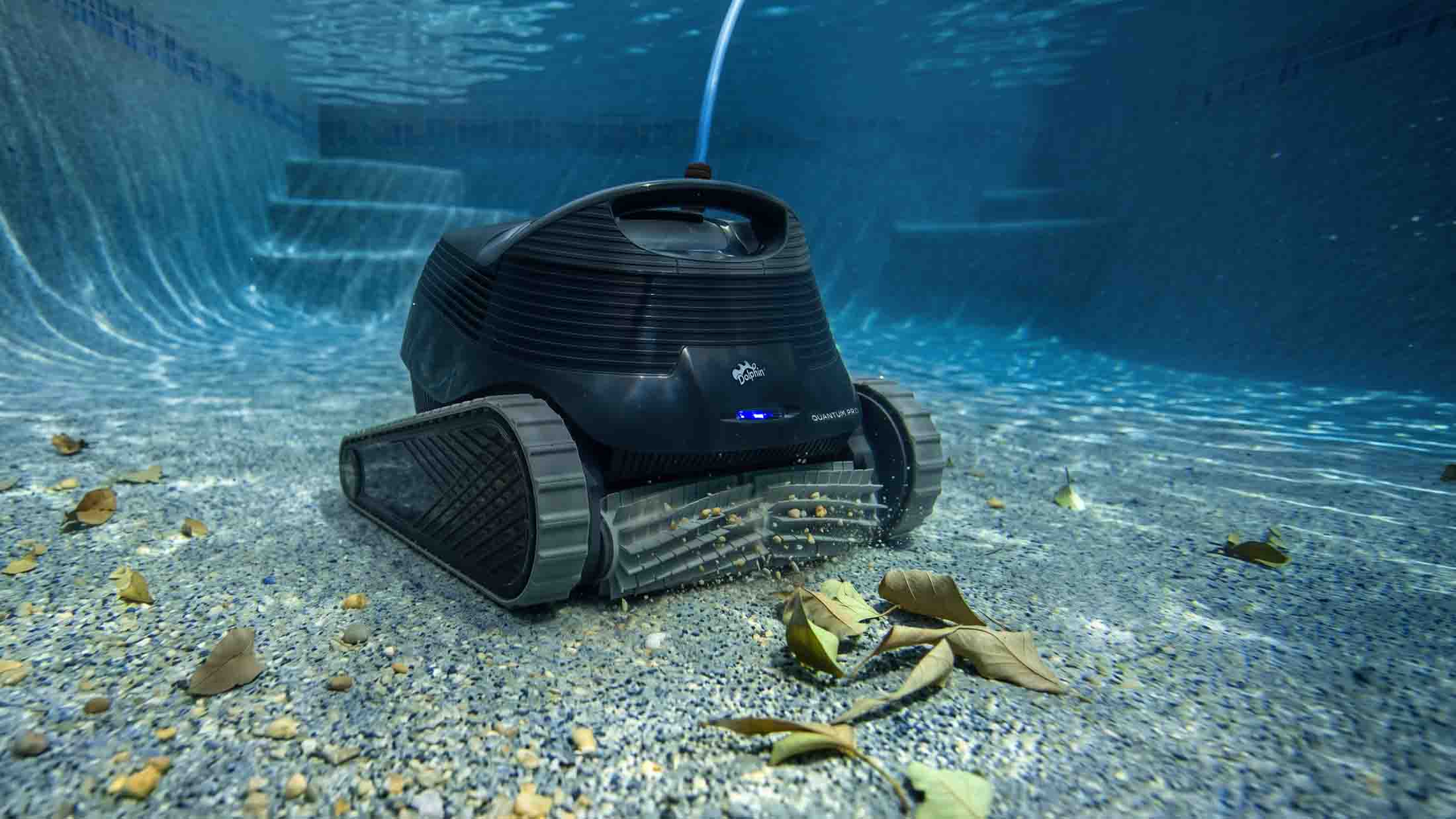
The best robotic pool cleaner for fine debris keeps what it picks up.
Top pick: Dolphin Quantum
Live prices · Ships free · 30 Day Trial
Fine debris is whatever a standard filter lets back into the water, so the robot to buy is the one with ultra-fine media included and a filter that is easy to rinse.
The quick answer
Buy the Dolphin Quantum: it includes a full set of NanoFilter panels for its XXL MaxBin, so silt, dust and pollen stay in the basket, and the top-load basket is quick to rinse after each cycle. The Dolphin Premier also includes NanoFilters, with a full-filter indicator and a 3-year warranty, if you are happy to pay more. Rinse fine media after every run with either.
You clean the pool, it looks perfect, and by the next morning a thin gray film is back on the floor. Sweep a hand through it and it lifts in a cloud. That is fine debris: silt, dust, pollen, dead algae, the powder that standard filters catch for a moment and then let straight back through. A robot with the wrong filter does not remove it. It rearranges it.
So the best robotic pool cleaner for fine debris is decided by one spec before any other: how fine the filter is, and whether that filter comes in the box. The Quantum, the Premier and the Dolphin Sigma all include NanoFilter media. For the Dolphin Cayman, NanoFilter panels are an optional add-on, which is why it sits fourth here.
The picks, ranked
Robots for fine debris, ranked on filtration.
$1999$1599Save $400 off the list price
Temporarily out of stock
Pick 1: NanoFilters included, with room to breathe
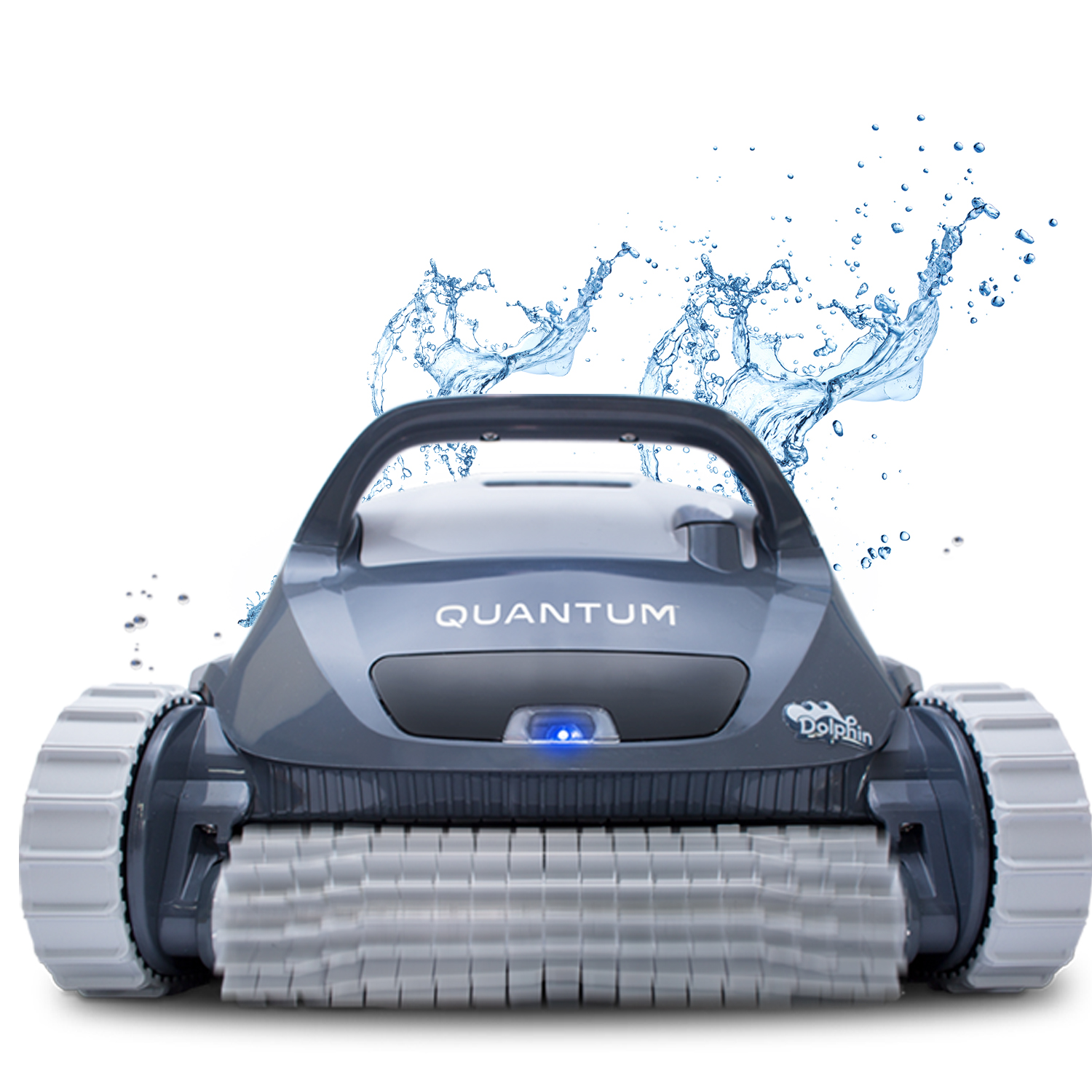
Dolphin Quantum
The Quantum comes with two sets of panels for its XXL MaxBin: standard ones and a full set of NanoFilters. Fit the NanoFilters and the basket's size works in your favor, because at over 400 square inches there is a lot of ultra-fine media to load before the flow drops. Two HyperBrushes at twice the speed of standard brushes lift settled film so it can be drawn in.
The basket opens from the top with one click, which keeps the rinse quick, and the weekly timer runs it every day or every 2 days to catch what settles overnight.
- Best for
- Pools up to 50 ft where silt, dust or pollen is the daily complaint and leaves are seasonal.
- The trade-off
- Fine panels need a rinse after each cycle, and its warranty is a year shorter than the next two picks.
$2499$1949Save $550 off the list price
Temporarily out of stock
Pick 2: Fine media with a light that says when to rinse
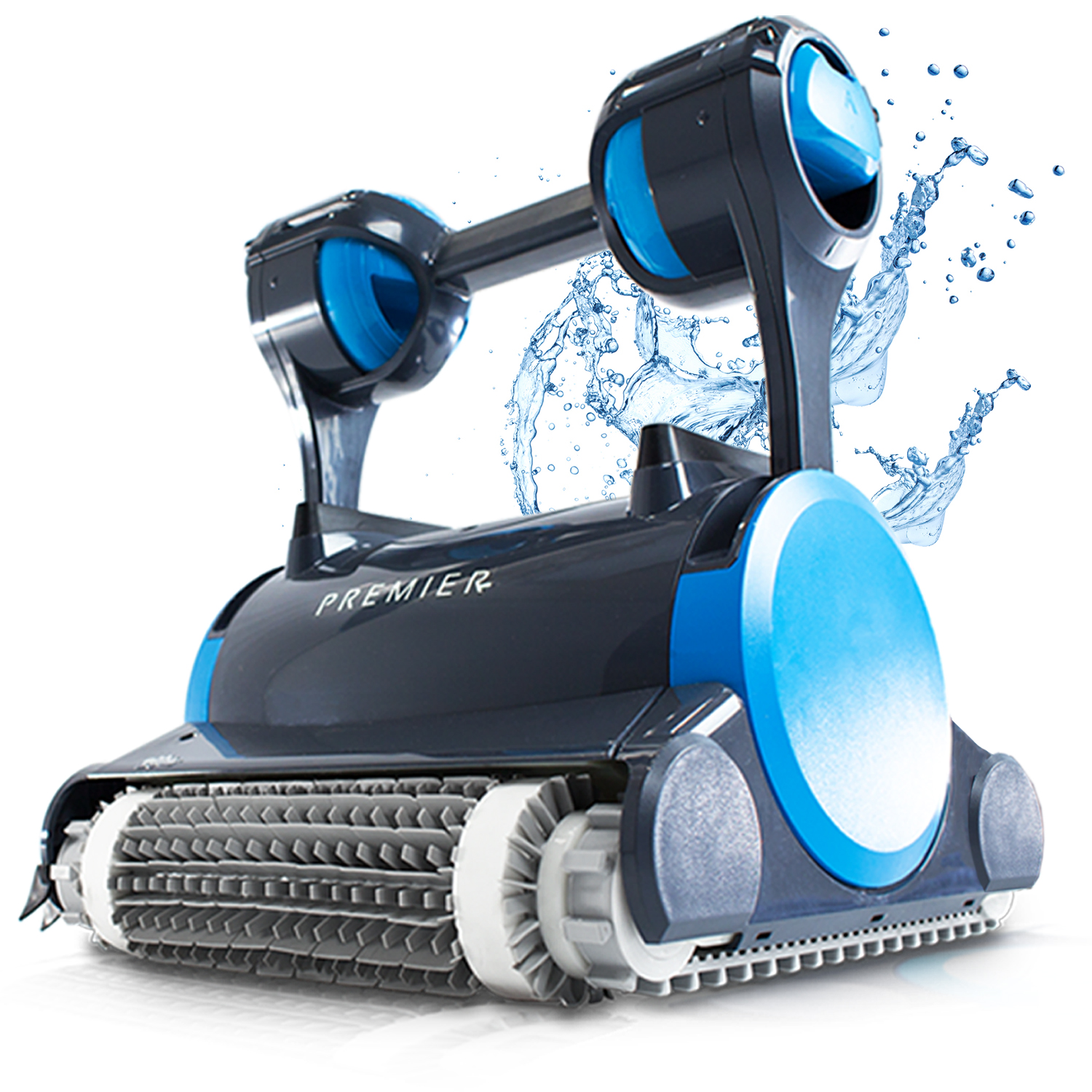
Dolphin Premier
The Premier's Multi-Media system includes NanoFilters and standard fine filters, plus an oversized leaf bag for the weeks when fine media would clog. Dual ProLine motors move 4,500 gallons an hour over a 3-hour cycle, the longest here. Its most useful feature for this job is a small one: a full-filter indicator on the power supply. Fine debris loads a filter invisibly, and a light that tells you so removes the guesswork. The warranty is 3 years. It is second because it costs more than the Quantum and its brushes turn at standard speed.
- Best for
- Owners who want to be told when the filter is loaded, and who value the longer warranty.
- The trade-off
- Higher price than the Quantum for the same included ultra-fine filtration, with controls on the power supply only.
$2999$2349Save $650 off the list price
Temporarily out of stock
Pick 3: Four brushes and a filter alert by phone
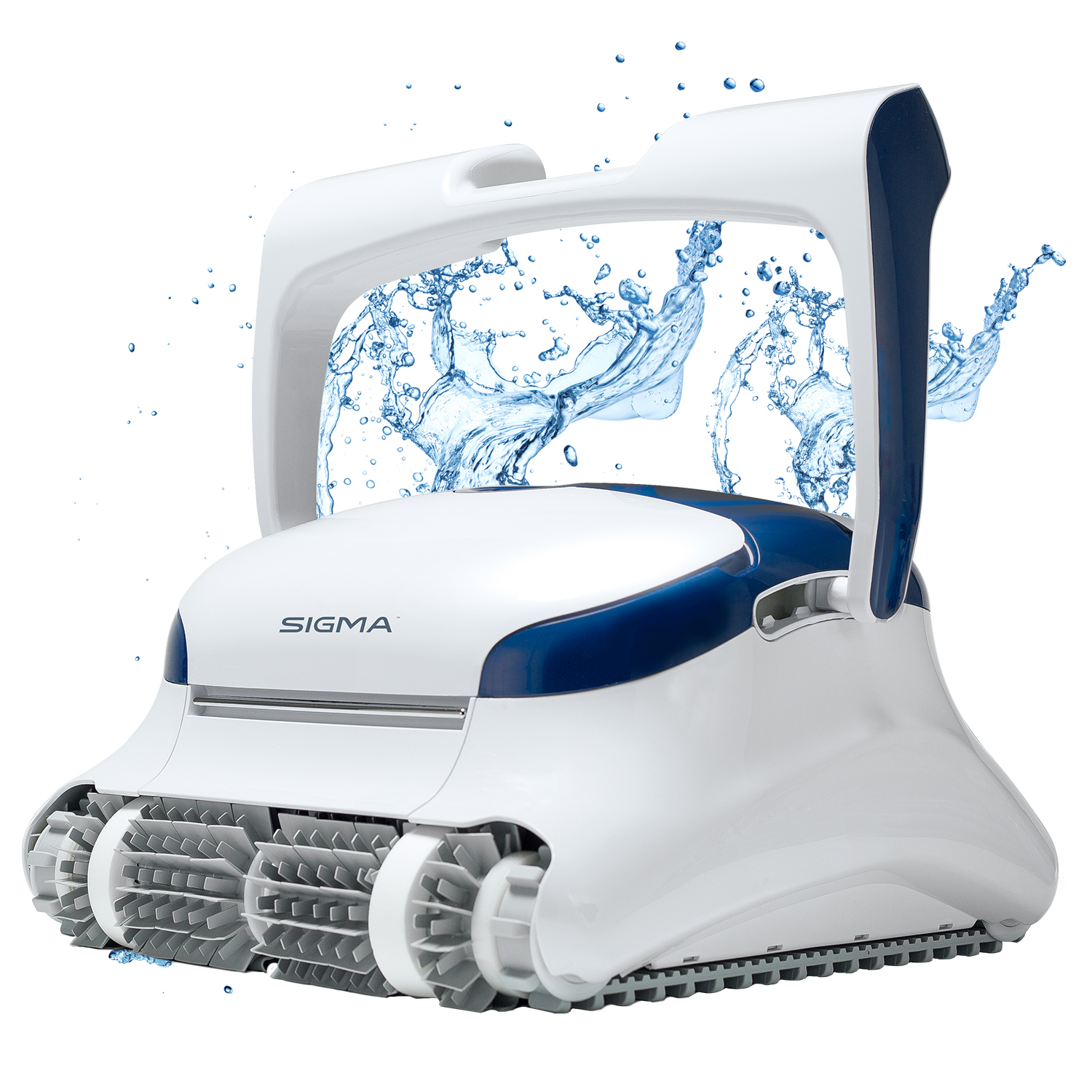
Dolphin Sigma
The Sigma pairs included NanoFilters with the most scrubbing on this page. Four brushes work settled film loose, three ProLine motors pull 4,500 gallons an hour through the cartridges, and SmartNav 3.0 with a gyroscope lays down an orderly pattern. Its cartridges are at their best on exactly this kind of material. The myDolphin Plus app sends a filter alert when they have loaded and schedules cycles by day and time. The warranty is 3 years.
Price is the only thing holding it to third. It costs the most of the four, and the two robots above it also include NanoFilters for less.
- Best for
- Large pools with fine dust on walls as well as floor, and owners who want alerts and schedules by phone.
- The trade-off
- It costs the most of the four and weighs 24.6 lb. For fine debris alone, the two picks above filter as finely.
$1299$1049Save $250 off the list price
Temporarily out of stock
Pick 4: Lower-cost route to 33 ft, panels extra
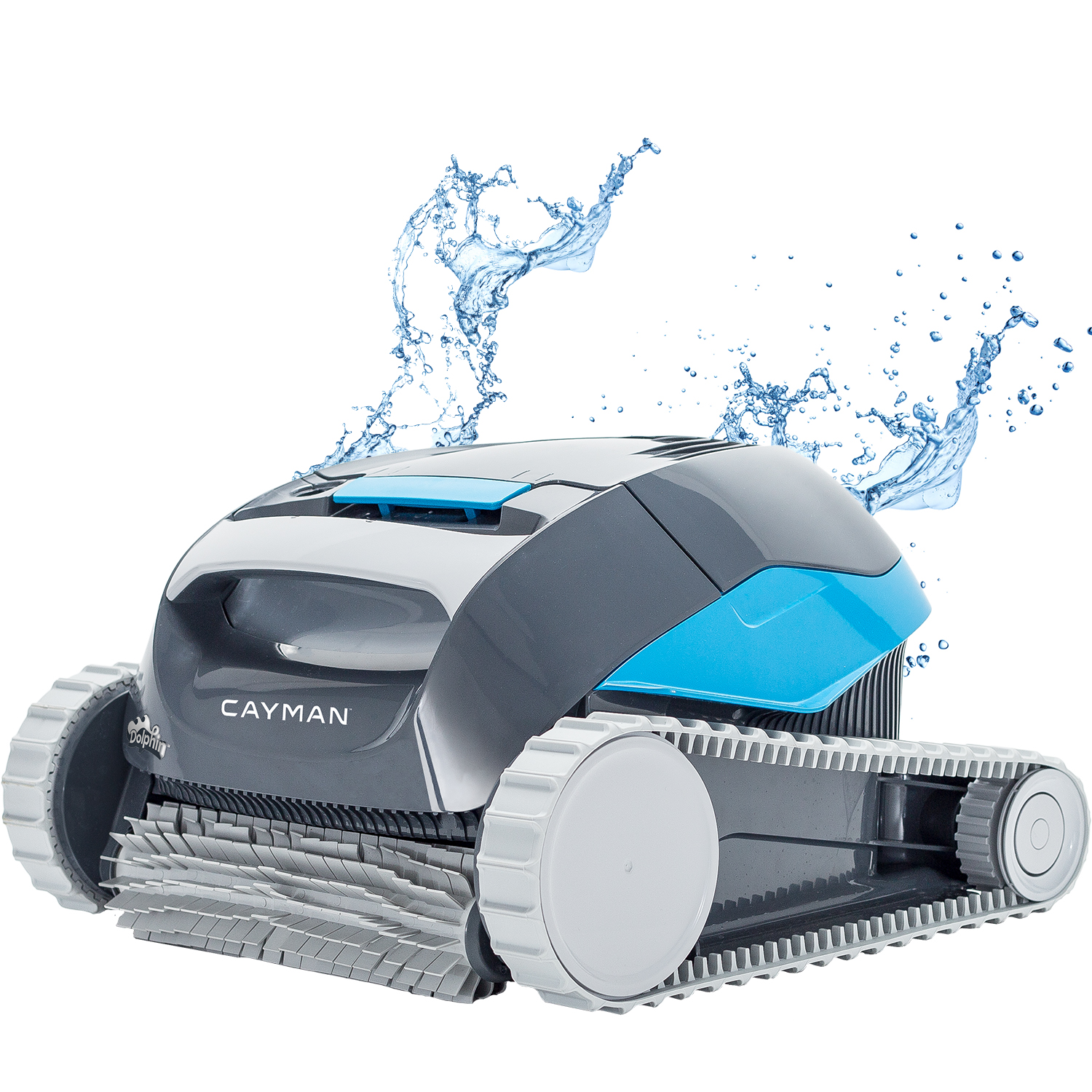
Dolphin Cayman
Out of the box the Cayman is a step behind on fine debris. Its MaxBin basket comes with fine panels that handle everyday dirt, but the ultra-fine NanoFilter panels are an optional add-on. Add them and the picture changes: a basket 50% larger than standard Dolphin filters, a fast HyperBrush to lift settled film, and a timer that runs a 2-hour cycle every day, the right rhythm for dust that returns daily. It cleans floor and walls in pools up to 33 ft and empties through a top hatch.
- Best for
- Pools of 33 ft or less with light to moderate fine debris, if you add the NanoFilter panels.
- The trade-off
- Ultra-fine panels are not in the box, there is no tile-line scrubbing, and the cable has no swivel.


Side by side
Filters, brushes and schedules compared.
| Specification | Dolphin Quantum | Dolphin Premier | Dolphin Sigma | Dolphin Cayman |
|---|---|---|---|---|
| Price today | $1599 | $1949 | $2349 | $1049 |
| Filtration | XXL MaxBin basket with standard and NanoFilter panels | Multi-Media: NanoFilters, oversized leaf bag and standard fine filters | NanoFilters and standard filter cartridges | MaxBin basket with fine panels; NanoFilter panels optional |
| Filter access | Top-load, one-click open | Top-load, no tools | Cartridges | Top hatch, one-tab emptying |
| Brushes | Dual HyperBrush | Dual scrubbing brushes | Quad scrubbing brushes | HyperBrush |
| Flow rate | 4,000 GPH | 4,500 GPH | 4,500 GPH | Over 4,000 GPH |
| Cycle time | 2 hours | 3 hours | 2.5 hours | 2 hours |
| Cleans | Floor, walls, waterline, sun shelves and stairs | Floor, walls and waterline | Floor, walls and waterline | Floor and walls |
| Scheduling | Weekly timer: every day, every 2 days or every 3 days | Weekly timer: every day, every 2 days or every 3 days | Weekly scheduler by day and time | Timer: every day |
| Warranty | 2 years | 3 years | 3 years | 2 years |
What to look for
What separates robots on fine debris.
-
Filter fineness, included.
Standard panels are made for leaves, sand and grit. Ultra-fine media such as NanoFilters is made for the particles that slip past them. Check that it is in the box. If it is an add-on, count its cost before comparing prices.
-
Filter area.
Fine media loads quickly because it stops nearly everything. The more filter surface a robot has, the longer it keeps its flow before a layer of silt chokes it, and the more of the cycle is spent collecting.
-
Ease of rinsing.
With fine media you rinse after every cycle, not every week. A filter you can lift out of the top and hose clean without tools turns that into a small habit instead of a chore.
-
Brushes that lift the film.
Settled silt clings to the floor, and algae dust sticks to walls. Active brushes break that film loose so the suction can take it. Faster brushes, or more of them, do it more thoroughly.
The puff test: is fine debris really your problem?
Wait for a still morning after the pool has sat overnight and look at the floor in the shallow end. If you see a faint, even film, lower a brush or your hand and sweep it gently. A cloud that rises and hangs is fine debris. Grit that rolls and drops straight back is sand, which standard panels handle.
Then watch your current cleaner at work. If a pale plume trails from it as it moves, its filter is passing the fine material straight through. That is the clearest sign that the fix is finer media, not more suction or longer cycles.
Finer media loads faster. Plan for it.
This is the trade-off that is easy to overlook. A filter fine enough to stop silt also stops everything larger, so it fills quickly. As it fills, flow falls, and the robot climbs less willingly and collects less. A NanoFilter left unrinsed for a week is doing far less than it can.
The habit that solves it is a rinse after every cycle: lift the robot, open the top, pull the panels and hose them until the water runs clear. And keep the standard panels. When leaves, blossoms or seed pods are falling, fit those instead, or the fine media will blind over early and the cycle is wasted.
What a fine filter will not fix.
A robot collects what has settled and what it stirs into its own intake. It does not replace the pool's filter, which is what clears particles suspended in the water, and it does not replace sanitizer. Water that is cloudy from chemistry, or green from living algae, needs treatment first; brushing and filtering come after.
Nor can it stop the source. If dust blows in daily from a field, a building site or a dry yard, the robot's job never ends, and a daily schedule is simply the cost of living there.
Getting the most from fine media.
- Skim and net first. The fewer large pieces reach the NanoFilters, the longer they keep flowing.
- Rinse the panels after every cycle until the water runs clear.
- On the Quantum or the Premier, set the timer to every day in pollen or dust season and every 2 or 3 days otherwise.
- Run the robot before swimmers arrive, when the night's layer is settled on the floor and easy to collect.
- Take the robot out before shocking, then return it afterward to collect the dead algae that settles.
Questions, answered
Fine debris: common questions.
Will the best robotic pool cleaner for fine debris clear cloudy water?
Only partly. A robot with ultra-fine media removes fine particles that have settled, and some that pass through it as it works, which can make the water look brighter. But clearing suspended haze is the job of the pool's own filter, and cloudiness from chemistry needs a chemical fix.
Why is there dust on the pool floor again the morning after a cycle?
Two possible reasons. Either the filter is too coarse and passed the dust back into the water, where it settled overnight, or new dust arrived. Fit NanoFilter panels and run again. If the film still returns daily, it is new material, and a daily schedule is the answer.
Can I leave NanoFilter panels in all year?
In most pools, for most of the year, yes. The exception is leaf season, or any week with heavy large debris, when fine media clogs almost at once. Swap to the standard panels for those weeks and back afterward. On the Quantum, both sets come in the box.
Do ultra-fine filters hold a robot back?
Any filter slows the flow as it loads, and fine media loads faster because it stops more. Kept rinsed, it does its job without holding the robot back in normal use. Left for a week, it will, and you will see the robot climb less and collect less.
Is pollen fine debris or surface debris?
Both, at different times. Fresh pollen floats as a yellow film, where only the skimmer reaches it. Later much of it sinks or sticks at the tile line, and there a robot with NanoFilter media collects it. The Quantum, Premier and Sigma also scrub that yellow line at the water's surface.
The bottom line
The rule for fine debris.
Start with the filter. If ultra-fine media is not included, add its cost or move on. Among the three picks that include it, take the Quantum for the largest basket, the quickest rinse and the lowest price. Take the Premier if a full-filter light and longer warranty are worth more, or the Sigma if you want four brushes and phone alerts. For a pool of 33 ft or less, the Cayman with NanoFilter panels added is the economical route.
More buying guides
