



By steps, ledges and tricky features
The best robotic pool cleaner for uneven floors: divots, wrinkles and patches.
Top pick: Dolphin Quantum
Live prices · Ships free · 30 Day Trial
A robot rides over an uneven floor. It does not fix one. Here is which Dolphin copes best with dips, wrinkles and patches, and where each will stall.
The quick answer
For an uneven in-ground floor, choose the Dolphin Quantum: HyperGrip continuous rubber tracks ride over dips and patches, and at 18.3 lb it is a moderate weight for a 50 ft robot. The Dolphin Sigma is the step up if the robot is likely to be tipped, since its gyroscope re-orients it. For an above-ground pool on a soft sand base, the pick is the Dolphin Cayman, at 14.6 lb.
Pool floors are rarely as flat as they look from the deck. Vinyl bottoms settle and wash out, leaving dips you can feel with your feet. Above-ground pools on sand pick up heel prints in their first season. Liners wrinkle. Plaster heaves, gets patched and keeps the outline of the patch. Old drain fittings sit proud of the surface. If that is your pool, the best robotic pool cleaner for uneven floors is one that keeps moving across all of it and does not get stranded.
The main requirement is already met. Tracks ride over unevenness far better than wheels, and every Dolphin in these guides runs on tracks. So the ranking turns on finer points: weight on a soft base, what happens when the robot is tipped, and which pool type each robot is made for. The honest limit comes first, though. A robot cleans an uneven floor. It will not level one.
The picks, ranked
Four robots, ranked for floors that are not flat.
$1999$1599Save $400 off the list price
Temporarily out of stock
Pick 1: Best for uneven in-ground floors
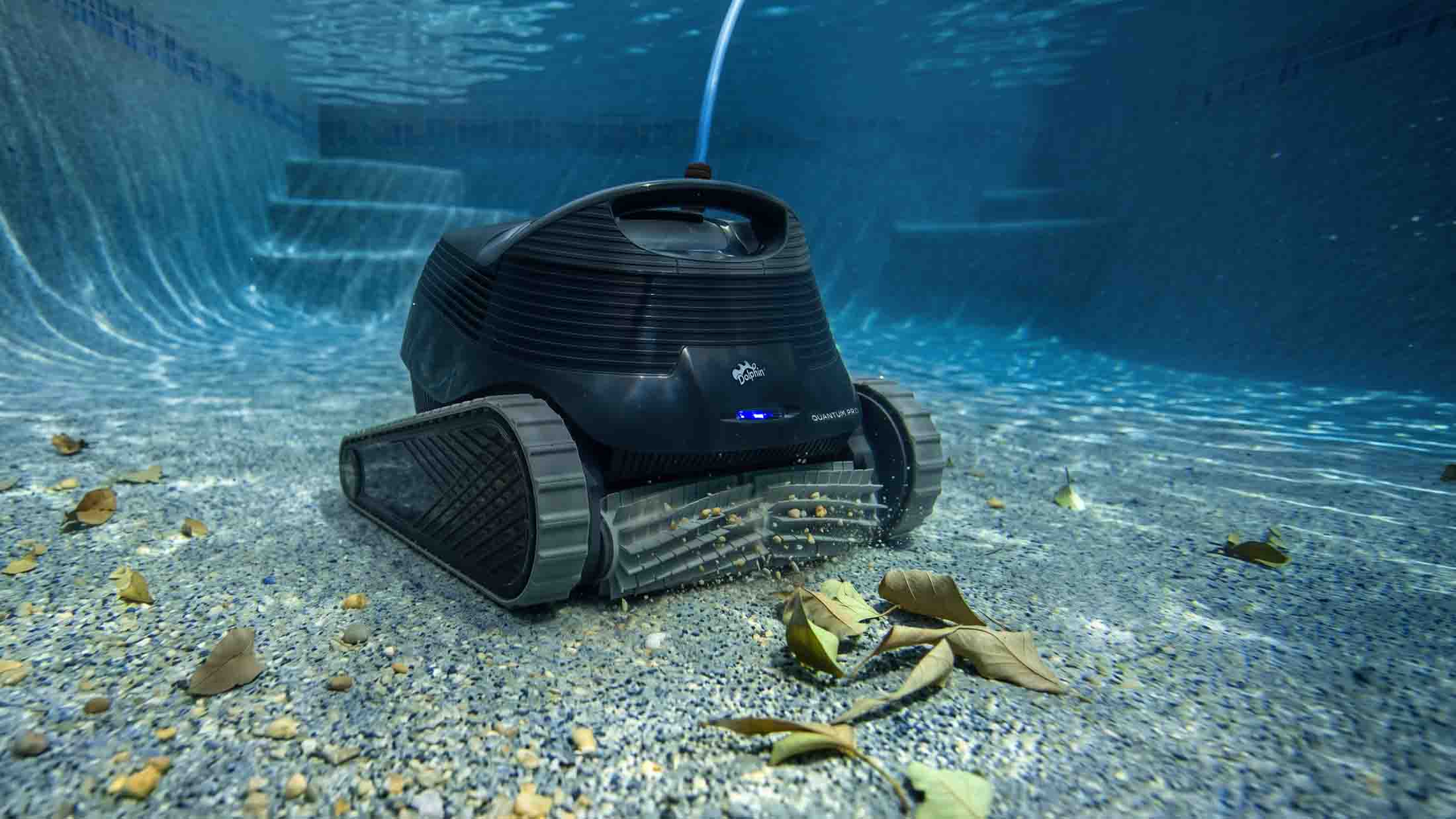
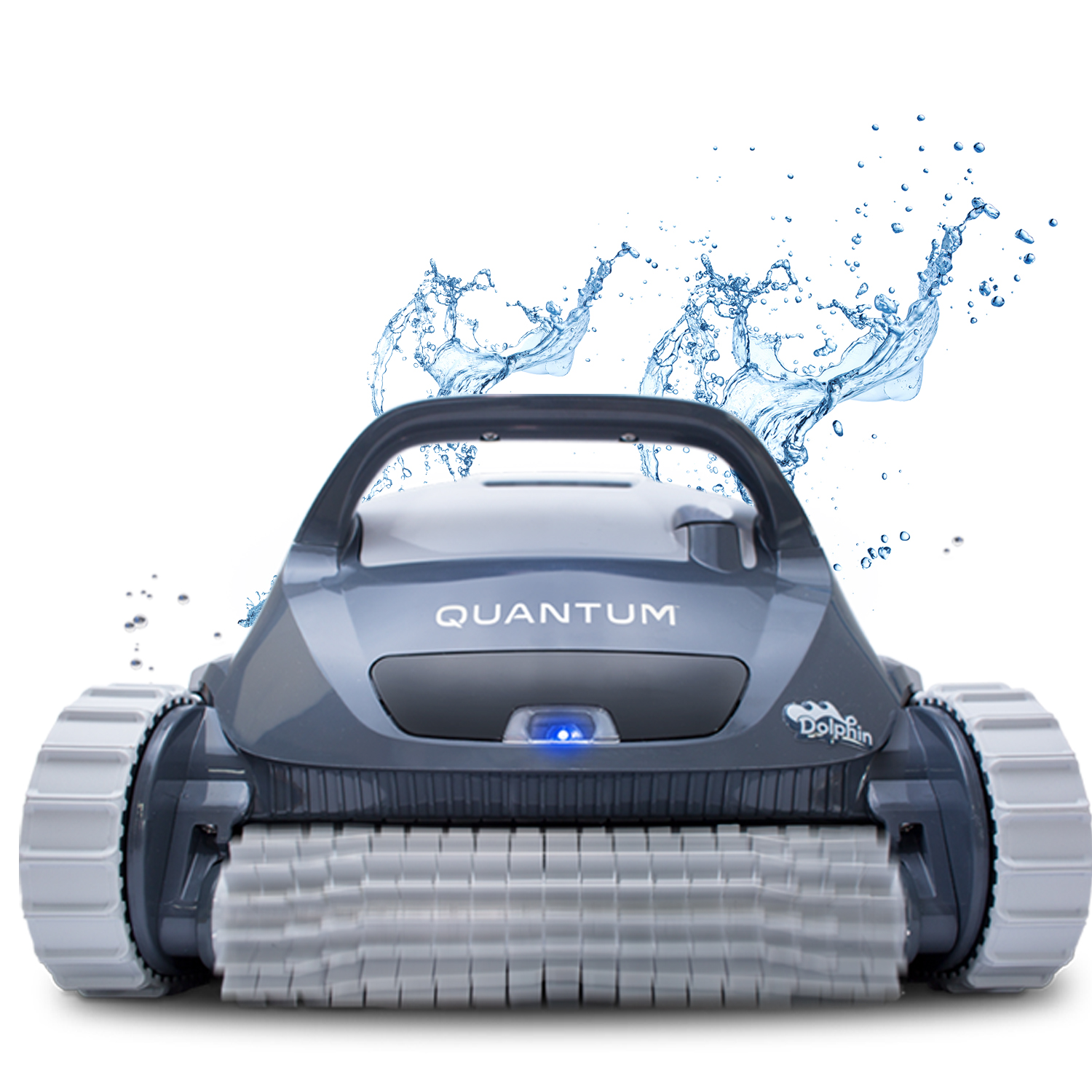
Dolphin Quantum
An uneven in-ground floor needs grip, moderate weight and brushes that stay busy, and the Quantum combines them. HyperGrip continuous rubber tracks carry it across settled areas and old plaster repairs, and at 18.3 lb it is the lightest of the three 50 ft robots on this page, a point in its favor on an older vinyl bottom. The dual HyperBrush and 4,000 GPH of flow pull dirt out of low spots. Vinyl liner, plaster, gunite, pebble, tile and fiberglass are on its published surface list, and drain covers are among the obstacles it handles.
- Best for
- In-ground vinyl, plaster or gunite pools up to 50 ft with dips, patches or a settled bottom.
- The trade-off
- It is not an above-ground robot and it has no gyroscope. A deep divot or a large wrinkle can still stall it.
$2999$2349Save $650 off the list price
Temporarily out of stock
Pick 2: Best at recovering when it gets tipped
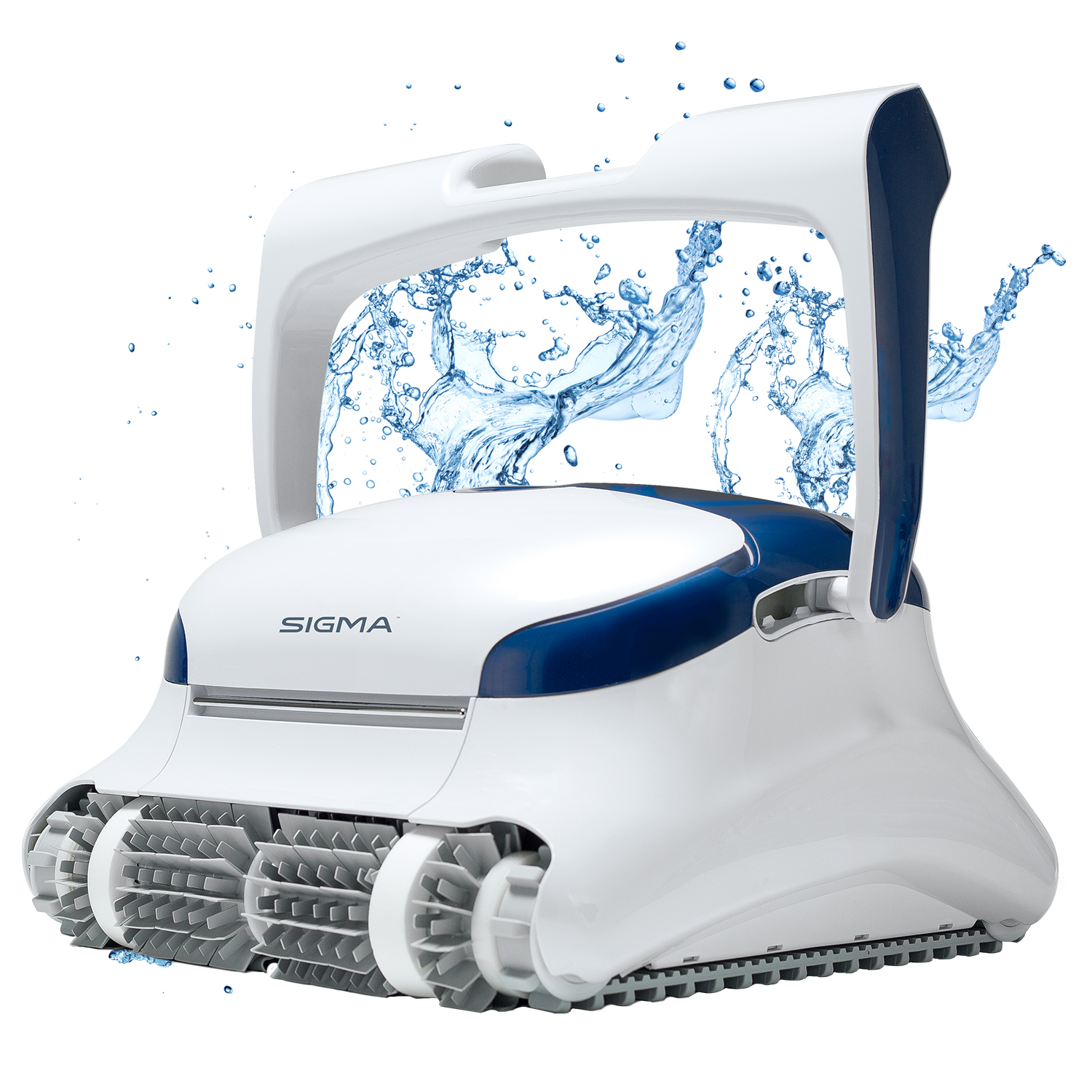
Dolphin Sigma
The Sigma is the pick for floors bad enough to tip a robot. SmartNav 3.0 has an onboard gyroscope, so when a track drops into a hollow or rides up the edge of a patch, the robot senses the change, re-orients and carries on with its route. With 4,500 GPH from three ProLine motors and four scrubbing brushes, it reaches into the low spots. The cost is weight: at 24.6 lb it is the heaviest robot here, so it belongs on firm in-ground floors.
- Best for
- Firm in-ground floors with heaves, patches or raised fittings that upset other robots.
- The trade-off
- Heaviest and highest-priced pick here. In-ground pools only, and not the robot for a soft or washed-out base.
$1299$1049Save $250 off the list price
Temporarily out of stock
Pick 3: Light enough for a soft above-ground base
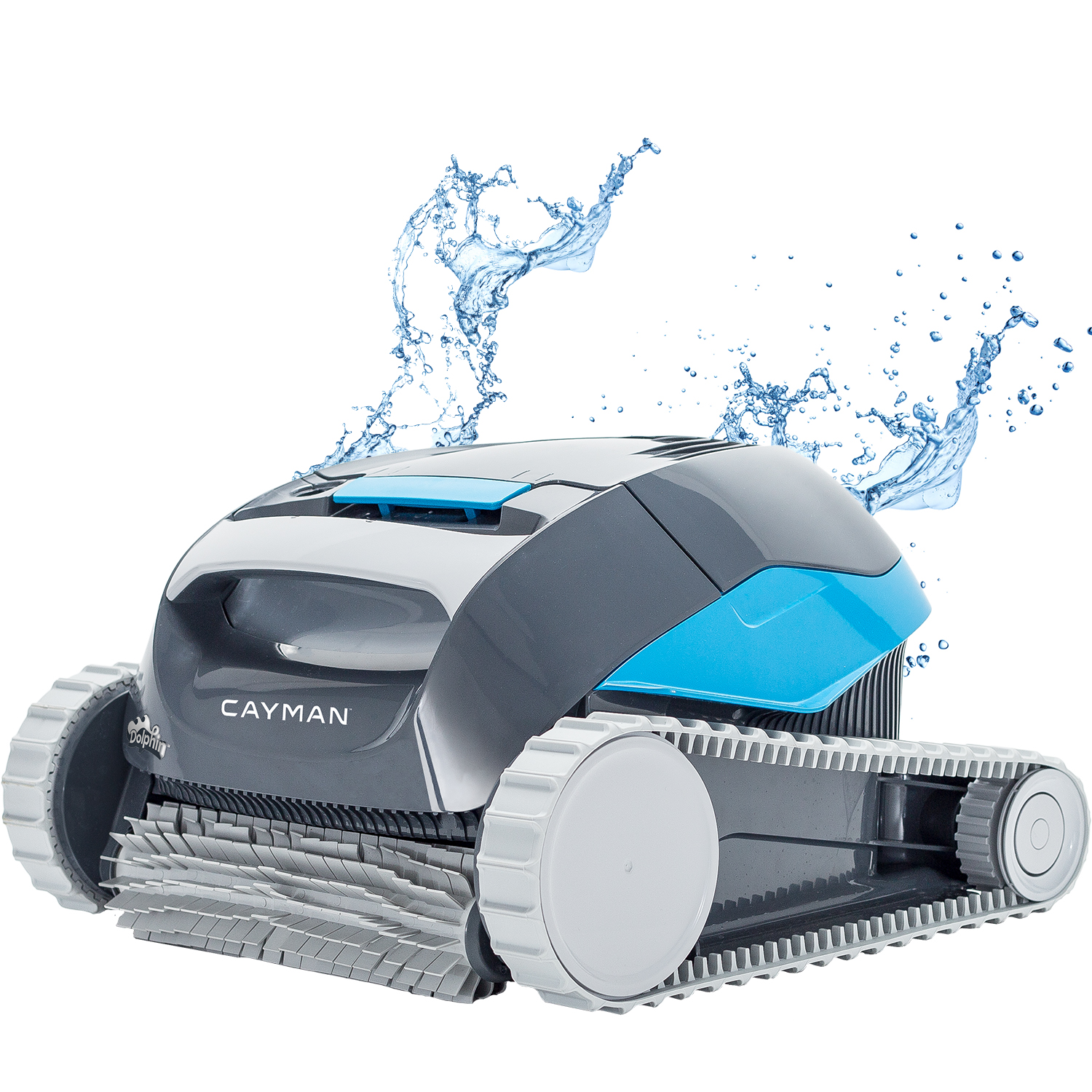
Dolphin Cayman
Above-ground pools on sand are where footprints and divots turn up most, and of the four picks only the Cayman is rated for them. It weighs 14.6 lb, the lightest on this page, which is kinder to a base that already shows marks. HyperGrip tracks bridge heel prints and shallow divots, a HyperBrush scrubs, and the 2-hour cycle runs on dual 24-volt DC motors rated at over 4,000 GPH. It is rated to 33 ft, in-ground pools included, so a small in-ground vinyl pool with a settled bottom is also its territory.
- Best for
- Above-ground pools on a sand base, and small in-ground vinyl pools up to 33 ft.
- The trade-off
- Floor and walls only, a cable with no swivel and a timer that runs every day only. Deep footprints are a floor repair, not a robot job.
$2499$1949Save $550 off the list price
Temporarily out of stock
Pick 4: For big, uneven floors that also collect leaves
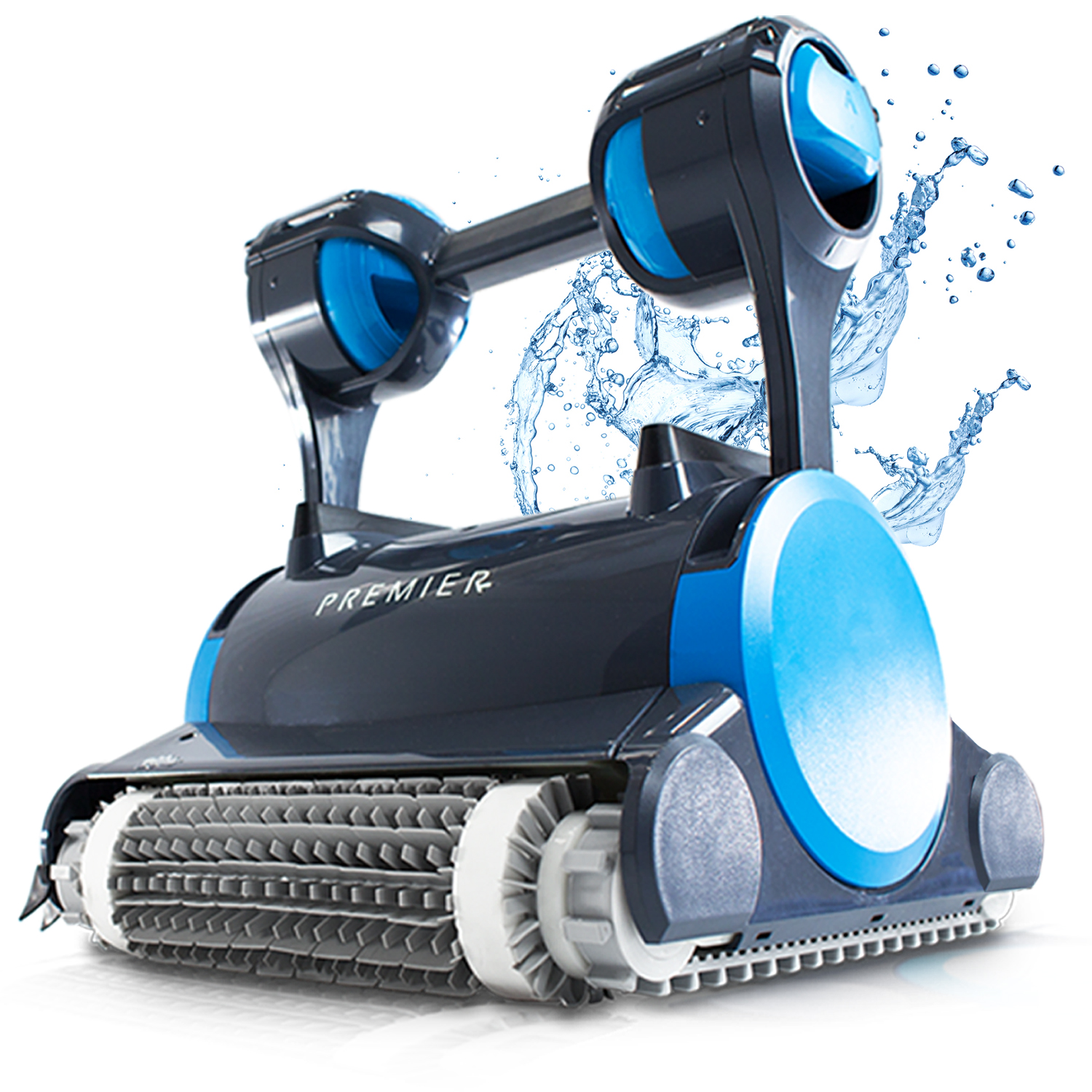
Dolphin Premier
The Premier is a strong robot ranked last here for a simple reason: nothing about an uneven floor calls for its particular strengths unless debris does. Its HyperGrip tracks cross dips and patches like the others, and SmartNav 2.0 scanning covers the floor over a 3-hour cycle, the longest of the four. Where it earns a place is a large, rough-floored pool under trees, because hollows fill with leaves and an oversized leaf bag is one of its included filter options. Flow is 4,500 GPH, and the warranty is 3 years.
- Best for
- Large in-ground pools where hollows in the floor fill with leaves and acorns.
- The trade-off
- In-ground only, 20.3 lb and no gyroscope. Its price sits above the Quantum's, and a rough floor by itself does not call for the difference.


Side by side
Weight, tracks and navigation compared.
| Specification | Dolphin Quantum | Dolphin Sigma | Dolphin Cayman | Dolphin Premier |
|---|---|---|---|---|
| Price today | $1599 | $2349 | $1049 | $1949 |
| Cleans | Floor, walls, waterline, sun shelves and stairs | Floor, walls and waterline | Floor and walls | Floor, walls and waterline |
| Traction | HyperGrip tracks | HyperGrip tracks | HyperGrip tracks | HyperGrip tracks |
| Navigation | SmartNav 2.0 | SmartNav 3.0 with gyroscope | SmartNav 2.0 | SmartNav 2.0 |
| Cable | 55 ft with anti-tangle swivel | 55 ft with 360° anti-tangle swivel | 50 ft | 55 ft with 360° anti-tangle swivel |
| Robot weight | 18.3 lb | 24.6 lb | 14.6 lb | 20.3 lb |
| Warranty | 2 years | 3 years | 2 years | 3 years |
What to look for
What matters when the floor is not flat.
-
Tracks, not wheels
A wheel drops into a divot and has to climb out. A track spans it. That is the biggest single advantage on a rough floor, and all four picks have it: HyperGrip tracks on each, in continuous rubber on the Quantum.
-
Weight on a soft base
Sand under an above-ground liner marks easily, and a heavy cleaner presses harder than a light one. The Cayman weighs 14.6 lb and is rated for above-ground pools. The Quantum, Sigma and Premier are in-ground robots, where the base under the floor is firmer.
-
Recovering from a tilt
A deep dip or the edge of a patch can tip a robot onto one side. Scanning robots recover and carry on. The Sigma goes further: its gyroscope senses the tilt and re-orients the robot, so it picks its route back up.
-
Brush contact in the low spots
Dirt collects in dips, exactly where a brush may not touch the surface. Fast brushes and strong flow help lift it anyway. The Quantum's dual HyperBrush spins at twice the speed of standard brushes, and every pick moves at least 4,000 GPH.
Work out which kind of uneven you have.
Walk the floor, or look at it through a mask on a still day. Most uneven pools fall into one of four kinds, and each has a different answer.
- Footprints and divots in an above-ground sand base: shallow ones are no trouble for tracks. Choose a light robot rated for above-ground pools.
- A settled or washed-out vinyl bottom in an in-ground pool: broad dips that tracks cross easily. Debris gathers in them, so plan on more frequent cycles.
- Liner wrinkles: small ones are ridden over. A large fold can stop a robot.
- Heaved or patched plaster and old drain fittings: hard edges that can tip a robot. This is where gyroscope navigation helps.
Wrinkles: deal with the big ones first.
A wrinkle is loose liner, and it matters more to the liner than to the robot. Small ripples are crossed by any tracked robot. A fold tall enough to catch a toe is different. A robot can stall against it or keep nosing into it, and a fold that size is a liner problem in its own right.
Large wrinkles usually mean the liner has shifted or water has got behind it, and a liner professional can often work them out. Do that before you put a robot on a daily timer.
Above-ground sand bases: light robots only.
Two of the five Dolphins in these guides are rated for above-ground pools: the Cayman, ranked on this page, and the Dolphin Escape, which is not on this shortlist but suits the job. At 14.2 lb the Escape is the lightest of the five, and the Cayman is 14.6 lb. The Cayman gets our nod for its 50 ft cable, its built-in daily timer and its published obstacle list. The Escape costs less. Measure the cable run before choosing it, because its cable is 40 ft.
Do not put the Quantum, Sigma or Premier in an above-ground pool. They are heavier, and they are built for in-ground pools.
Before the first cycle on a rough floor.
- Watch the whole first cycle. Note any spot where the robot hesitates or tips, and you will know whether it is a divot, a wrinkle or a fitting.
- Brush debris out of the deepest hollows onto flatter floor before a cycle, so the robot can reach it.
- If the robot stalls in the same place twice, deal with the place: a wrinkle to be worked out, a loose fitting to be secured.
Questions, answered
Uneven floor questions.
Will a robot make footprints in my above-ground floor worse?
A light robot on tracks spreads its weight along the length of each track instead of resting on a few small wheels. The Cayman, at 14.6 lb, is rated for above-ground pools and is the pick here for a sand base. We cannot promise what any cleaner does to a particular floor, so if the base is very soft, watch the first few cycles.
Can a robot get stuck in a liner wrinkle?
In a large one, yes. Small ripples are crossed by tracks. A tall fold can stop a robot or hold it in place until the cycle ends, and the rest of the pool goes uncleaned. Have big wrinkles worked out, and until then run the robot while you are around.
Should I fix my pool floor before buying a robot?
Not for ordinary unevenness. Dips, shallow footprints and old patches are within what a tracked robot handles. Fix the things that stop a robot outright: large wrinkles, loose or broken drain covers and holes deep enough to trap one. A robot will not level a floor, and the best robotic pool cleaner for uneven floors does not need a level one.
Why is there still dirt in the low spots after a cycle?
Dips collect the finest debris, and a brush riding across the rim of a dip may not touch the bottom of it. Flow lifts most of what is there, but not always all of it. Running cycles more often stops the build-up.
The bottom line
The rule for uneven floors.
Start with the pool type, then the floor. Above ground on a sand base: a light robot rated for it, which on this page means the Cayman. In-ground with dips, patches or a settled bottom: the Quantum. In-ground and rough enough to tip a robot: the Sigma. In-ground, large and leafy: the Premier. Fix large wrinkles and loose fittings first. Not sure which floor you have? A Dolphin Expert can help you sort it out.
More buying guides
