



By pool surface
Best robotic pool cleaner for fiberglass pools: grip, waterline and molded steps.
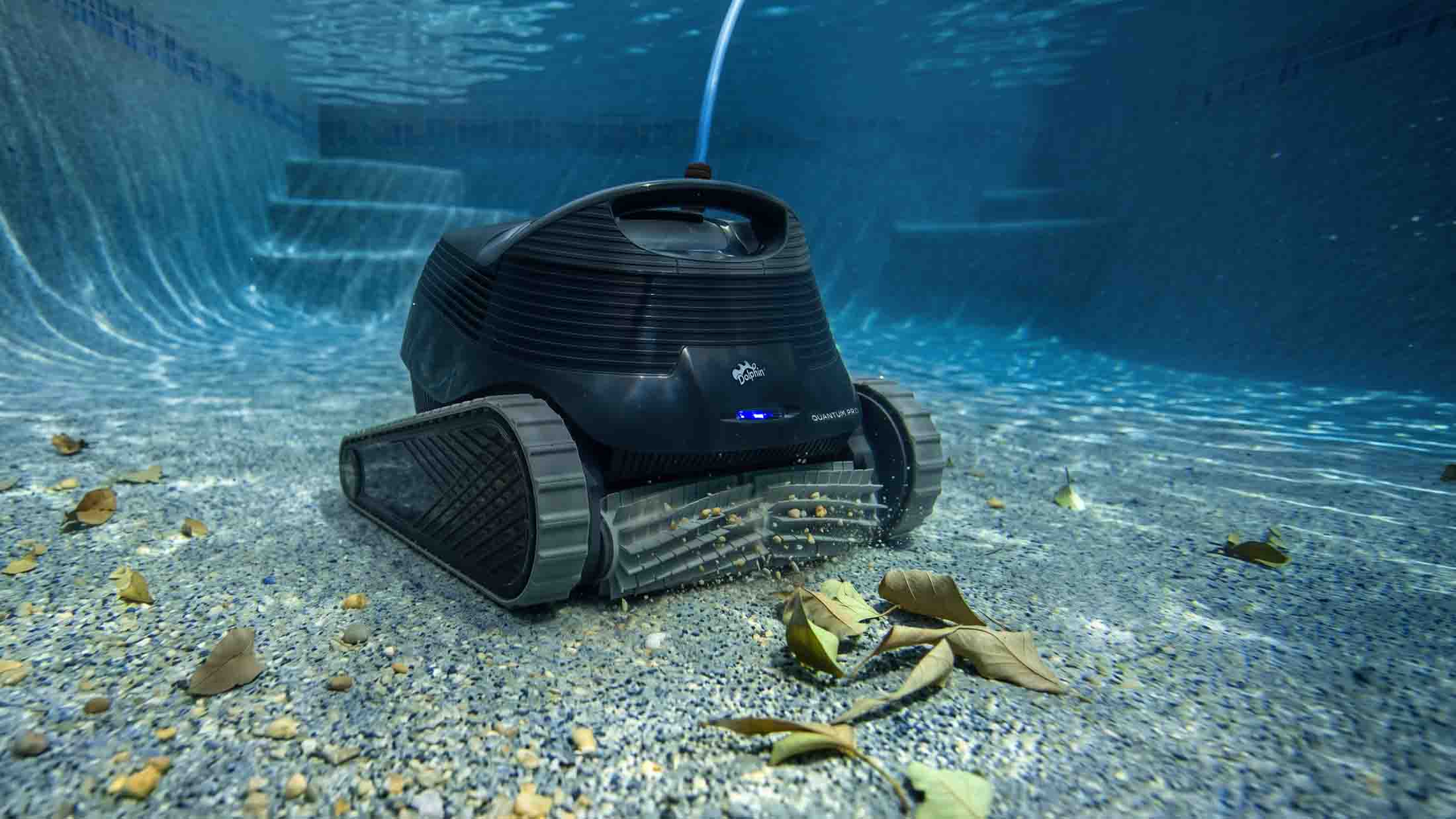
Top pick: Dolphin Quantum
Live prices · Ships free · 30 Day Trial
Gelcoat is easy to keep clean and hard to climb. The right robot holds a slick wall, scrubs the scum line and reaches the steps and ledges molded into the shell.
The quick answer
The Dolphin Quantum is the pick for most fiberglass pools because its published coverage includes the stairs, sun shelves and Baja ledges that nearly every shell has, along with the waterline. Choose the Sigma instead if wall grip and navigation matter most to you: it has quad brushes, three motors and a gyroscope, at a higher price and weight.
A fiberglass pool is a single molded shell with a gelcoat finish, and that shapes everything about cleaning it. The surface is smooth and non-porous, so algae has little to hold on to and dirt lets go easily. The same smoothness makes the walls slick for a climbing robot and the scum line easy to see. And because the shell comes out of a mold, the steps, benches and tanning ledge are part of it.
That is why the best robotic pool cleaner for fiberglass pools is not chosen on scrubbing force. It is chosen on traction, a real waterline pass, and coverage of the molded features. Size is rarely the problem: shells travel by road, so most are 40 ft or shorter, well inside a 50 ft rating and often inside 33 ft.
The picks, ranked
Four robots for fiberglass, in order.

$1999$1599Save $400 off the list price
Temporarily out of stock
Pick 1: Best for shells with steps and a tanning ledge
Dolphin Quantum
Fiberglass is on the Quantum's published surface list, and so are the things fiberglass pools are full of: stairs, sun shelves and Baja ledges, in addition to floor, walls and waterline. No other robot in this guide lists those features. Its dual HyperBrush spins at twice the speed of standard brushes, which suits a surface that wants a quick, frequent wipe more than a hard scrub, and HyperGrip continuous rubber tracks carry it up the wall.
A 2-hour cycle is plenty for a shell under 40 ft, and NanoFilter panels are included for the fine dust that shows on smooth gelcoat.
- Best for
- Fiberglass pools with a tanning ledge, a bench or wide steps, which is most of them.
- The trade-off
- Its warranty is 2 years, and with dual brushes and SmartNav 2.0 it gives up some scrubbing and navigation to the Sigma.

$2999$2349Save $650 off the list price
Temporarily out of stock
Pick 2: Strongest wall grip of the four picks
Dolphin Sigma
If your walls are the problem, the Sigma is the answer. Four scrubbing brushes and three commercial-grade ProLine motors moving 4,500 GPH work a slick wall and the waterline, and SmartNav 3.0 with an onboard gyroscope keeps its route orderly around the curves and coves of a molded shell. Fiberglass is a published surface.
It ranks second only because its published coverage is floor, walls and waterline; stairs and shelves are not listed. The myDolphin Plus app adds day-and-time scheduling and a filter alert, and the warranty is 3 years.
- Best for
- Shells where wall and waterline cleaning matter more than the ledge, and owners who want the app.
- The trade-off
- Highest price of the four, 24.6 lb to lift, and filter cartridges instead of a lift-out basket.

$2499$1949Save $550 off the list price
Temporarily out of stock
Pick 3: Fiberglass pools with trees overhead
Dolphin Premier
The Premier lists fiberglass, climbs on HyperGrip tracks and scrubs the waterline with dual brushes and 4,500 GPH of flow. What it adds for a fiberglass owner is filtration choice: NanoFilters for the fine dust that is so visible on gelcoat, standard fine filters for ordinary weeks, and an oversized leaf bag for when the trees let go.
Its 3-hour cycle is more than a 30 ft shell needs, though the weekly timer on the power supply lets you run it every 2 or 3 days instead of daily. The warranty is 3 years.
- Best for
- Leafy yards, and owners who want simple controls and the longer warranty.
- The trade-off
- There is no app, and stairs and shelves are not in its published coverage.
$1299$1049Save $250 off the list price
Temporarily out of stock
Pick 4: Small shells where floor and walls are enough
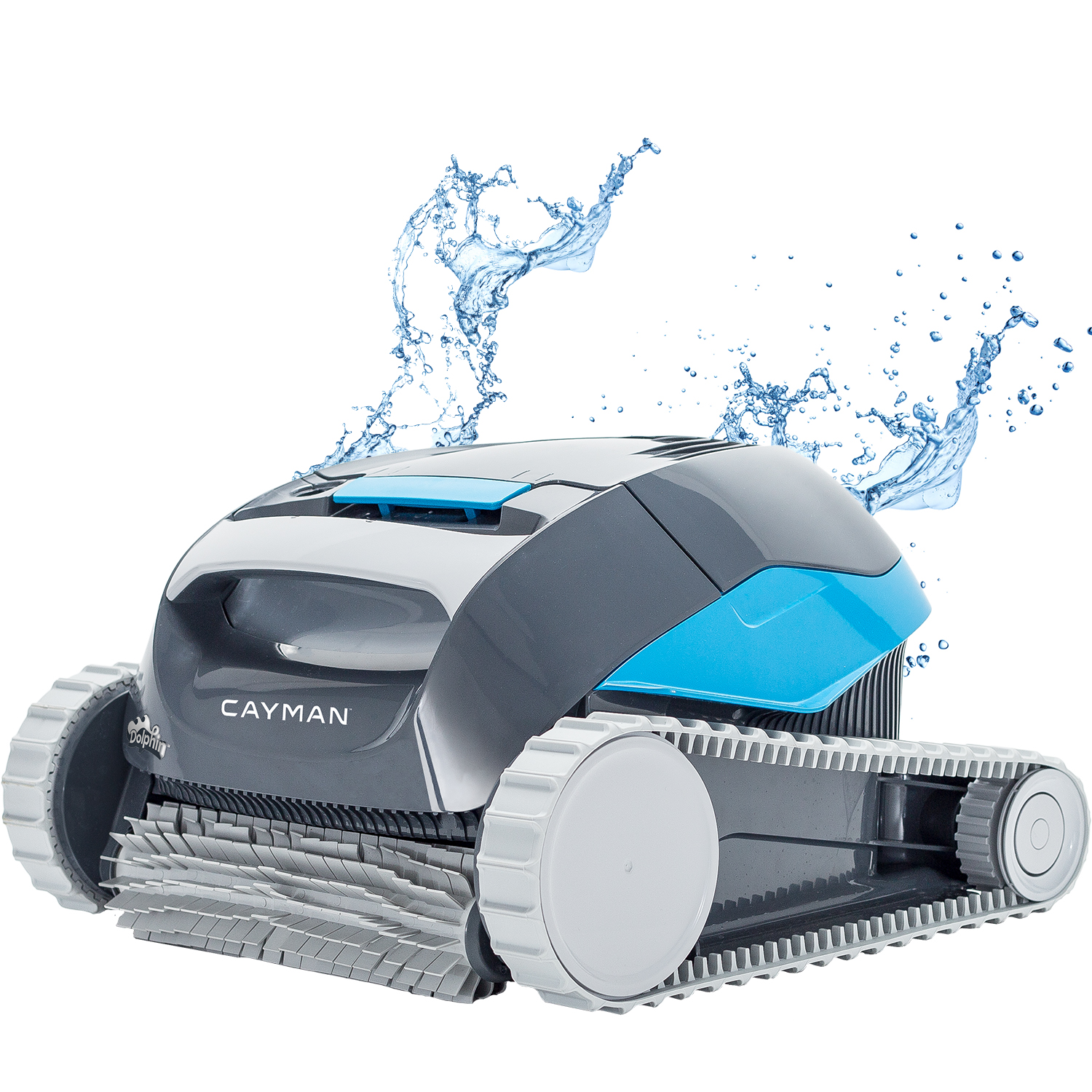
Dolphin Cayman
Plenty of fiberglass pools are 30 ft or less, and for those the Cayman is rated for the job at a lower price. It lists fiberglass, weighs 14.6 lb, and cleans the floor and walls in 2 hours with one HyperBrush, dual 24-volt DC motors and HyperGrip tracks. The MaxBin basket empties through a top hatch.
Understand what you give up. It turns back below the surface, so the scum line stays yours to wipe, and neither steps nor ledges are in its coverage. On fiberglass, where that line shows, it is a real trade.
- Best for
- Compact shells up to 33 ft whose owners will wipe the scum line themselves.
- The trade-off
- No waterline cleaning, a daily-only timer, and a 50 ft cable without a swivel.


Side by side
Fiberglass picks compared.
| Specification | Dolphin Quantum | Dolphin Sigma | Dolphin Premier | Dolphin Cayman |
|---|---|---|---|---|
| Price today | $1599 | $2349 | $1949 | $1049 |
| Brushes | Dual HyperBrush | Quad scrubbing brushes | Dual scrubbing brushes | HyperBrush |
| Cleans | Floor, walls, waterline, sun shelves and stairs | Floor, walls and waterline | Floor, walls and waterline | Floor and walls |
| Traction | HyperGrip tracks | HyperGrip tracks | HyperGrip tracks | HyperGrip tracks |
| Pool length | Up to 50 ft | Up to 50 ft | Up to 50 ft | Up to 33 ft |
| Filtration | XXL MaxBin basket with standard and NanoFilter panels | NanoFilters and standard filter cartridges | Multi-Media: NanoFilters, oversized leaf bag and standard fine filters | MaxBin basket with fine panels; NanoFilter panels optional |
| Robot weight | 18.3 lb | 24.6 lb | 20.3 lb | 14.6 lb |
| Warranty | 2 years | 3 years | 3 years | 2 years |
What to look for
Where a gelcoat shell tests a robot.
-
Traction on a slick wall.
Gelcoat gives a robot very little to push against. Tracks put more rubber on the wall than wheels do, and water flow presses the robot to the surface as it climbs. Every pick here runs on HyperGrip tracks. A film of algae or sunscreen will still cost any robot grip.
-
A true waterline pass.
On a white or pale blue shell, the ring of body oil and pollen at the water's surface is the first thing a visitor sees. Some robots climb and turn back below it. If the scum line bothers you, choose a robot that lists the waterline in its coverage.
-
Steps, benches and ledges.
Molded features take up a large share of a fiberglass pool. Most robots are published for floor and walls, or floor, walls and waterline. Check whether stairs and shelves appear in the coverage list, and expect the shallowest treads to need a hand brush whatever you buy.
-
Length of the shell.
Measure the longest straight run. Many fiberglass pools are 33 ft or shorter, where a smaller robot is rated for the job; longer shells need a 50 ft rating. Cable reach is seldom tight in a pool this size.
What to expect on steps, benches and the tanning ledge.
Listing a feature is not the same as reaching every inch of it. A robot needs enough water over it to drive and to draw debris in. A tanning ledge and the lower treads of a staircase are within reach of a robot that lists them; the top step, where the water is ankle deep, usually is not. Our spec sheet gives no minimum depth, so check the manual against your ledge before you count on it. If it does not work out on your shell, we offer 30 day returns with no restocking fees.
Molded shells help in one way: their corners are rounded, so there are few sharp inside angles for debris to hide in. Coverage of odd-shaped features still varies from one cycle to the next, so judge the result over a week, not a single run, and keep a soft brush for the top tread and the lip of the ledge.
Looking after gelcoat.
Gelcoat is tough, but it is a finish, and what marks it is grit dragged across it. That is the reason to keep a robot's brushes and tracks clean and to rinse the robot after it has sat on a sandy deck.
The other half is the scum line. On fiberglass it wipes off easily while it is fresh and stubbornly once it has baked on for a month. A robot that scrubs the waterline several times a week keeps it in the easy stage. It will not remove calcium scale or metal stains, which are water chemistry problems, and it does not replace your sanitizer or skimmer.
Getting a clean shell with less effort.
- Run the robot every day or two. Fiberglass releases dirt easily, so frequent light cycles beat an occasional long one.
- When the floor shows a fine haze of dust, swap in the NanoFilter panels; return to standard panels when leaves are falling.
- Measure the water depth over your tanning ledge and compare it with the minimum depth in the manual.
- Empty and rinse the filter at least weekly; a loaded filter moves less water, and the robot climbs worse for it.
Questions, answered
Fiberglass pool questions.
Will a robot scratch the gelcoat on a fiberglass pool?
Fiberglass is a published surface for every robot on this page, and their brushes and tracks are made for it. Scratches come from grit, so rinse sand off the brushes and tracks before the robot goes in, and replace worn parts. We cannot vouch for a shell we have not seen, so check yours for existing damage first.
Why does my robot slip on fiberglass walls?
Usually because of a film on the wall. Gelcoat is slick to begin with, and a thin layer of algae, oil or sunscreen removes what grip is left. Brush the walls once by hand, clean the robot's brushes and empty its filter, then try again. Worn brushes also reduce climbing and are replaceable.
Do I still need to brush a fiberglass pool if I own a robot?
Less often, but yes. The top step, the lip of the ledge, behind the ladder and around fittings are places a robot does not reach well. During an algae treatment you brush the whole pool by hand; a robot does not replace that.
Does the color of the gelcoat matter when choosing a robot?
Not for compatibility. It changes what you notice. Dark shells show fine pale dust, and white shells show the waterline ring and leaf stains, so owners of dark pools tend to value NanoFilter panels and owners of light pools the waterline pass. The best robotic pool cleaner for fiberglass pools of either color still needs tracks and a fiberglass rating.
The bottom line
Choosing for your shell.
Look at your pool from the deck. If steps or a tanning ledge take up much of the view, buy the Quantum, the only robot here that lists them. If the walls and waterline are your main chore and the budget stretches, buy the Sigma. Under heavy trees, the Premier's leaf bag earns its place. And for a compact shell where you are content to wipe the waterline yourself, the Cayman saves money.
More buying guides
