



By pool surface
Best robotic pool cleaner for Pebble Tec pools: reaching between the stones.
Top pick: Dolphin Quantum
Live prices · Ships free · 30 Day Trial
A pebble finish is a field of small bumps and valleys. Fine dirt settles in the valleys, and it takes fast brushes, firm traction and fine filters to get it out.
The quick answer
The Dolphin Quantum is our pick for Pebble Tec and similar finishes: its dual HyperBrush spins at twice the speed of standard brushes to work down between the stones, NanoFilter panels are included for the fine dirt that comes out, and pebble is on its published surface list. Choose the Sigma instead if you want four brushes and a longer 2.5-hour cycle and will pay more for them.
Run a hand over a pebble finish and you feel the problem. The surface is thousands of small rounded stones set in cement, with a shallow valley around each one. Fine dirt drifts into those valleys and stays there, out of the main flow of water, and algae starts in the same sheltered spots. A brush that only skims the tops of the pebbles leaves most of it behind.
Pebble Tec is the best-known name, but the same applies to any pebble finish, from coarse river-stone blends to the smoother small-pebble mixes, and to exposed aggregate. The best robotic pool cleaner for Pebble Tec pools has brushes that get into the texture, tracks that hold a bumpy wall, filters fine enough for what the brushes release, and pebble on its published surface list.
The picks, ranked
Pebble picks, in order of brush action.
$1999$1599Save $400 off the list price
Temporarily out of stock
Pick 1: Twice-speed dual brushes, NanoFilters included
Dolphin Quantum
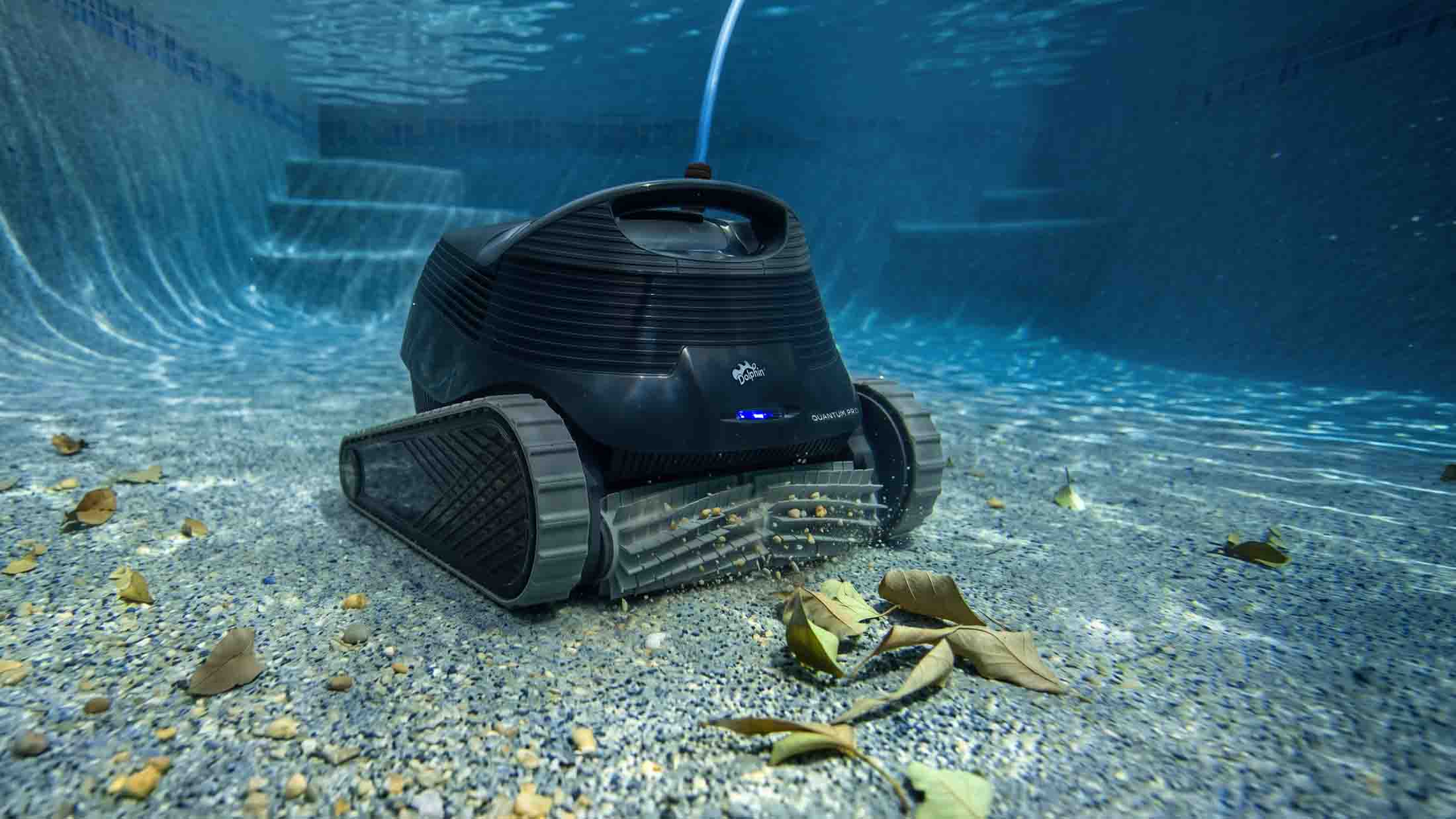
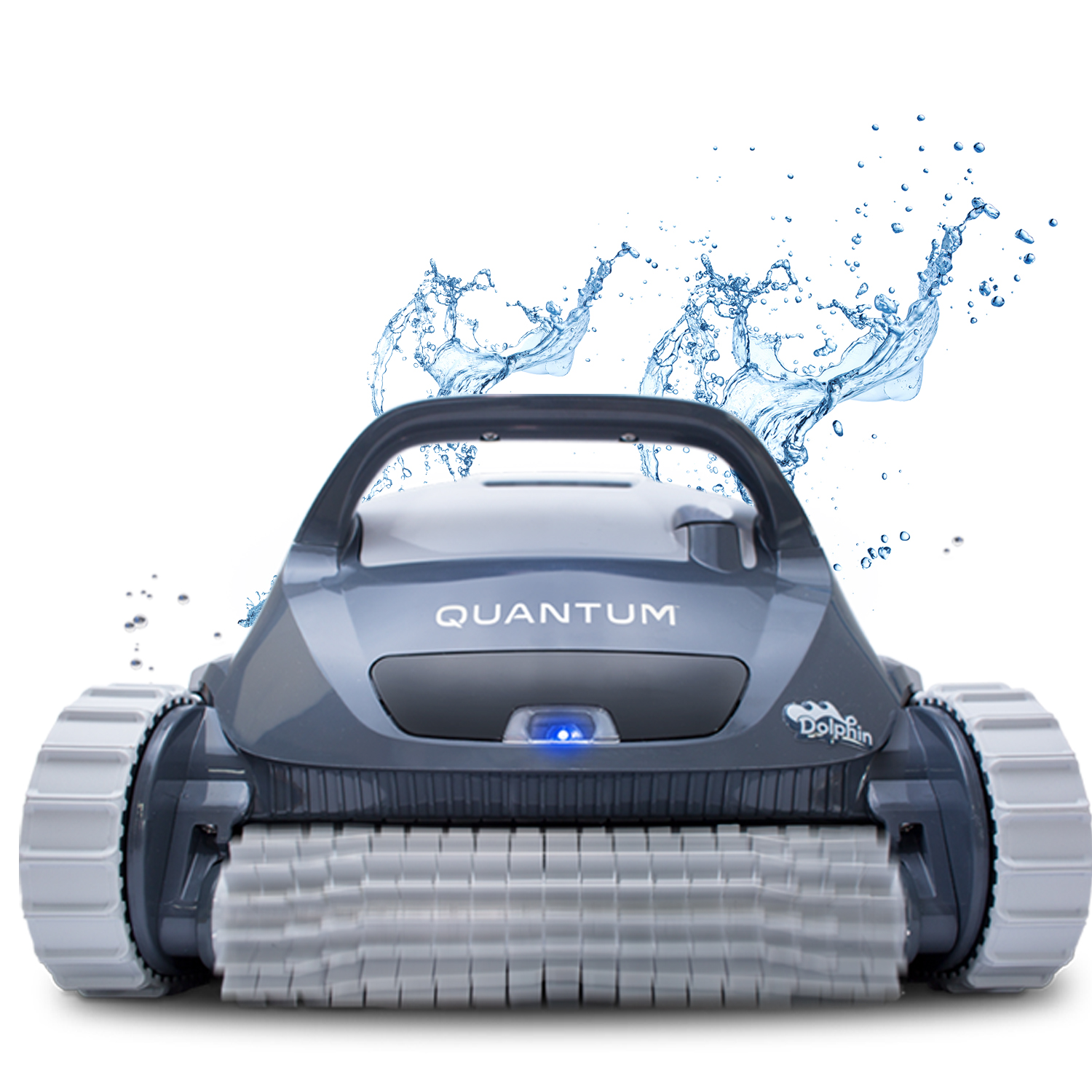
On pebble, brush action decides the result, and the Quantum's dual HyperBrush turns at twice the speed of standard brushes, so each pass puts more strokes into the valleys between the stones. Pebble is on its published surface list, HyperGrip continuous rubber tracks carry it up a bumpy wall to the waterline, and the full set of NanoFilter panels in the box catches the silt the brushes dislodge.
Its 2-hour cycle is the shortest of the three larger robots. The weekly timer makes up for that: set it for every day and the floor gets seven visits a week without you touching it.
- Best for
- Pebble Tec pools up to 50 ft, especially with steps, benches or a sun shelf finished in pebble.
- The trade-off
- Two brushes, a 2-hour cycle and a 2-year warranty; the Sigma has more of all three.
$2999$2349Save $650 off the list price
Temporarily out of stock
Pick 2: Four brushes for coarse pebble
Dolphin Sigma
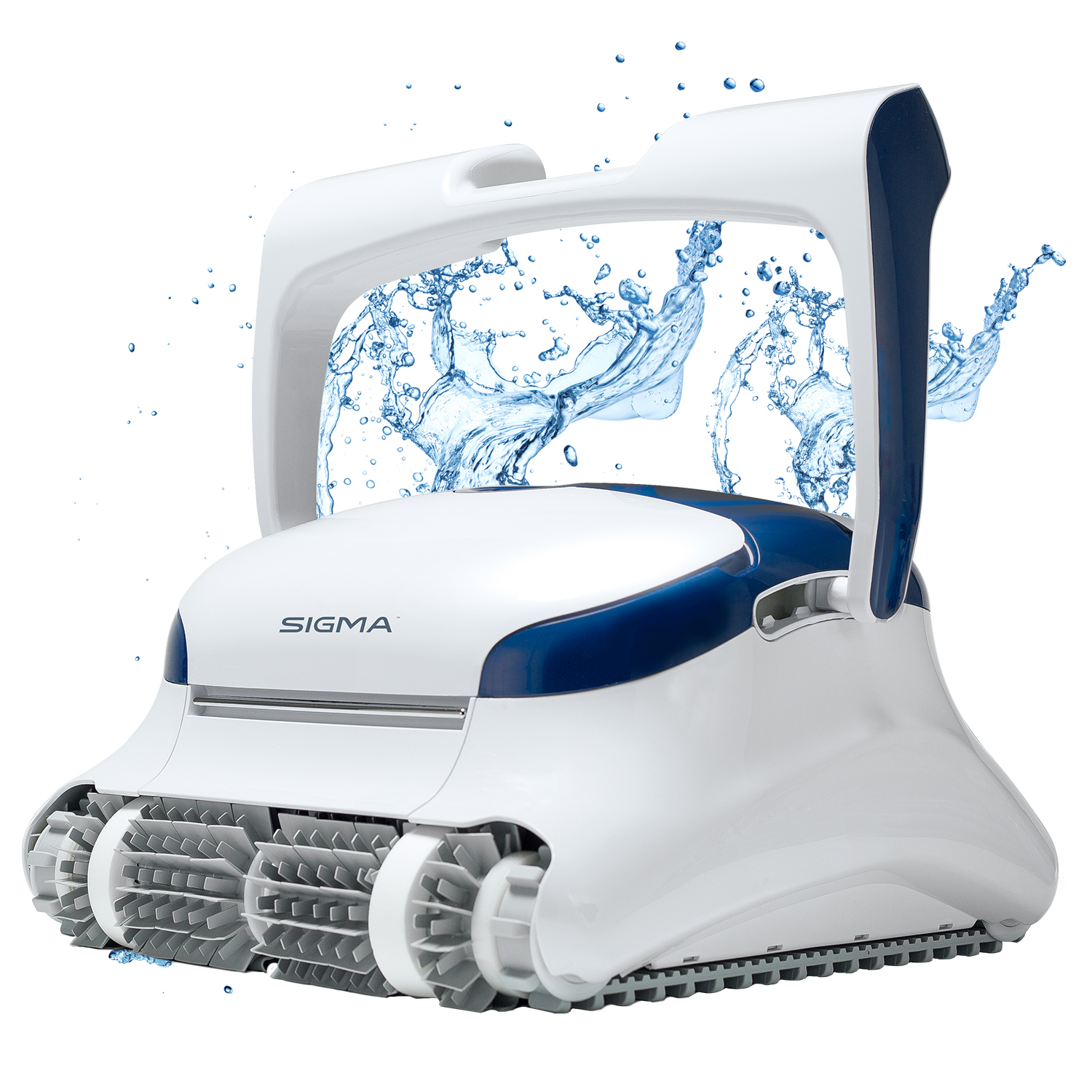
If your finish is the coarse, large-stone kind, or the pool has been let go for a while, the Sigma puts more brush on the surface than any other pick: quad scrubbing brushes, backed by three commercial-grade ProLine motors at 4,500 GPH. Its cycle runs 2.5 hours, and SmartNav 3.0 with an onboard gyroscope helps it hold a line over a floor that is all small bumps.
Pebble is on its surface list, NanoFilters and standard cartridges are included, and the warranty is 3 years. It costs the most of any robot here, which is the only reason it is second.
- Best for
- Coarse or neglected pebble finishes and large pools where budget is not the limit.
- The trade-off
- Highest price of the four and 24.6 lb to lift; on pebble, all four brushes will need replacing in time.
$2499$1949Save $550 off the list price
Temporarily out of stock
Pick 3: Longest cycle of the four picks
Dolphin Premier
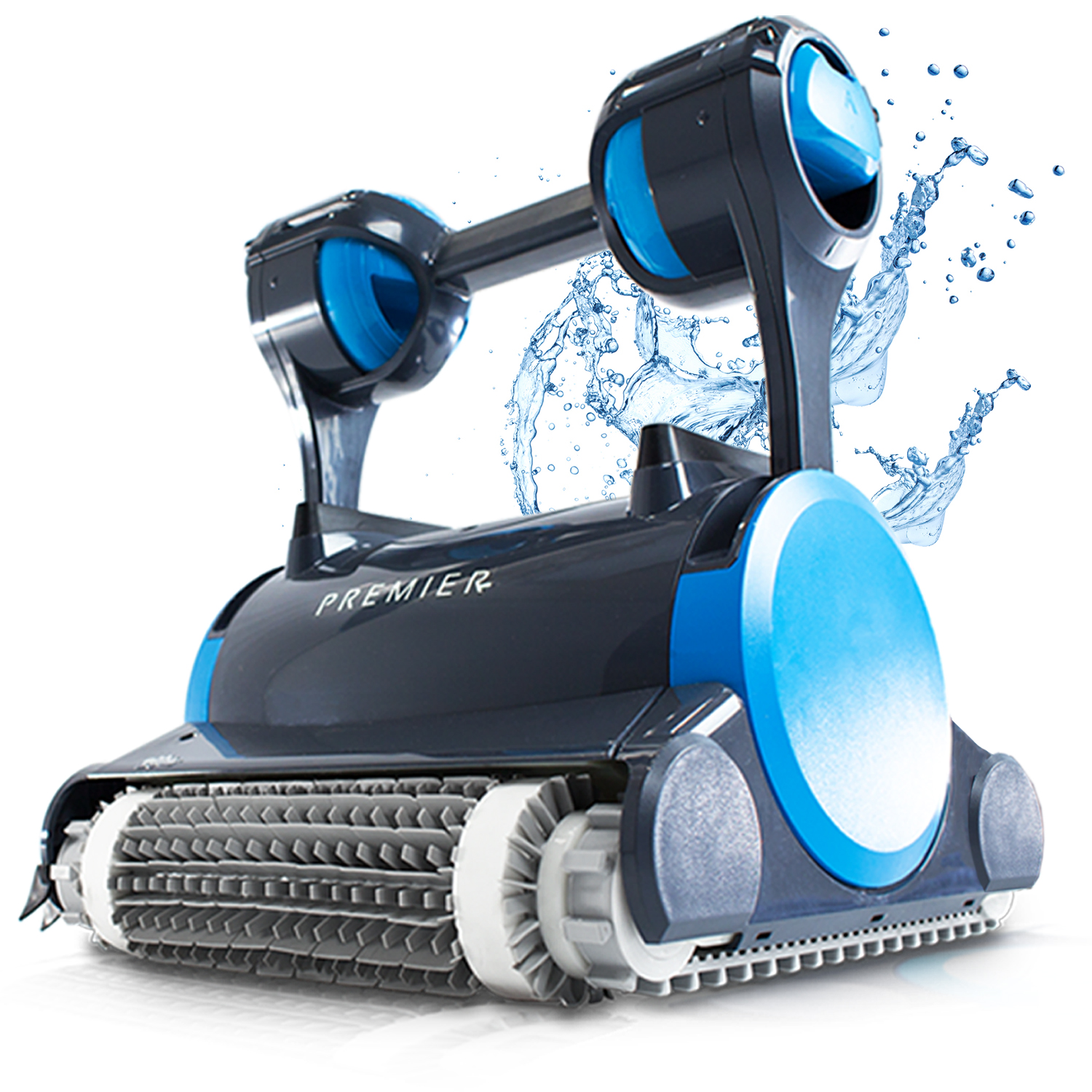
The Premier gives a pebble pool time. Its 3-hour cycle is the longest of the four picks, so the dual scrubbing brushes cross the same floor more often in one run, with 4,500 GPH from dual commercial-grade ProLine motors pulling loosened silt into the filter. Pebble is on its published surface list.
Multi-Media filtration lets you fit NanoFilters for silt or the oversized leaf bag when the trees drop, and both are included. The warranty is 3 years, not prorated and not limited by cycle count, which counts on a finish that wears brushes.
- Best for
- Large pebble pools under trees, and owners who want a long cycle and simple timer controls.
- The trade-off
- No app, no fast HyperBrush, and steps and shelves are not in its published coverage.
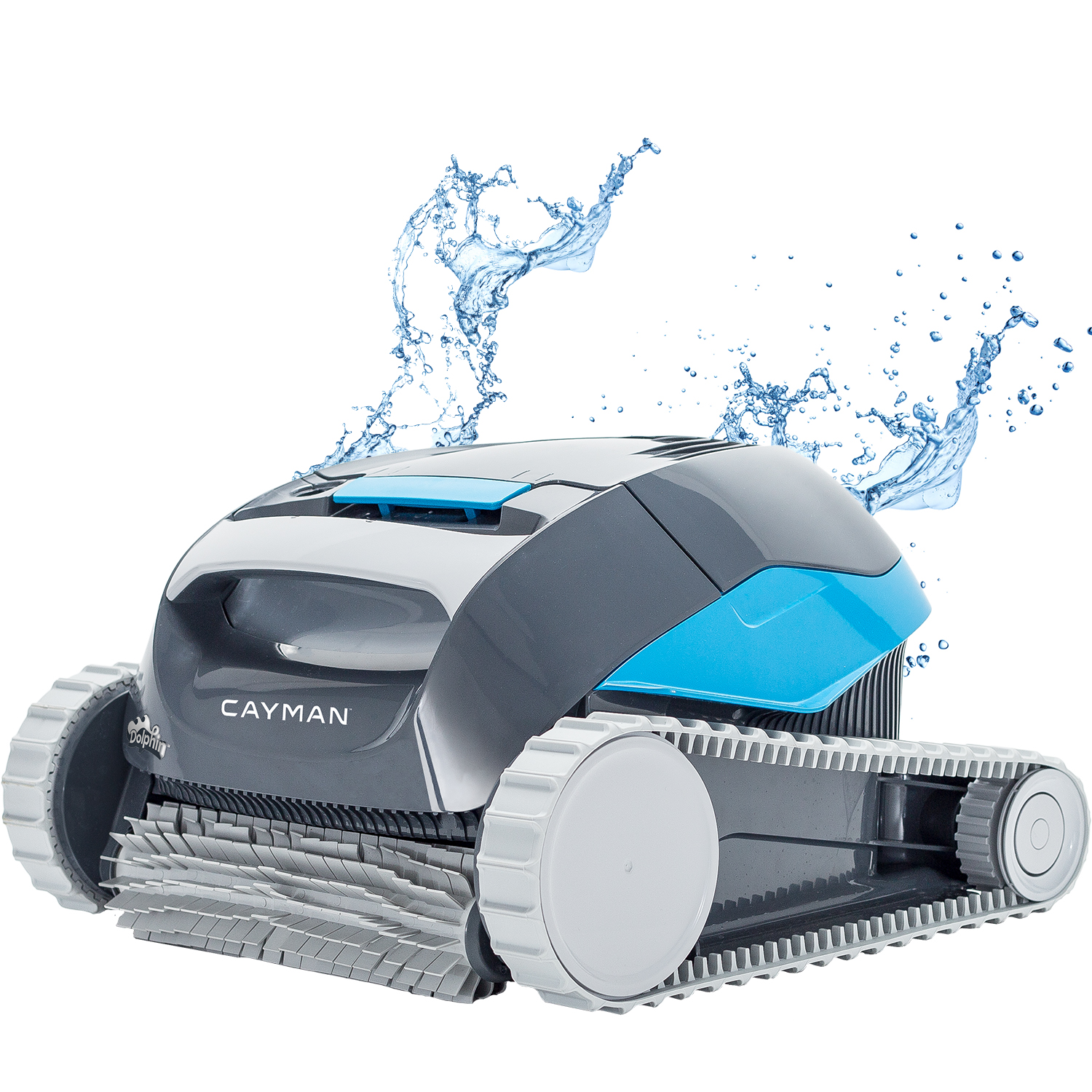
$1299$1049Save $250 off the list price
Temporarily out of stock
Pick 4: Small pebble pools, floor and walls
Dolphin Cayman
For a pebble pool of 33 ft or less, the Cayman is the lower-cost route, and it names pebble on its surface list, which not every small robot does. It has one HyperBrush of the same twice-speed type, with dual 24-volt DC motors moving over 4,000 GPH and HyperGrip tracks for the walls.
One brush covers less texture per pass than two, so use its daily timer and let repetition do the work. Add the optional NanoFilter panels; without them the finest silt goes back into the pool.
- Best for
- Compact pebble-finished pools with a longest run of 33 ft or less.
- The trade-off
- No waterline cleaning, NanoFilter panels are extra, and the 50 ft cable has no swivel.


Side by side
Brushes, cycles and filters, side by side.
| Specification | Dolphin Quantum | Dolphin Sigma | Dolphin Premier | Dolphin Cayman |
|---|---|---|---|---|
| Price today | $1599 | $2349 | $1949 | $1049 |
| Brushes | Dual HyperBrush | Quad scrubbing brushes | Dual scrubbing brushes | HyperBrush |
| Cleans | Floor, walls, waterline, sun shelves and stairs | Floor, walls and waterline | Floor, walls and waterline | Floor and walls |
| Traction | HyperGrip tracks | HyperGrip tracks | HyperGrip tracks | HyperGrip tracks |
| Pool length | Up to 50 ft | Up to 50 ft | Up to 50 ft | Up to 33 ft |
| Filtration | XXL MaxBin basket with standard and NanoFilter panels | NanoFilters and standard filter cartridges | Multi-Media: NanoFilters, oversized leaf bag and standard fine filters | MaxBin basket with fine panels; NanoFilter panels optional |
| Robot weight | 18.3 lb | 24.6 lb | 20.3 lb | 14.6 lb |
| Warranty | 2 years | 3 years | 3 years | 2 years |
What to look for
Why pebble is harder to clean than it looks.
-
Brushes that reach into texture.
The dirt is between the stones, below the level of their tops. Fast-spinning or multiple brushes flick it out where a single slow pass rides over it. Compare brush count and brush speed before anything else.
-
Traction on a bumpy wall.
Pebble gives plenty of bite, but the contact is uneven, a few stone tops at a time. Wide tracks bridge the bumps and keep a robot climbing steadily instead of slipping and restarting. All four picks run on HyperGrip tracks.
-
Fine filtration.
What comes out from between the stones is silt, not leaves. If the filter lets it through, it drifts back down and you are where you started. NanoFilter-grade media hold it; check whether they are included or extra.
-
Enough passes.
One trip across a pebble floor loosens some of the dirt, not all of it. A longer cycle, or a shorter one run more often on a timer, gives the brushes the repeat visits this texture needs.
Pebble Tec, smooth pebble and aggregate: does the type matter.
Pebble Tec is a brand, and its original finish is the coarse one most people picture. Smoother small-pebble blends, of the PebbleSheen type, sit closer to plaster to the touch, and exposed aggregate falls somewhere between. For a robot they behave alike: a textured, cement-based surface that hides fine dirt and wears brushes. The coarser the stone, the deeper the valleys, the more brush action you want and the sooner brushes need replacing.
If you are unsure what you have, feel the floor on the top step. If it is as rough as a gravel path, lean toward the Sigma or run the Quantum daily. If it feels like fine sandpaper, any of the three 50 ft robots will do well.
What a robot will not remove from a pebble finish.
Pebble finishes develop problems that look like dirt and are not. Calcium nodules are small hard bumps that grow out of the cement. Scale forms a white or gray haze over the stones. Metal and leaf stains tint the surface. A robot's brushes do not remove any of these, and scrubbing harder or longer makes no difference. They are chemistry and repair matters for a pool professional.
What the robot does remove is the loose material: silt, sand, pollen, leaves, and dead algae after a treatment. Doing that often keeps the valleys from filling, which is commonly why a pebble floor looks dull. It does not replace sanitizer, and during an algae treatment the walls still need a stiff brush in your hands.
Getting the most from a robot on pebble.
- Run it more often than you would on plaster. Frequent cycles suit pebble; a weekly one leaves the valleys full.
- Water clear but floor dusty? That is the cue for NanoFilter panels, rinsed after each cycle.
- Look over the brushes every few weeks. Pebble rounds off the fins, and worn brushes skim the stone tops.
- After a windstorm, empty the basket and run a second cycle; the first fills with leaves before it gets to the silt.
- Brush the top step and tight corners by hand each week, where the texture gets the fewest robot passes.
Questions, answered
Questions about robots and pebble.
Is Pebble Tec too rough for a robotic pool cleaner?
No. Pebble is a published surface for all four picks, and their tracks and brushes are made to work on it. Rough texture does mean faster brush wear than plaster or vinyl, so treat brushes as a consumable. The best robotic pool cleaner for Pebble Tec pools is one that names pebble and has brushes you can replace.
Why does dust come back to the floor a few hours after cleaning?
Usually because the filter is too coarse. Silt pulled from between the stones passes through standard panels, hangs in the water and settles again. Switch to NanoFilter panels and run a cycle or two. If it still returns, look at the pool's own filter and at whether fresh dust is blowing in each day.
Does the Dolphin Escape work on a pebble finish?
Pebble is not on the Escape's published surface list, which names vinyl liner, gunite, fiberglass and tile, so we do not recommend it for a pebble pool. For a small pebble pool the Cayman is the one to look at: it names pebble and is rated for pools of 33 ft or less.
Will a robot knock off calcium nodules or lift stains?
No, and we would be wary of any claim that one can. Nodules, scale and stains are bonded to the finish. Brushes remove loose dirt and soft film only. If nodules are appearing, have a pool professional look at the finish and the water balance.
Do I need a different robot for smooth pebble than for coarse pebble?
Not a different list, a different emphasis. Smooth small-pebble finishes clean up much like plaster, and the Quantum handles them comfortably. Coarse finishes reward more brush and more time, which favors the Sigma or the Premier. So the best robotic pool cleaner for pebble finish pools depends on how rough yours is.
The bottom line
The pebble rule of thumb.
Buy brush action first, filtration second. For most pebble pools that means the Quantum, run daily on its timer, with NanoFilter panels when the floor looks dusty. If the stone is coarse or the pool is big and you can spend more, the Sigma's four brushes are the upgrade; if leaves are the bigger problem, the Premier's long cycle and leaf bag are. At 33 ft and under, take the Cayman and add NanoFilter panels. Expect to replace brushes, and do not expect any robot to cure nodules or stains.
More buying guides
