



By feature
The best robotic pool cleaner with wall climbing, and how high each one goes.
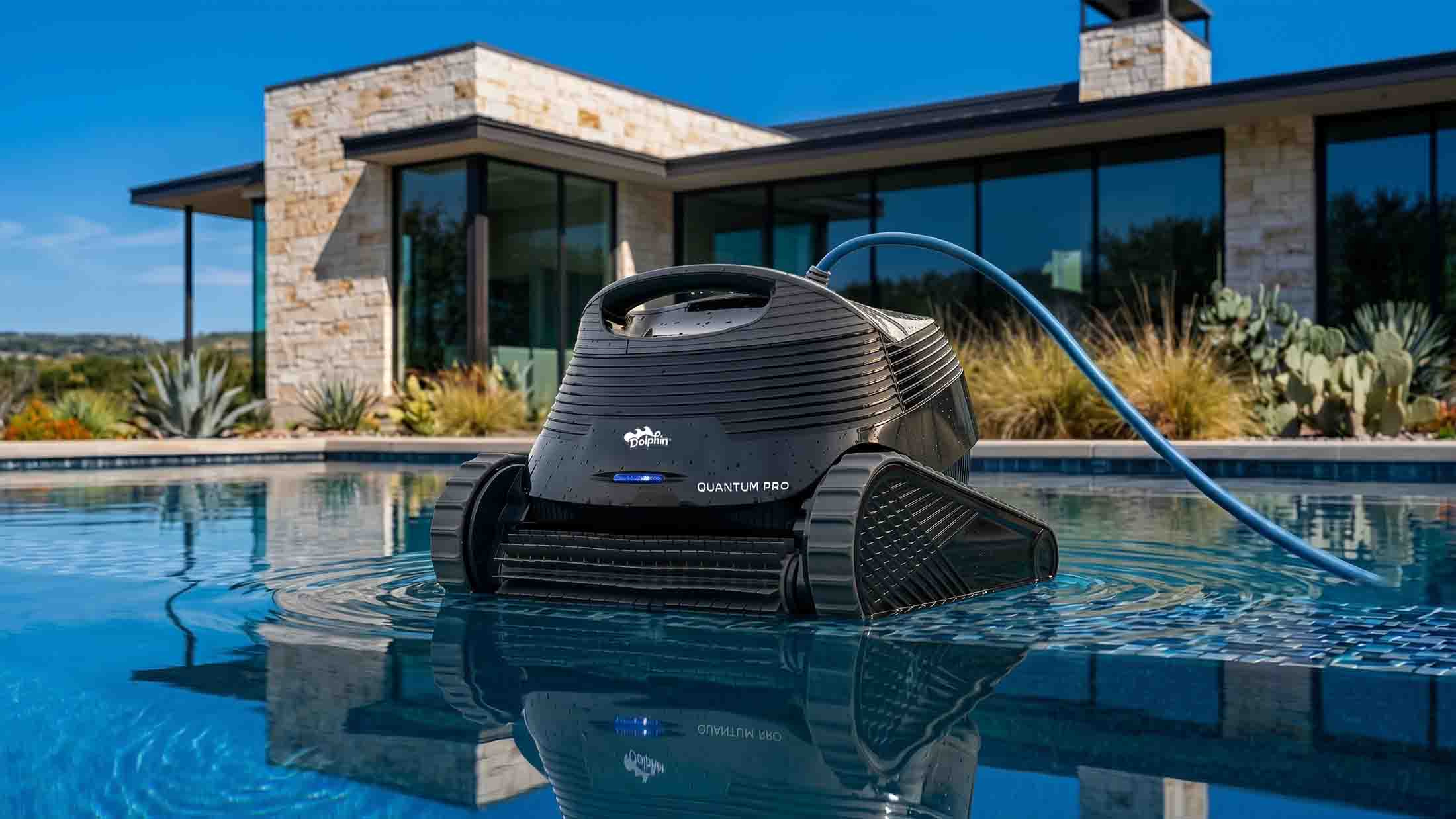
Top pick: Dolphin Quantum
Live prices · Ships free · 30 Day Trial
Every robot on this page climbs. What separates them is where they stop, how hard they scrub on the way up, and what keeps them there.
The quick answer
The Dolphin Quantum is the wall climber to buy: HyperGrip continuous rubber tracks, a dual HyperBrush, and a climb that goes all the way to the waterline, at the lowest price of the three robots here that reach it. The Dolphin Premier and Dolphin Sigma climb as high with more motor behind them. For pools up to 33 ft, the Dolphin Cayman climbs the walls and stops below the waterline.
A pool wall holds more than it seems to. Fine dust settles on it, algae starts on the shaded side, and the cove where wall meets floor collects whatever rolls downhill. A robot that only patrols the floor leaves all of that for the brush pole.
So a robotic pool cleaner with wall climbing is worth having, and all five Dolphins compared here at QuantumRobotic.com climb. They are not equal, though. Three go to the waterline and scrub along it. Two clean the wall and turn back short of the surface. And every one of them, whatever it cost, will stop climbing if its filter is clogged or its brushes are worn.
The picks, ranked
Four wall climbers, ranked for this store.
$1999$1599Save $400 off the list price
Temporarily out of stock
Pick 1: Climbs to the waterline for the least
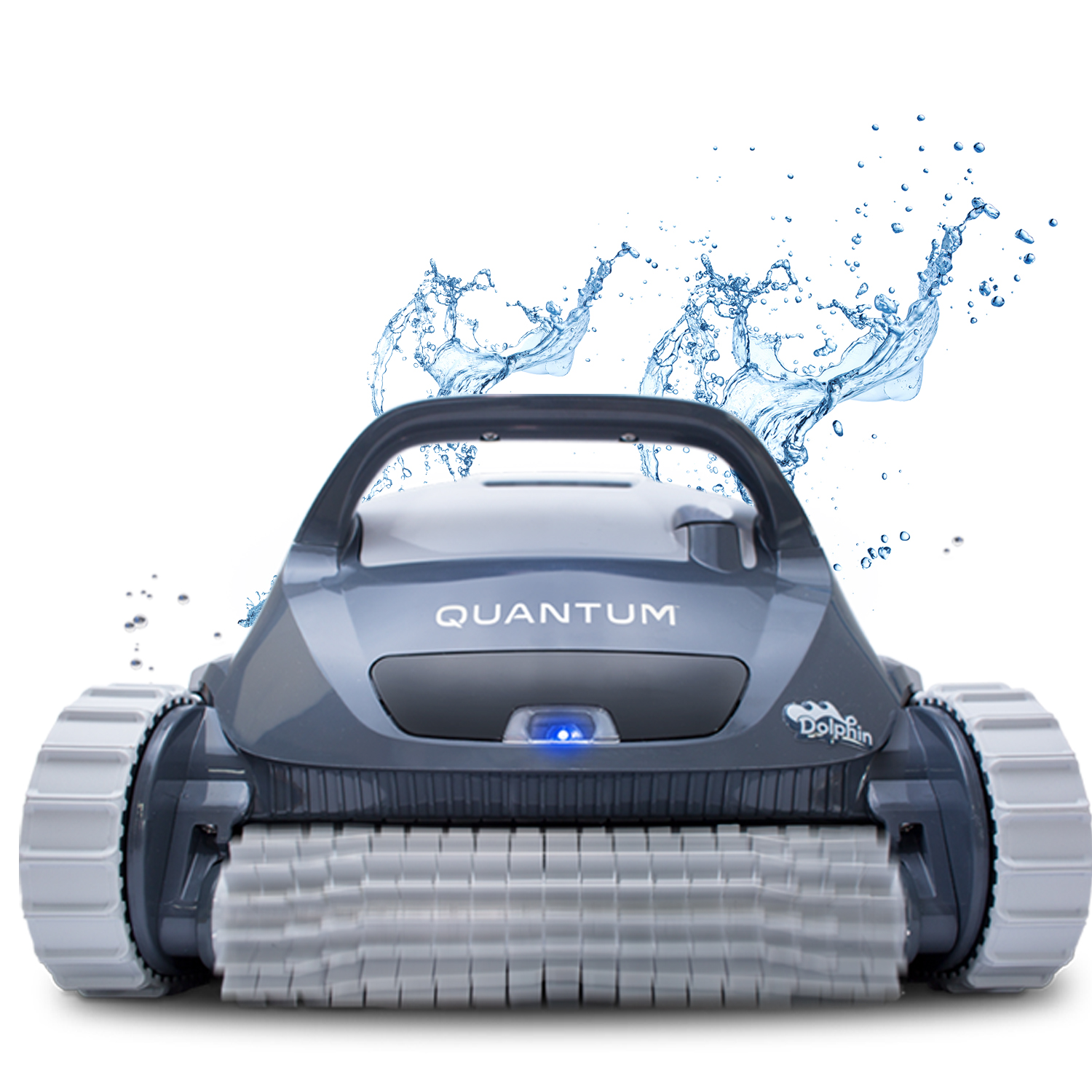
Dolphin Quantum
The Quantum climbs the full height of the wall and scrubs along the waterline, and of the three robots here that go that high it is the lowest-priced. It grips with HyperGrip continuous rubber tracks and scrubs with a dual HyperBrush that spins at twice the speed of standard brushes. Dual commercial-grade motors move 4,000 GPH through an XXL MaxBin of over 400 square inches, and filter area matters on walls: a bigger filter takes longer to clog, so the hold tends to last through the cycle.
- Best for
- In-ground pools up to 50 ft whose owners want walls and waterline scrubbed without paying top price.
- The trade-off
- Its 4,000 GPH is the lowest flow of the three waterline climbers, and the warranty is 2 years.
$2499$1949Save $550 off the list price
Temporarily out of stock
Pick 2: Same height, more flow, longer cycle
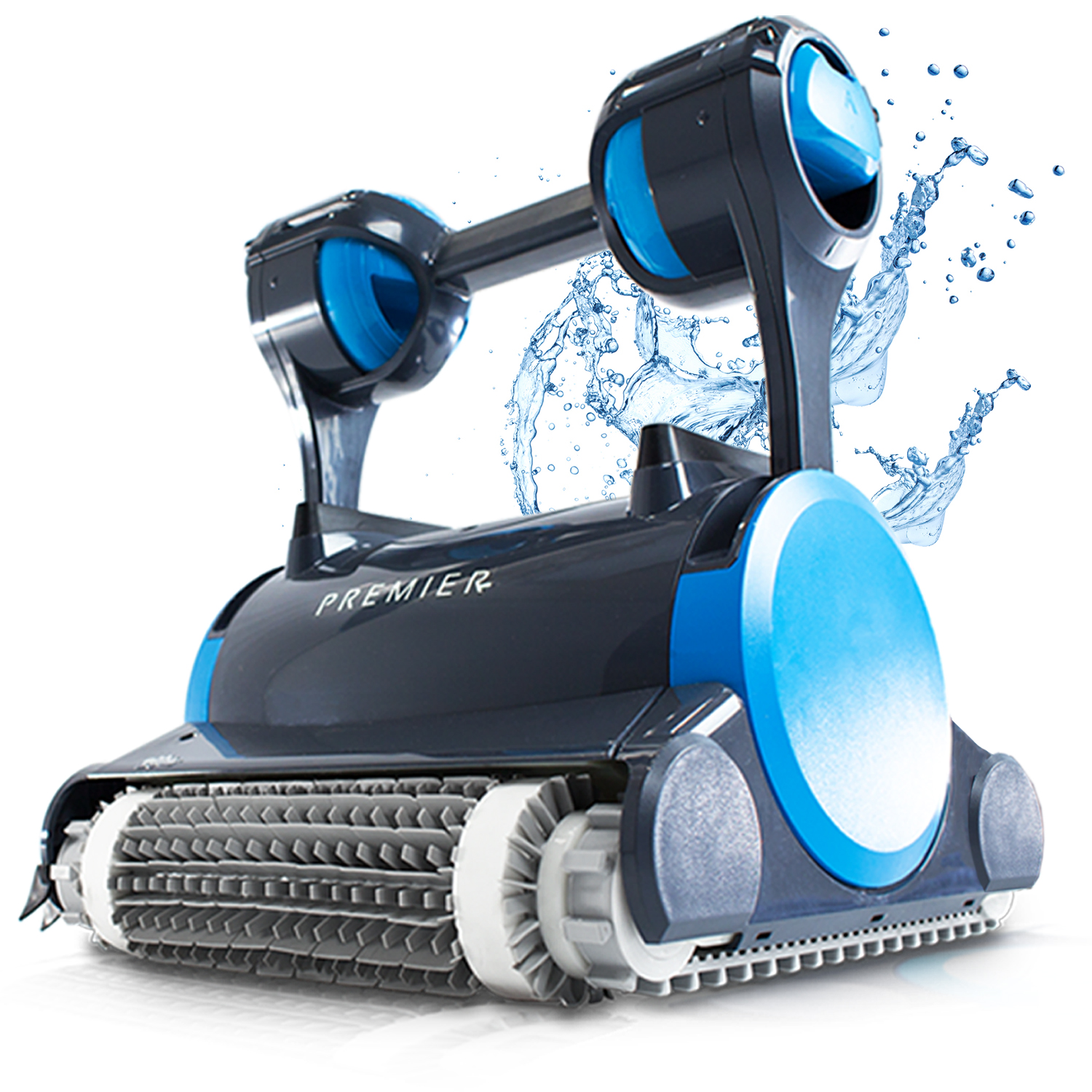
Dolphin Premier
The Premier climbs to the waterline as well and puts more behind the climb: dual commercial-grade ProLine motors moving 4,500 GPH. Its 3-hour cycle is the longest here, which gives it more time on the walls of a big pool. When the wall problem is fine dust, its Multi-Media system takes the included NanoFilters; when it is leaves in the cove, the oversized leaf bag. A full-filter indicator on the power supply tells you when flow, and with it the climb, is about to suffer. The warranty is 3 years.
- Best for
- Larger or leafier in-ground pools, and owners who value a 3-year warranty over phone control.
- The trade-off
- No app or Wi-Fi control, and at 20.3 lb it is heavier to lift than the first pick.
$2999$2349Save $650 off the list price
Temporarily out of stock
Pick 3: Most motor and brush on the wall
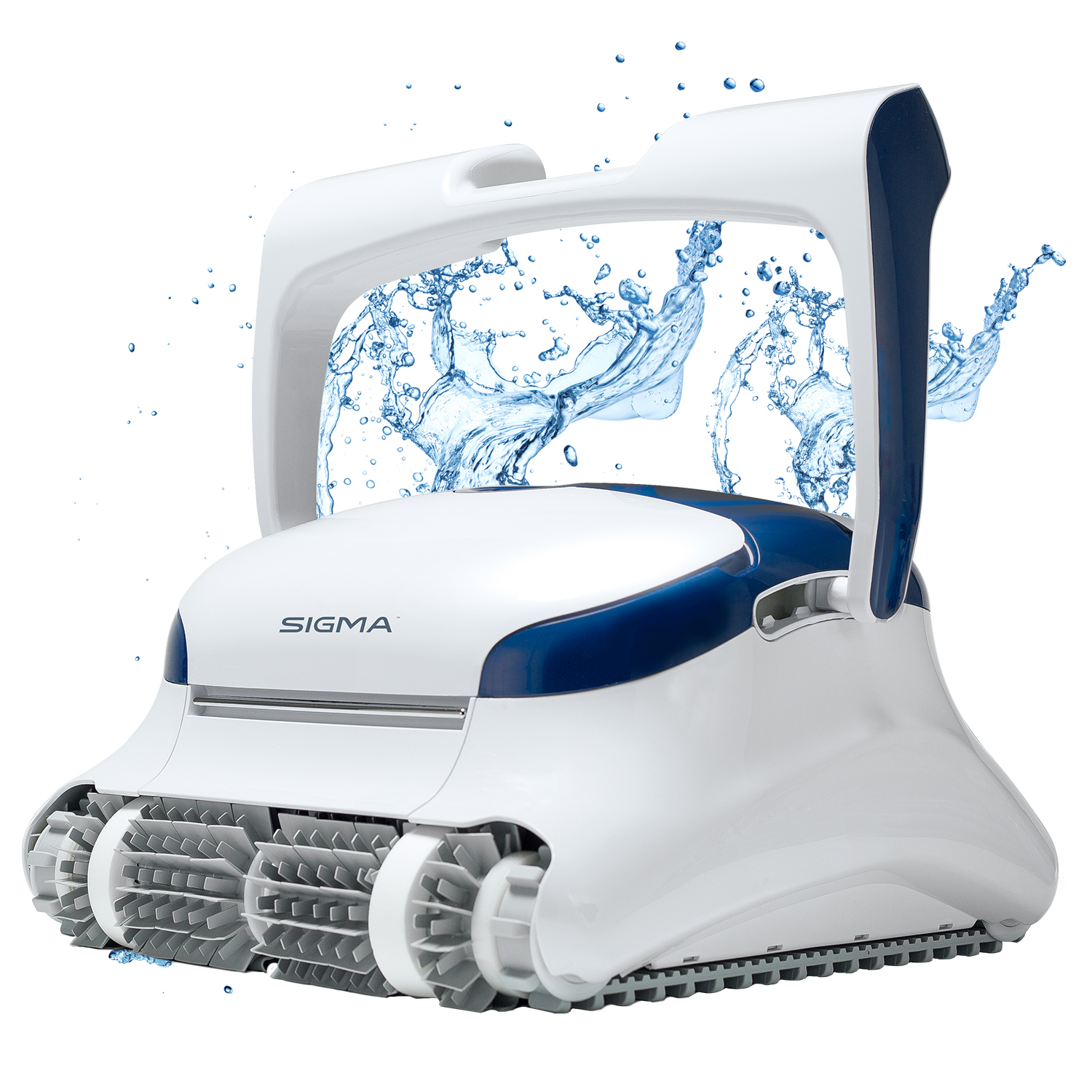
Dolphin Sigma
On hardware alone the Sigma is the strongest climber here: three commercial-grade ProLine motors moving 4,500 GPH, quad scrubbing brushes, and SmartNav 3.0 with an onboard gyroscope, which gives it a sense of its own orientation and helps it hold straight passes up a wall. It reaches the waterline, carries a 3-year warranty, and reports a full filter in the myDolphin Plus app before a clogged cartridge costs it grip.
It ranks third because no robot on the page costs more. On ordinary walls the first two picks reach the same height for less.
- Best for
- Slick tile or fiberglass walls, and owners who want the strongest climber regardless of price.
- The trade-off
- Highest price and heaviest robot on the page at 24.6 lb. Its filters are cartridges, not a single lift-out basket.
$1299$1049Save $250 off the list price
Temporarily out of stock
Pick 4: Wall climber for pools up to 33 ft
Dolphin Cayman
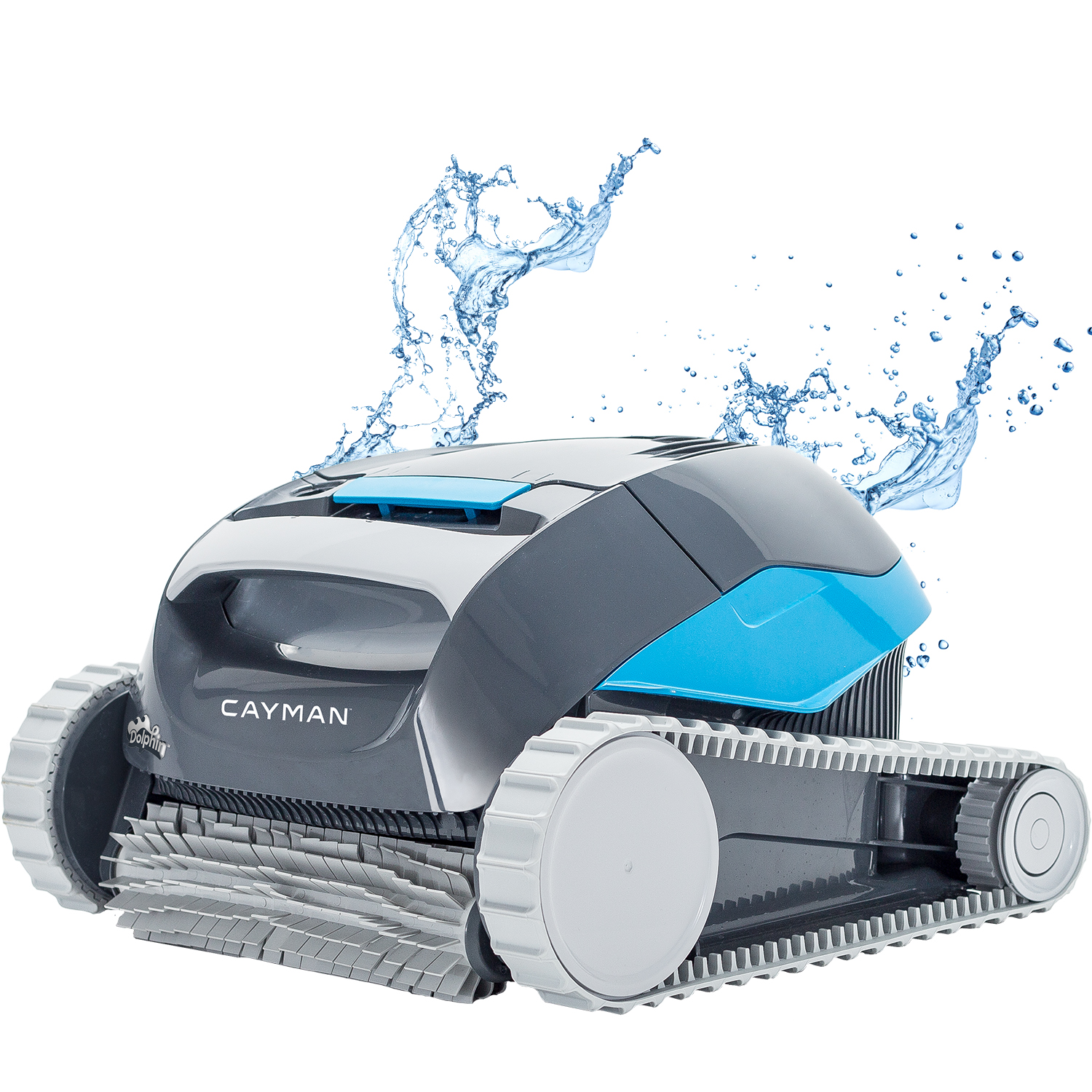
The Cayman is the pick when the pool is smaller or above ground. It climbs on the same HyperGrip tracks, scrubs with one HyperBrush at twice the speed of standard Dolphin brushes, and its dual 24-volt DC motors move over 4,000 GPH, real flow for a 14.6 lb robot.
What it does not do is finish the climb: it cleans floor and walls and stops below the waterline. In a pool up to 33 ft where the line at the top is wiped by hand anyway, that is a fair trade for the lower price.
- Best for
- In-ground or above-ground pools up to 33 ft where clean walls matter more than the line at the top.
- The trade-off
- No waterline scrubbing, one brush, and a 50 ft cable with no swivel.


Side by side
How the four climbers compare.
| Specification | Dolphin Quantum | Dolphin Premier | Dolphin Sigma | Dolphin Cayman |
|---|---|---|---|---|
| Price today | $1599 | $1949 | $2349 | $1049 |
| Cleans | Floor, walls, waterline, sun shelves and stairs | Floor, walls and waterline | Floor, walls and waterline | Floor and walls |
| Scheduling | Weekly timer: every day, every 2 days or every 3 days | Weekly timer: every day, every 2 days or every 3 days | Weekly scheduler by day and time | Timer: every day |
| App | myDolphin Plus (Wi-Fi) | No app; controls on the power supply | myDolphin Plus (Wi-Fi and Bluetooth) | No app; controls on the power supply |
| Filtration | XXL MaxBin basket with standard and NanoFilter panels | Multi-Media: NanoFilters, oversized leaf bag and standard fine filters | NanoFilters and standard filter cartridges | MaxBin basket with fine panels; NanoFilter panels optional |
| Brushes | Dual HyperBrush | Dual scrubbing brushes | Quad scrubbing brushes | HyperBrush |
| Navigation | SmartNav 2.0 | SmartNav 2.0 | SmartNav 3.0 with gyroscope | SmartNav 2.0 |
| Cable | 55 ft with anti-tangle swivel | 55 ft with 360° anti-tangle swivel | 55 ft with 360° anti-tangle swivel | 50 ft |
| Warranty | 2 years | 3 years | 3 years | 2 years |
What to look for
What gets a robot up a wall, and keeps it there.
-
Traction
A wall offers nothing to push against but friction. All five Dolphins here drive on HyperGrip tracks, which lay a long strip of tread on the surface where a wheel lays a patch. Tracks also help with the hardest part, the turn from floor to wall at the cove.
-
Water flow
A climbing robot is held to the wall partly by the water it pulls through itself. More flow means a firmer hold. That is why motor output matters on walls, and why a filter choked with debris, which strangles the flow, is the number-one reason a robot stops climbing.
-
Brush speed and condition
On a wall the brush does two jobs: it scrubs, and it helps the robot keep its bite on the surface. Fast, driven brushes clean more per pass. Worn brushes do less of both.
-
How slick the surface is
Rough plaster and pebble give tracks plenty to hold. Glazed tile, fiberglass and any wall with a film of algae are slick, and every robot climbs them less surely. If the walls feel slimy, treat the algae and brush first; the climb improves once the film is gone.
Why a robot stops climbing, most likely cause first.
When a robot that used to climb starts turning back at the cove, the cause is almost always one of these, and the first is far ahead of the rest.
- A clogged filter. Restricted flow means less hold on the wall. Rinse the filter and try again before anything else.
- Fine media in a dirty pool. NanoFilters load quickly with silt or dead algae. Use the standard filters for the first cleanups, then go back to fine.
- Slick walls. An algae film is slippery, and a robot is not a substitute for brushing during an algae treatment.
- Worn brushes or tracks. Both are wear parts. If the brush has gone smooth, replace it.
What the wall itself changes.
A robot needs a way onto the wall. In most gunite, plaster and fiberglass pools the floor curves up into the wall, and a tracked robot rolls through that curve easily. Some vinyl liner pools and most above-ground pools meet the wall at a tighter angle. Robots still climb them, but expect the climb to vary more.
Height is the other half. On the first three picks the climb ends at the waterline with a scrub along it. On the Cayman, and on the Escape, the lowest-priced Dolphin here, it ends short of the surface. No robot covers every square foot of wall on every cycle: coverage builds over repeated runs.
Walls a robot does not finish.
Be realistic about the edges of the job. Robots do not reliably clean top steps or shallow ledges, though the Quantum lists stairs, sun shelves and Baja ledges in its coverage. Tight inside corners and the wall behind a ladder usually need a brush now and then. During an algae outbreak the walls still need brushing by hand as part of the treatment; the robot's job is to collect what you brush loose, with the standard filters fitted, once the water is clearing.
Setting a robot up to climb well.
- Start each cycle with a rinsed filter. It is the cheapest way to keep a robot on the wall.
- Let the robot sink and rest on the floor for a moment before starting, so air can escape from the body.
- Place the power supply near the middle of the pool's long side, so the cable does not tug the robot off the far wall.
- Inspect brushes and tracks at the start of each season, and replace them when they look polished or cracked.
Questions, answered
Wall-climbing questions.
Why did my robotic pool cleaner stop climbing the walls?
Most often the filter is clogged. A robot's hold on the wall depends on water moving through it, and a packed filter cuts that flow. Rinse the filter and run it again. If that does not fix it, look for slick algae on the walls, worn brushes or tracks, or ultra-fine filters fitted in a dirty pool.
Does the Dolphin Escape climb walls?
Yes. The Escape cleans the floor and walls on HyperGrip tracks with one HyperBrush and stops below the waterline. It sits outside this page's shortlist of four, not outside the job: it is a sound wall climber for pools up to 33 ft, at the lowest price of the five Dolphins compared here.
Is a robotic pool cleaner with wall climbing worth it for a vinyl liner pool?
Yes. Vinyl liner is a published surface for all four picks, and liner walls collect the same dust and early algae as any other. Liner walls can be a little slicker than plaster, so a clean filter matters more, and wrinkles near the cove can turn a robot back at that spot.
Do wall-climbing robots clean every wall on every cycle?
Not every square foot. A cycle divides its time between floor and walls, and its path will not reach every panel each time. Over several cycles the passes overlap and the walls get covered, which is why a robot on a timer keeps walls cleaner than one run now and then.
Can a heavy robot climb as well as a light one?
Yes. Under water, weight matters far less than on the deck; what holds a robot to a wall is grip and water flow. The 24.6 lb Sigma is the strongest climber on this page and also the heaviest. Weight matters when you lift the robot out.
The bottom line
Choosing a wall climber.
Decide how high the climb needs to go. If you want the waterline scrubbed, the choice is among the first three, and the Quantum is the one to buy unless slick walls or a large, leafy pool argue for the Sigma's extra motor or the Premier's longer cycle. If the pool is 33 ft or less and you will wipe the line by hand, the Cayman climbs the walls for less. Whichever you choose, a clean filter does more for the climb than any spec.
More buying guides
