



By pool surface
The best robotic pool cleaner for tile pools scrubs the waterline.
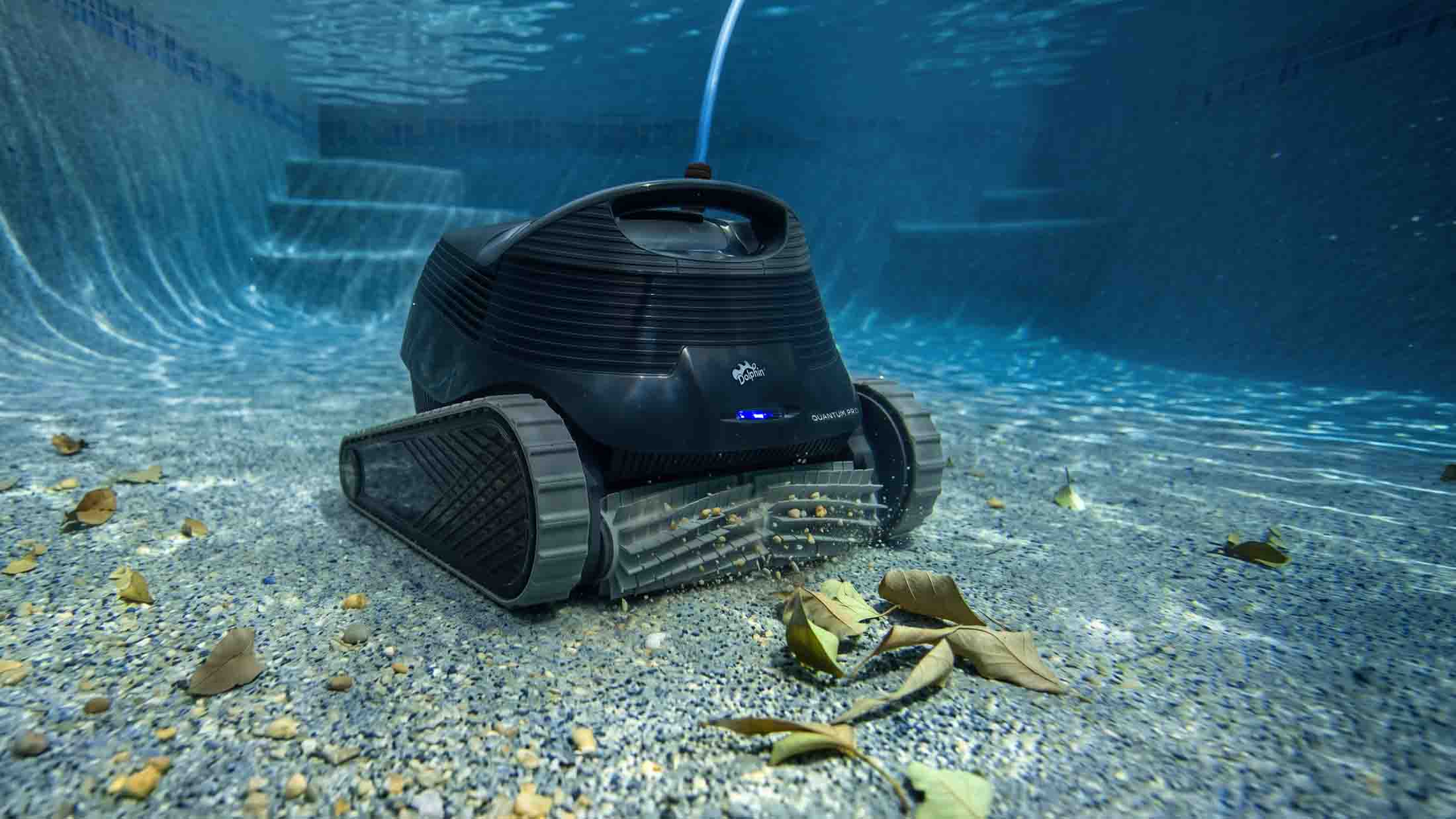
Top pick: Dolphin Quantum
Live prices · Ships free · 30 Day Trial
Grout lines hold dirt and the tile band shows every film line, so the right robot is the one that scrubs both, on a schedule, without slipping.
The quick answer
For most tiled pools, choose the Dolphin Quantum: it scrubs the waterline band, runs two HyperBrushes at twice the speed of standard brushes across the grout, and is the lowest-priced robot here rated for pools up to 50 ft. Choose the Dolphin Sigma instead if you want the most brush contact, with four scrubbing brushes and gyroscope navigation, and its higher price is comfortable.
Tile is the easiest pool surface to wipe clean and the hardest to keep looking clean. Dirt does not soak into the glaze, but every grout line is a small channel where dust and algae settle, and the band at the water's surface collects sunscreen, body oil and the first traces of scale. So the best robotic pool cleaner for tile pools is judged on two things: whether it scrubs the waterline, and how much brush it puts into the grout.
This guide covers fully tiled pools and the more common plaster or gunite pool with a tiled band around the top. Three of our four picks scrub that band: the Quantum, the Sigma and the Dolphin Premier. The fourth, the Dolphin Cayman, cleans floor and walls only, and we say so plainly, because the tile line is where owners most want the help.
The picks, ranked
The four robots we recommend for tiled pools, ranked.

$1999$1599Save $400 off the list price
Temporarily out of stock
Pick 1: Best all-round tile scrubber for the money
Dolphin Quantum
The Quantum is the lowest-priced robot here that scrubs the waterline, and on tile that ability matters more than any other. Two HyperBrushes spin at twice the speed of standard brushes, the kind of contact grout needs, on HyperGrip continuous rubber tracks. Its coverage also takes in stairs, sun shelves and Baja ledges, tiled places a floor-and-wall robot never reaches.
A full set of NanoFilter panels comes with the XXL MaxBin, so fine dirt scrubbed out of the grout stays in the basket. Set the weekly timer to every 2 days and the tile line gets scrubbed three or four times a week.
- Best for
- Tiled and tile-band pools up to 50 ft, especially with tiled steps or a sun shelf.
- The trade-off
- Two brushes, not four, and a 2-year warranty. If brushing power or longer cover matters more than price, see the next two picks.

$2999$2349Save $650 off the list price
Temporarily out of stock
Pick 2: Most brush contact on grout lines
Dolphin Sigma
If grout is the complaint, the Sigma puts the most brush on it: four scrubbing brushes against two on the Quantum and the Premier. Three ProLine motors move 4,500 gallons an hour, and SmartNav 3.0 uses an onboard gyroscope to track its heading, so the pattern stays orderly from wall to wall. It scrubs floor, walls and waterline in 2.5 hours, includes NanoFilters and standard cartridges, schedules by day and time in the myDolphin Plus app, and carries a 3-year warranty.
- Best for
- Fully tiled pools with a lot of grout, and owners who want app scheduling plus the longer warranty.
- The trade-off
- Highest price here, heaviest at 24.6 lb, and its cartridges hold less bulk than a basket in leaf season.

$2499$1949Save $550 off the list price
Temporarily out of stock
Pick 3: Longest cycle here and a 3-year warranty
Dolphin Premier
The Premier scrubs floor, walls and waterline with dual scrubbing brushes and the same 4,500 GPH flow as the Sigma, and its 3-hour cycle keeps it on the surface longer than any other robot here. The Multi-Media set includes NanoFilters for grout dust and an oversized leaf bag for fall. The timer is set on the power supply and the warranty is 3 years. It ranks third because the Quantum does the same waterline job with faster brushes and step coverage for less, and the Sigma out-brushes it.
- Best for
- Owners who want waterline scrubbing, long warranty cover and a timer that works without a phone.
- The trade-off
- Standard-speed brushes, no step or shelf coverage in its published list, and a higher price than the Quantum.
$1299$1049Save $250 off the list price
Temporarily out of stock
Pick 4: Floor-and-wall pick for tiled pools to 33 ft
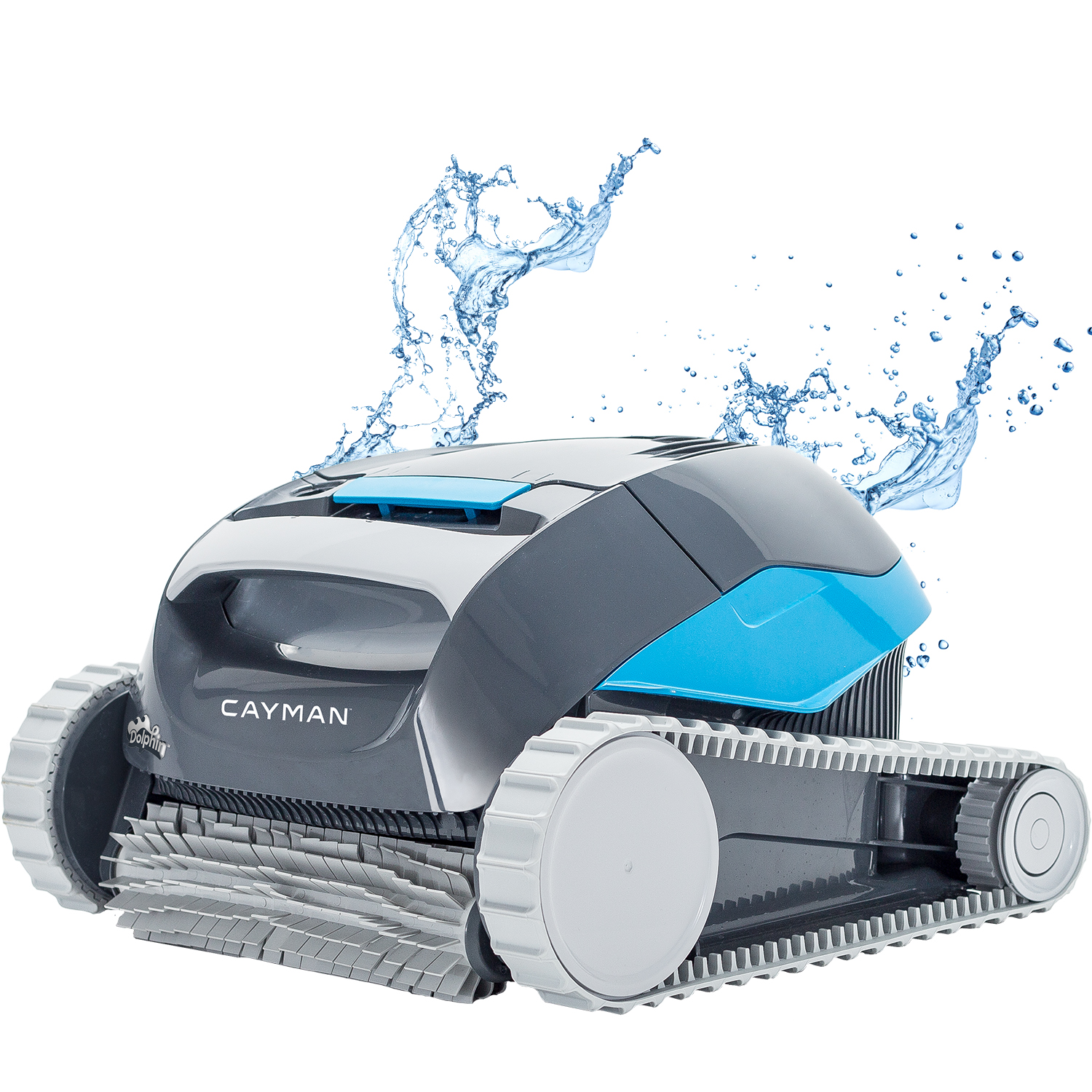
Dolphin Cayman
The Cayman is here for smaller tiled pools where budget matters more than the tile line. It cleans the floor and walls of pools up to 33 ft in 2 hours, lists tile among its surfaces, and uses one HyperBrush at twice the speed of standard Dolphin brushes on HyperGrip tracks. The MaxBin basket empties through a top hatch, and the timer runs it every day.
What it does not do is scrub the waterline. On a tiled pool the band at the surface stays a hand-brush job, which is why it sits last.
- Best for
- Tiled or tile-band pools 33 ft and under where you are happy to brush the band yourself.
- The trade-off
- No waterline scrubbing, a 50 ft cable without a swivel, and NanoFilter panels are an optional add-on.


Side by side
The four picks side by side.
| Specification | Dolphin Quantum | Dolphin Sigma | Dolphin Premier | Dolphin Cayman |
|---|---|---|---|---|
| Price today | $1599 | $2349 | $1949 | $1049 |
| Brushes | Dual HyperBrush | Quad scrubbing brushes | Dual scrubbing brushes | HyperBrush |
| Cleans | Floor, walls, waterline, sun shelves and stairs | Floor, walls and waterline | Floor, walls and waterline | Floor and walls |
| Traction | HyperGrip tracks | HyperGrip tracks | HyperGrip tracks | HyperGrip tracks |
| Pool length | Up to 50 ft | Up to 50 ft | Up to 50 ft | Up to 33 ft |
| Filtration | XXL MaxBin basket with standard and NanoFilter panels | NanoFilters and standard filter cartridges | Multi-Media: NanoFilters, oversized leaf bag and standard fine filters | MaxBin basket with fine panels; NanoFilter panels optional |
| Robot weight | 18.3 lb | 24.6 lb | 20.3 lb | 14.6 lb |
| Warranty | 2 years | 3 years | 3 years | 2 years |
What to look for
What matters on tile, in order.
-
Waterline scrubbing.
The tile band sits exactly where oils and dust float. A robot that climbs to the surface and scrubs along it every cycle deals with that film while it is soft. A floor-and-wall robot leaves the band to you and a hand brush.
-
Brush contact in the grout.
Grout sits a little below the tile face, so a slow or worn brush skates over it. Compare how many brushes a robot carries and how fast they turn. More contact, more often, is what grout needs.
-
Grip on a slick wall.
Glazed tile gives tracks less to bite than plaster. Rubber tracks and steady water flow hold a robot to the wall, and a clean filter keeps that flow up, so any robot climbs best with a freshly rinsed filter.
-
A fine filter for what the brushes lift.
What comes out of grout is mostly fine: dust, dead algae and grit. Standard panels let the finest of it drift back onto the tile. Ultra-fine media such as NanoFilters keeps it inside the robot.
Fully tiled, or a tile band on plaster.
Most pools described as tile pools are plaster, gunite or pebble shells with a band of tile around the top. The robot spends nearly all of its cycle on the shell, so check that the shell finish is on its published surface list too. Every pick here lists tile along with plaster and gunite.
A fully tiled pool is a different job. Every surface is slick, grout runs in a grid across all of it, and there is often a tiled bench, steps or a shelf. That is where brush count, brush speed and track grip earn their keep.
Film, yes. Hardened scale, no.
A robot's brushes are soft PVC. They lift what is still soft: sunscreen, body oil, dust, pollen and the first slick of algae. What they cannot do is take off calcium scale once it has hardened into a white or gray crust. That calls for a scale treatment or a professional tile cleaning, plus water balance that keeps it from coming straight back.
Two more limits. A robot scrubs at the water's surface and below, so tile above the water level is yours to wipe. And if the level drops in a dry week, the scrubbed line drops with it.
If the robot slips on tiled walls.
Slick tile asks more of a robot's grip than plaster does. If a robot climbs partway and slides back, work through this list before deciding it is the wrong machine.
- Rinse the filter. A loaded filter cuts the water flow that helps press the robot to the wall.
- Brush the walls once by hand. A thin algae film makes glazed tile slicker than it looks.
- Look at the floor-to-wall joint. A square corner is harder to climb than a rounded cove.
- Still slipping? Chat with a Dolphin Expert about your tile and wall shape.
Setting up a robot for a tiled pool.
- Hold the water level near the middle of the tile band, so the waterline scrub lands on tile and not on the plaster below it.
- On the Quantum or the Premier, start with the timer on every 2 days. Move to every day in heavy swim weeks, when sunscreen builds fastest.
- Fit the NanoFilter media once the pool is clear of leaves, and rinse it after each cycle, because fine media loads quickly.
- Take the robot out before you shock the pool or add a scale treatment, and wipe the tile above the water level while it is out.
Questions, answered
Common questions about robots and tile.
Is the best robotic pool cleaner for tile pools the same one I would buy for plaster?
Usually yes, with one change in priorities. On plaster the floor does most of the talking; on tile the waterline band does. So waterline scrubbing moves from nice-to-have to the main reason to buy. The Quantum, Sigma and Premier all list both tile and plaster, so one robot covers a plaster pool with a tile band.
Can a robotic cleaner loosen tiles or damage grout?
Not sound tile and grout. The brushes are soft PVC, the tracks are rubber, and every robot on this page lists tile. If tiles are already hollow or lifting, or the grout is crumbling, have that repaired first, because any regular scrubbing can dislodge loose pieces.
Will a robot remove the white calcium line on my tile?
No. It scrubs away soft film, the dust and oil that sit on top, but hardened calcium is bonded to the glaze and needs a scale treatment or a tile-cleaning service. After that, regular waterline scrubbing and balanced water are how you slow its return.
Do I still have to brush the tile line by hand?
With a waterline robot, much less: mainly the strip above the water level, tight inside corners and around fittings. With the Cayman, which cleans floor and walls but not the waterline, plan on brushing the band yourself about as often as you do now.
How often should a robot run in a tiled pool?
Often enough that film never sits for a week. In swim season that usually means every 2 days, and every day when the pool is busy. Robots with a timer are made to stay in the water between scheduled cycles; lift them out weekly to rinse the filter.
The bottom line
The short version.
If the tile line is why you are shopping, buy a robot that scrubs it: the Quantum for most pools, the Sigma if grout is the main complaint and price is not, the Premier if warranty length and a no-phone timer decide it. Choose the Cayman only for a pool of 33 ft or less where you will brush the band by hand. Hard scale is a separate job; no robot here removes it.
More buying guides
